
Friday, October 31, 2008

A Wing and a Prayer


To a Butterfly

I've watched you now a full half-hour;
Self-poised upon that yellow flower
And, little Butterfly! Indeed
I know not if you sleep or feed.
How motionless! - not frozen seas
More motionless! and then
What joy awaits you, when the breeze
Hath found you out among the trees,
And calls you forth again!

~William Wordsworth


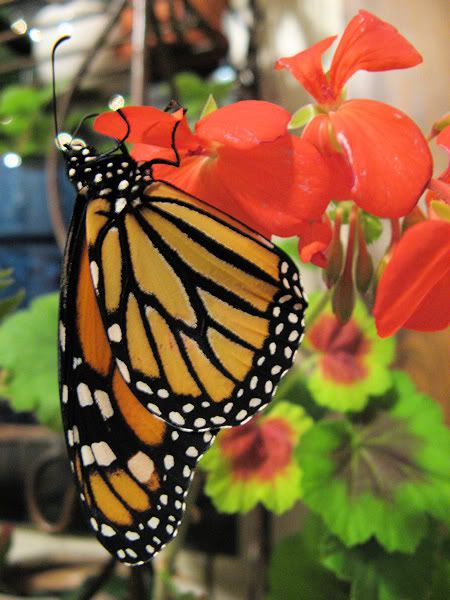
I awoke this morning with butterflies in my stomach and the irony of that was not lost on me. Today dawned with bright sunshine and clear skies. If I were traveling anywhere by plane today, I would say it's a great day for flying. When I went into the dining room to do pre-flight preparations for Little Miss Monarch, she was sipping from the oranges. It's as if she too knew what lay ahead of her. And indeed she does. God made her that way.

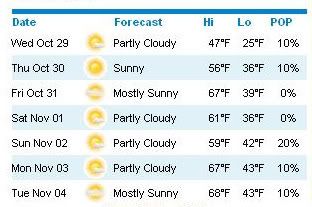
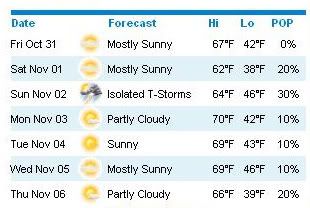
While I waited for her to finish her meal, I put the memory card into the camera and got my shoes on. I checked the temperature outside: 53°. Breezes of 9 MPH seemed ideal. The forecast for the coming week couldn't be better, with Indian Summer weather upon us.
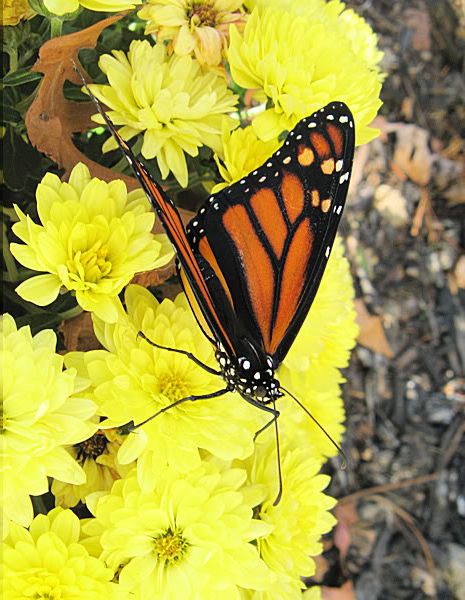
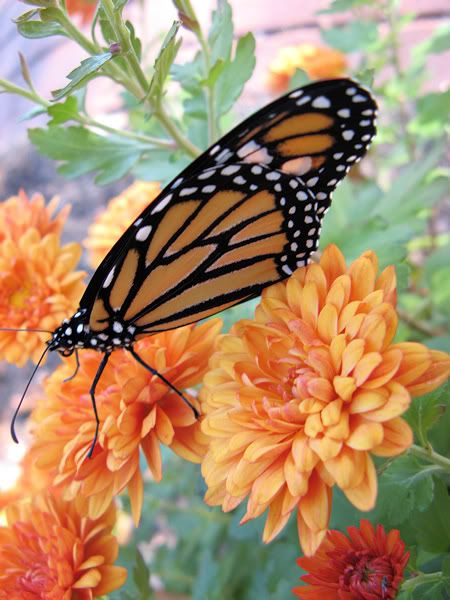
Not wanting to waste a precious moment of potential flying time, I put my finger out and Little Miss Monarch crawled on board. We went out the front door and walked over to the south side of the house where the sun was shining and the mums were still in bloom. I gave her a little kiss for luck, let her down to the yellow ones, and she crawled out onto them.

I wondered if she would take right off, but she slowly opened and closed her wings, perhaps testing the air.


While I wanted to stay right there and watch to see her as she took flight, she didn't seem anxious to be on her way, so I went back into the house, where I peeked out the window at her every ten minutes or so. The third time I looked, she was gone.

I have mixed feelings as I think about her and what might be her fate in the coming days and weeks. My hope is that she knows the urgency of her mission and will put as many miles behind her in the first days of her flight as possible. But she is part of a larger plan that neither of us has much control over. Still, I can't help but think that my deciding to bring her in nearly a month ago set in motion that larger plan and all has gone just the way it was supposed to - for this Monarch.

We've had below freezing temperatures for many nights since that time and even some frozen precipitation mixed in with rain just a couple of days after she emerged. She was snug and warm inside and we were able to keep her safe and fed until better flying days came along. Now with nearly a week of unseasonably warm weather before us, she has the best chance of fulfilling her life's purpose.

Be safe and live well, Little Miss Monarch. Thank you for letting us be a part of the miracle you are.


To read about Little Miss Monarch's journey from caterpillar to butterfly, see the following posts:


Wednesday, October 29, 2008

Fall Foliage at Our Little Acre


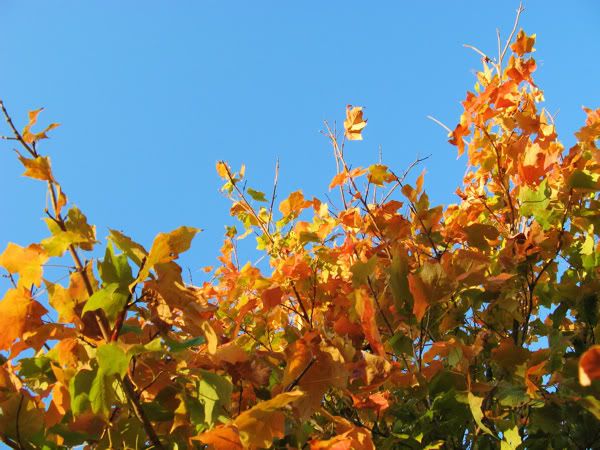
Last week, "there came a killing frost" and fall definitely had its game on. The colors are not as vibrant after a dry summer and we sure had that, just like last year. But you can't keep a good woman down and Mother Nature showed us that she still had plenty of tricks up her sleeve.

In years past, it seems to me that the plants and trees that change colors reached their peak at pretty much the same time. This year it was more spread out, which is why this post has been so late in coming. Just as I thought everything had turned, one more plant or tree surprised me.

The high winds we had over the weekend brought down a lot of the beautifully colored leaves, but I had taken several pictures of them before that happened.


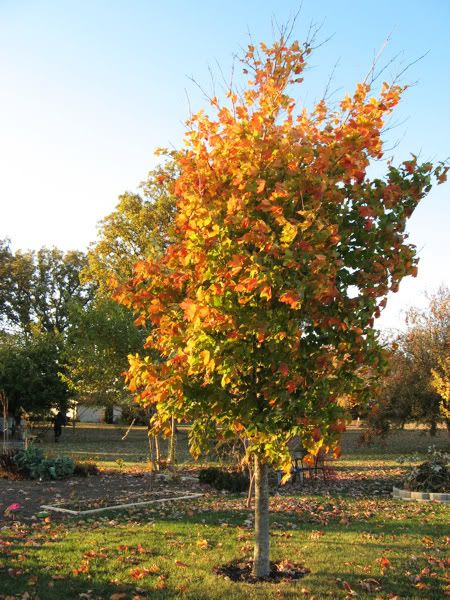
This is the only maple (Acer sp.) in our yard that turns this gorgeous shade of orangy-yellow. It's my favorite color on the trees in the fall.


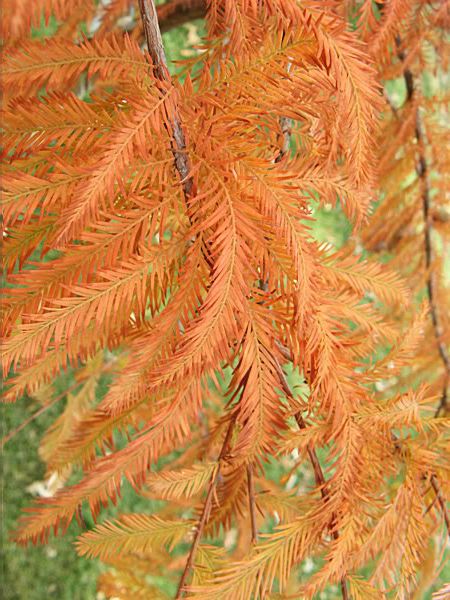
The Bald Cypress (Taxodium distichum)always turns the most gorgeous shade of peachy gold.


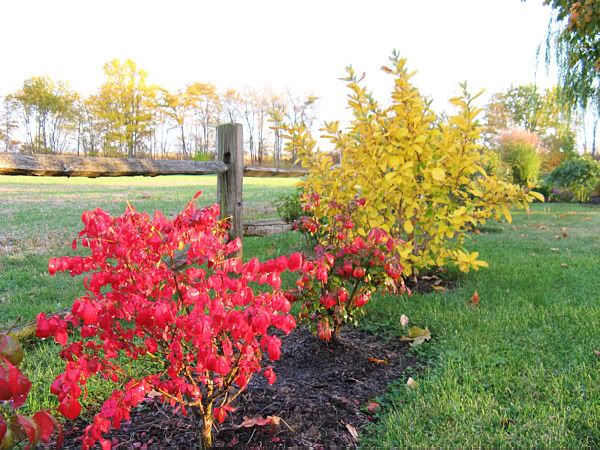
At the very back of Our Little Acre are some Burning Bushes (Euonymus alatus) and our new-this-year Witch Hazel (Hamamelis vernalis), contrasting nicely.


This Ginkgo (Ginkgo biloba) tree has been in this spot for three years now. Previously it was in the front of the house, which proved to be a bad spot in terms of protection from the strong winter winds we get. It's been much happier here on the east side, where it has a little protection from the house.


Probably the most vibrant of anything we have, the Cutleaf Staghorn Sumac (Rhus typhina) absolutely glows in Max's Garden, especially when the late afternoon sun shines on it, as it is doing here.


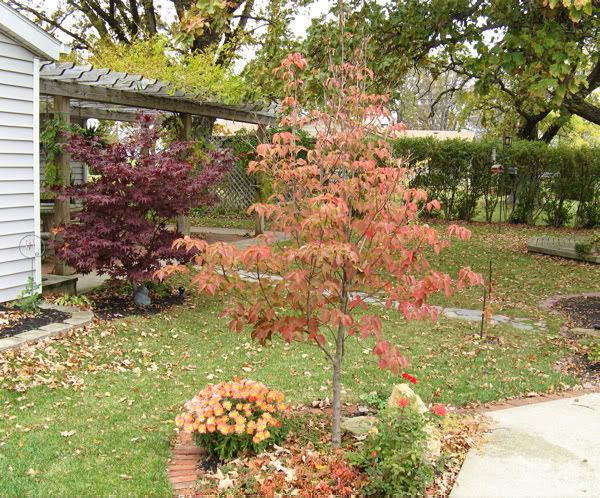
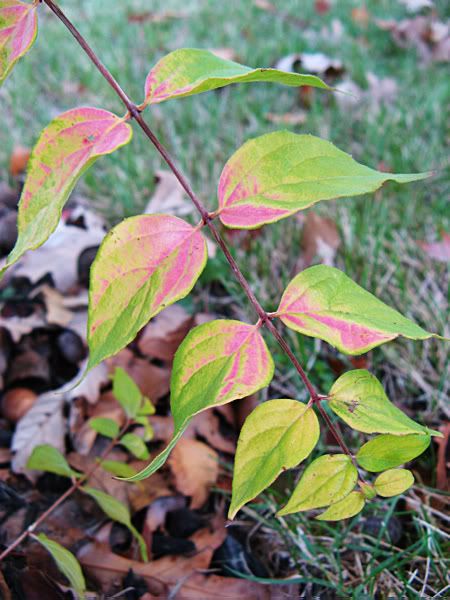
The Japanese Maple (Acer palmatum 'Emperor II') really hasn't gotten its usual fall color yet, for some reason. A smaller Japanese Maple (Acer palmatum 'Mikawa yatsubusa'), which is planted under the kitchen window just around the corner from this one, is still green as green can be. But the Kousa Dogwood (Cornus kousa) in the foreground is just gorgeous! I don't remember it being this red before.


The Beauty Bush (Kolkwitzia amabilis 'Dream Catcher') is new to Our Little Acre this year, too. It has lovely pink coloring right now.


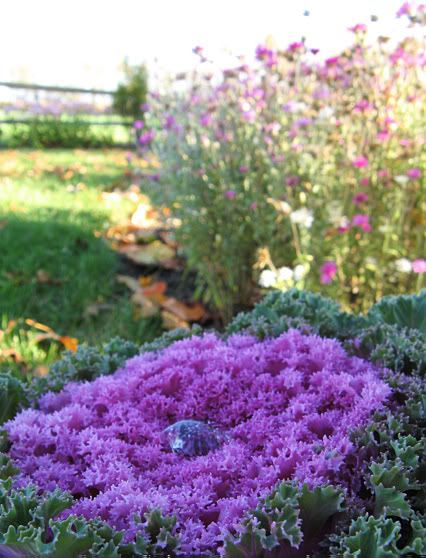
I have always loved Flowering Kale (Brassica oleracea var. acephala 'Nagoya') and this fall, they have been fabulous. I've got both purple and white. As you can see, the frost hasn't hurt them a bit.

The
Xeranthemum in the background is unfazed by it so far, too, and echoes the magenta colors beautifully.


The ornamental peppers (Capsicum annuum 'Medusa') have been casting their orange spell for several months now. A couple of hard frosts finally did it in though.


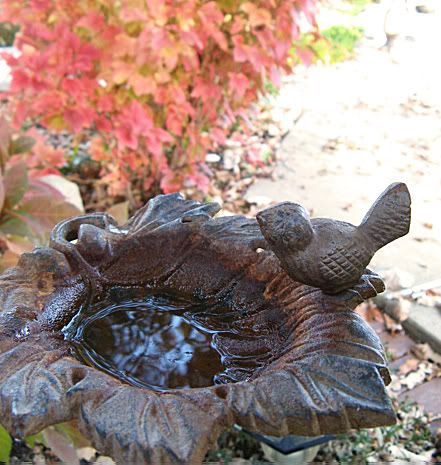
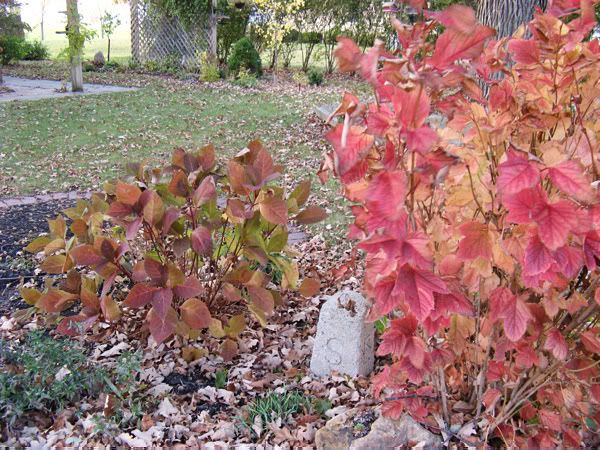
Behind the small bird bath/feeder, the Viburnum (not sure which kind - it was a passalong from my grandma) is glowing a muted red.


The fountain that is usually in this spot has been put away for the winter, but the Viburnum on the right (same one that's shown in the photo above) provides good color interest and the Hydrangea 'Lady In Red' shows just one of the reasons she was so named.


For more beautiful color shows from various locations around the world, visit The Home Garden, where Dave is hosting The Garden Blogger Fall Color Project.


Now that I've shared some of the beautiful color here, I feel better about having received the Fabulous Fall Decor Award, which was presented to me by three fellow bloggers on the same day! Thank you, Perennial Gardener (Does Everything Grow Better in My Neighbor's Yard?), Lona (A Hocking Hills Garden), and Vicki (Havenwood).


She's Sipping!


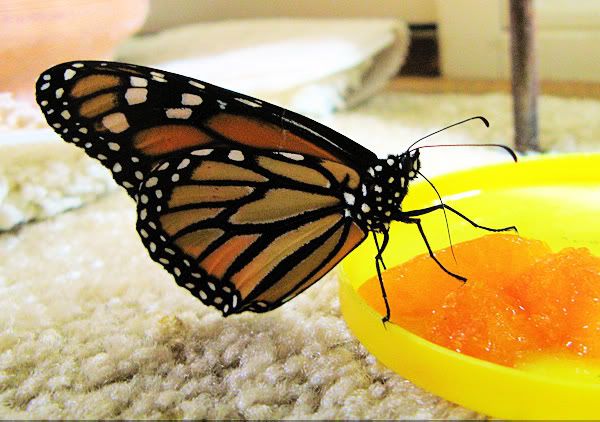
Just a quick little update on Little Miss Monarch. Things are going well. I had said before that I hadn't seen her in the act of sipping from the orange slices, but this morning I caught her at it.


She flutters about the room and most of the time she is on the window sill, looking out, no doubt wanting to be out there on her way to her destination. If the Weather.com weather report is accurate, we'll be releasing her tomorrow. We're to have several warm days in a row - hopefully enough to get her far enough south to miss the returning colder weather.


I don't like those nighttime temperatures, but I'm sure she'll find a protected tree or shrub to roost for the night, then continue on when it warms enough during the day for her to fly.


Don't worry - there are some actual gardening posts coming up. This is a gardening blog after all. LOL.

Monday, October 27, 2008
What's the Status of Little Miss Monarch?


Because some of you asked...

Little Miss Monarch is still residing in our dining room and seems to be doing well. She's fairly active I think, because every time I go in there to check on her, she's in a different spot.

She's so cute - when I put my finger in front of her, she'll walk right onto it and let me carry her around the room. Sometimes she'll fly off, but she always comes back to me, usually landing on my arm or shoulder. When I put her down, I set her next to the food and water I've provided.

Up until about an hour ago, I hadn't seen her sipping anything, but when I went in there this last time, she was sipping from the orange slices. She wasn't anywhere near this when I'd checked on her earlier in the evening, so I think she knows where her food is now.


Shady Gardener wondered if I had any fresh blossoms from which she might get nectar and unfortunately, the killing frosts we've had in the last week have done in nearly everything. But I did have a couple of plants that I'd brought in for the winter that still have blossoms on them, so I put those in the room and gently placed her on one of them.


I've got tropical hibiscus blooming as well as a pelargonium ('Red Happy Thought'). The big brugmansia is done blooming now, but I've got another smaller one that has new blossoms forming.

Hopefully, the break in the weather that is predicted for later this week will be a reality and we can attempt to release her again and she will take off for Mexico. We're to have a few days in a row of weather that's sunny and around 60°, starting Thursday. Today and tonight, we've had snow mixed with rain, so I feel good that she's safe and warm here inside.


I called The Butterfly House earlier today and I got a recording that they are closed for the season. So I'm hoping Indian Summer will be a reality and she'll be able to get far enough south to get out of any more cold weather and that she'll meet up with some other late-goers so she doesn't have to make the trip all by her lonesome.

Geesh, I feel like she's one of my kids. She came in as a caterpillar, transformed into a chrysalis, and metamorphosed into a butterfly - just like our two girls did in this very same house. All three were fascinating and beautiful to watch as they went through the stages of growing up. The girls are now successful adults, living the lives they were meant to have, and I want no less for Little Miss Monarch.

I'll post another update after Thursday when we make another attempt at a safe release.

Sunday, October 26, 2008

Green Thumb Sunday - Hardy Cyclamen


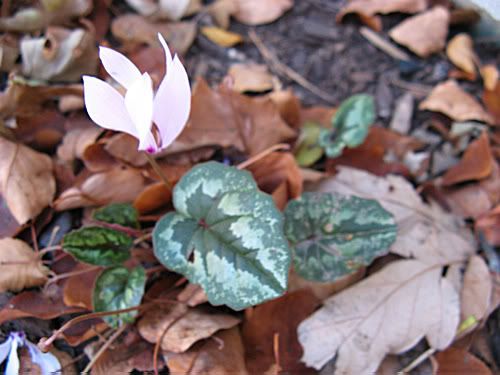
I was beginning to think my Hardy Cyclamen (Cyclamen hederifolium) wasn't going to show this autumn. I've got three different ones and I'd not seen a sign of any of them as of a few weeks ago. But then one day, I noticed the pale lavender blooms that look like pinwheels peeking through the leaves that had fallen from the Amelanchier that shades them.

It's difficult (for me, anyway) to accurately capture the details of the blooms because they're so pale in color. Photographing white flowers can present much the same challenge. Though I love the form of the blooms, it's the foliage that inspired me to plant them in the first place.

Hardy Cyclamen are spring and summer dormant, then pop up in the fall, as nights begin to cool down. The foliage will remain long after most perennials have died down, as they can survive temperatures below freezing. In fact, I have had the foliage persist through winter until spring, but mine are in a very protected location. They grow from corms, like good drainage, and are hardy to zone 5.


Join Green Thumb Sunday

Friday, October 24, 2008

Monarch Update


Little Miss Monarch concerns me.

She was released yesterday afternoon after she exhibited the desire to fly while in the house. She had been opening and closing her wings while in the cloche, so I took her out and she took flight in the family room. Yes, definitely time to let her get on her way!


We took her outside, where it was sunny and 60°, with a light breeze. She didn't want to leave my finger, even though I walked completely around the house with her. That happened one other time when we released a Monarch earlier in the summer. We had put it on a shrub and a little while later, it took off.

This time, I decided to put her on a mum on the south side of the house, where the sun was nice and warm and there was a little bit of protection from the wind. A few hours later, she was still there.


Romie and I left for the evening, to go see
The 5 Browns at the Niswonger Performing Arts Center in Van Wert. Fabulous, these five siblings on their Steinways. I had seen them on Oprah awhile back and owned one of their CDs. I'm not a fan of piano music per se, but something about these five twenty-somethings was fascinating. Their enthusiasm for classical music and their talent for presenting it was compelling and we had a wonderful evening.

While we were enjoying the concert, it had gotten windier and colder outside and I wondered how Little Miss Monarch was doing. I knew it was way too cold for her to fly and suspected she was still going to be perched on the mum when we returned home at 10:30. Sure enough, there she was, and I knew she would be there until morning.

In the night, it had started raining, which continued all day today, along with cold temperatures and wind. Early afternoon, I went out to check on her, and she was being pounded by the rain. It was only 47° and it wasn't going to get any warmer, so I took pity on her plight and brought her back into the house.

I got the punch bowl out again. (This punch bowl has been used far more as a butterfly habitat than for punch!) I still had the stick on which she'd hung out for the last two weeks, so I put that in the bowl and got her some orange slices in case she was ready to eat something. Obviously, the warmth felt good to her, because after a short time she started walking around the bowl and climbed up the stick.

The forecast for the next six days is for rain, with daytime highs no more than 53° - certainly not flying weather for a Monarch. There's even a chance of snow flurries for Monday. So now what? Sometimes Monarchs are too late to fly to Mexico and they die. Monarchs born at this time of the year have the potential to live eight or nine months. I want this butterfly to live a full and natural life. She can't fly when it's so rainy and cold, and her time to escape it is running out.

My friend Marsha laughingly suggested a road trip. I told her it would be nice if we could personally take her to Mexico or even Florida. Marsha replied that she is going to Florida in four weeks, and if we could keep her alive until then, she would take her along. Hmmm...

  • Is it possible to keep a Monarch for that long in captivity in one's house?
  • If the Monarch is transported to Florida, will it still find its way to Mexico?
  • I wonder if a butterfly habitat such as The Butterfly House would take a Monarch?
  • If you put a fall-born Monarch in a habitat such as The Butterfly House, will they "go crazy" if they can't fly to Mexico?

Right now, she is sitting on the orange slice and has been there for some time. I haven't yet been able to catch her in the act of sipping, so I don't know if she's doing that or not. I'm going to do some research online as well as call The Butterfly House tomorrow. If anyone has any ideas or suggestions for what we might do to help this beautiful lady, we'd love to hear them.


One morning after a particularly fearsome storm, a man arose early and decided to go for a walk along the sea. As he neared the beach, the early riser saw an old man in the distance slowly, yet purposely, ambling down the shoreline. As he watched, the old man stopped, picked something up, and tossed it into the ocean. Then, the old man slowly straightened himself up, walked several more feet, stooped down, and once again picked up something, which he tossed into the sea.

Intrigued, the early riser moved closer. As he drew near, he realized suddenly what the old man was doing. Littered all down the shoreline, as far as the eye could see, were thousands upon thousands of starfish cast out from the ocean by the fury of the now-passed storm. As the early riser watched, the old man bent down, gently picked up a small, helpless starfish, and tossed it back into the ocean. He repeated the same process every few feet.

After a minute or two, the early riser approached the old man. "Good morning, sir" he said. "I couldn't help notice what you're doing. I commend you for what you're trying to do, but the storm has washed up thousands of starfish on this beach. You can't possibly save them all! What possible difference do you hope to accomplish?"

The old man paused for a long time, pondering the early riser's question. Finally, without saying a word, he bent down, picked up a starfish, and tossed it far into the ocean. "It made a difference to that one," he said.


Thursday, October 23, 2008

Little Miss Monarch


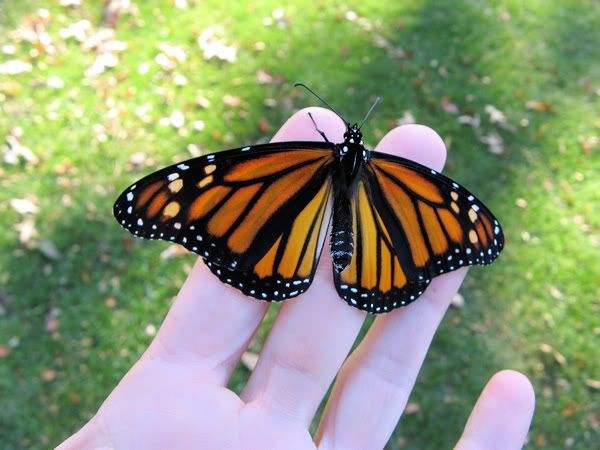
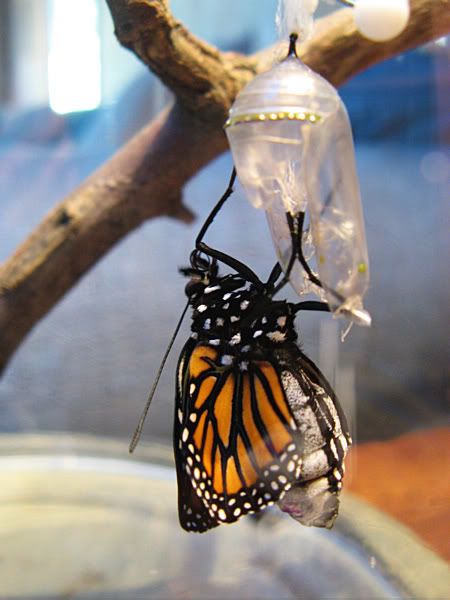
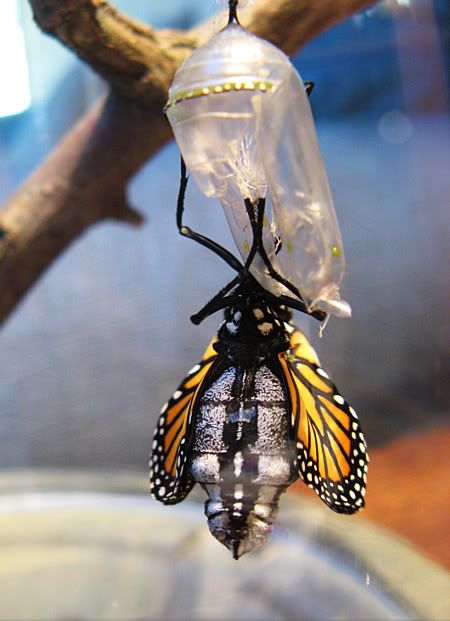
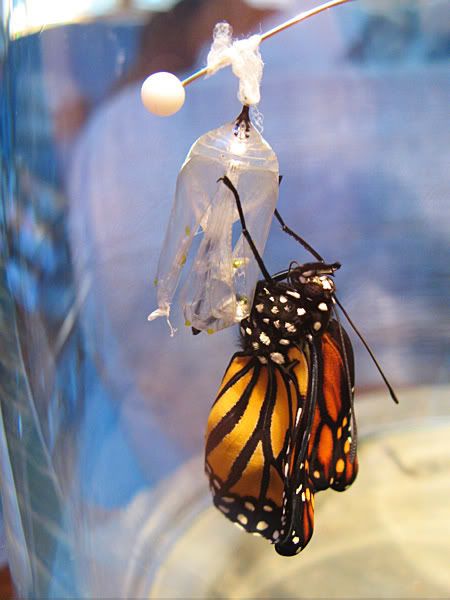
Without further ado, meet the newest member of the Monarch world, soon to join the ranks of thousands as they make their way to the hills of Mexico:


It's supposed to reach 60° later today and it's sunny, so as soon as it's warm enough and Little Miss Monarch is ready to fly, I will set her on her way. It will take approximately two months for her to make the trip to Mexico and at this late date, she has absolutely no time to lose. Averaging 200-250 miles a day, she will undoubtedly encounter more cold air before she reaches the warmer southern climate where she will be more comfortable.

By the way, I did stay up pretty much all night to watch for this event, but she is just like most babies, they are born when they are good and ready. She emerged at 8:40 a.m. EDT. And technically, she's now an adult. She probably was giving karma to me for my procrastination habit, don't you think? ;-)


The Last Monarch


We saw a Monarch butterfly sipping nectar from a wildflower in the next-door neighbor's yard on Monday. Now this is late. Most of his buddies are long gone from here and well on their way to Mexico. In fact, some of them are already there.

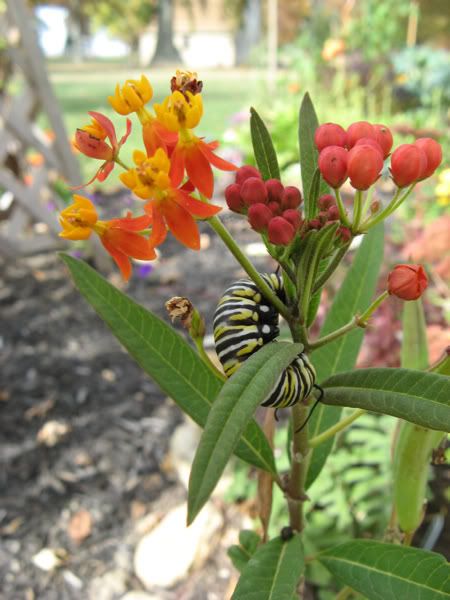
But even more alarming is that we have two chrysalids right now here at Our Little Acre. A little over two weeks ago, I was shocked to find one larger and one very tiny Monarch caterpillar munching on the tropical milkweed (Asclepias curassavica).

Night temperatures had dipped near freezing and we'd had two light frosts already. Since Monarchs can't fly if the temperature goes below 50° (and even then it has to be sunny if it's below 60°), I worried about these two.

I took the larger one into the house, since I was pretty sure it was close to pupating, but left the smaller one, so he could eat more fresh milkweed until he was large enough for pupation. I thought maybe the warmer temperatures in the house might speed up the development.

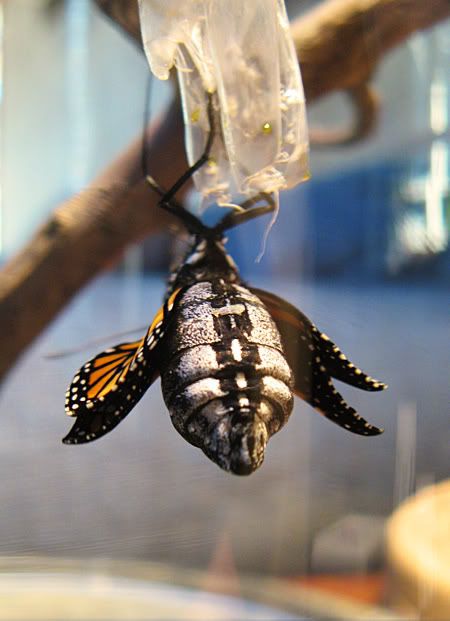
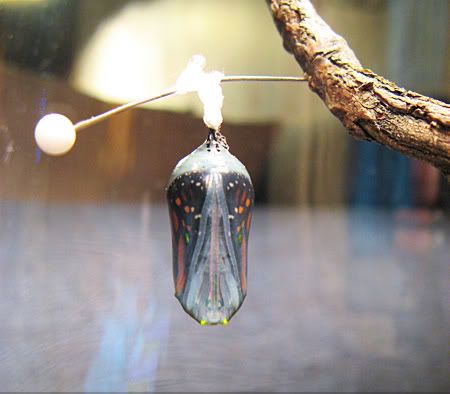
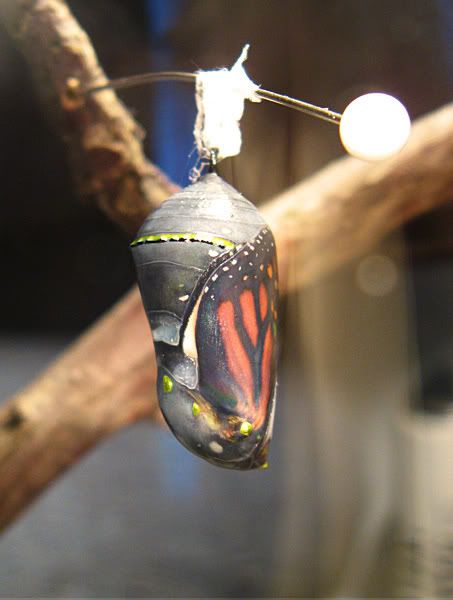
So much for that theory. It formed its chrysalis the very next day and now it's been nearly 16 days, which is the longest span of time it's ever taken for a Monarch to develop while in captivity here. But last night, I noticed the chrysalis becoming darker and today I could see the Monarch butterfly clearly through the chrysalis casing.


It will soon eclose (emerge). In fact, I'm keeping a vigil as I write this, because this will be the last chance I'll have to see this particular part of the amazing process until next year. I've missed it every other time we've had a chrysalis in the house.

This Monarch isn't the last Monarch of the season here, however. Remember that I said there was another smaller caterpillar on the milkweed the same time I found this larger one? A little over a week ago, I checked on it and it was getting quite large - large enough to be pupating - and I'm sure that's just what it did later that same day. I was thinking of bringing it inside the house, too, but when I went out to get it, it was nowhere to be found.

I looked around a little bit, but I wasn't able to locate it anywhere. I'm certain it's there, well hidden, with about another week to go before its metamorphosis is complete. I pray we have enough warm weather left for it to be able to fly south, or it will certainly die. We had our first killing frost last night and there's another one due tonight.

So far, reports are that the migration numbers are down from previous years. This may be due to a couple of different factors: Ongoing reduction in natural habitats due to herbicide use and urban development, and fewer births occur during a hot and dry summer. There's not much that can be done about the latter, but if gardeners were sure to plant more milkweed (any Asclepias species will do) and reduce pesticide use in their gardens, it would go a long way to help increase the Monarch population.

It's now 3:00 a.m. and while the casing has started to crack open, there's still no butterfly. But I'm determined to stay awake until it makes its way into the world, and when it does, you'll be the first to know.

Wednesday, October 22, 2008

Master Gardeners Learn About Garden Blogging


The week didn't start out very well - I gave Dad a bloody nose on Sunday, Romie accidentally chopped up 18 brand new tulip bulbs on Monday, and at midnight that night our refrigerator stopped working. Nothing that couldn't be remedied, but I was ready for the tide to turn! It did.

Last night, I traveled northeast to rural Defiance to speak to the Defiance County Master Gardeners. One of their members, Nancy DeTray, had asked me to speak at their October meeting, which was being held at her home. I'd never spoken to a group about gardening before, but since it's a subject I love, I agreed to do it.

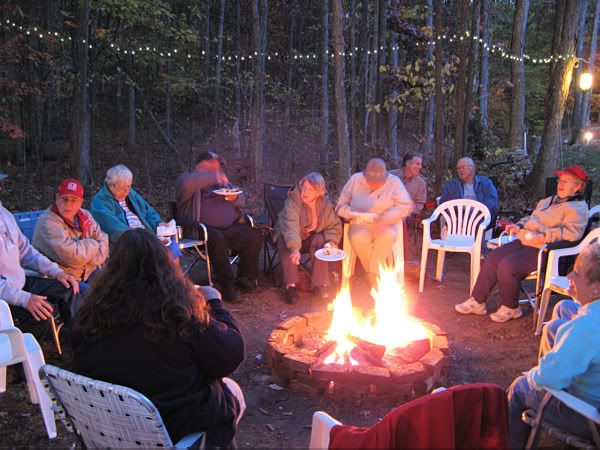
Their property is in a woods, with some gentle rolling to the landscape (so foreign to me, though we live in the next county!). As I walked down to the fire pit, there was a group of about 25 people talking and laughing and enjoying hot dogs around the glow of the fire. I saw some familiar faces, since I'd met a few of them at the Lilac Festival earlier in the year.


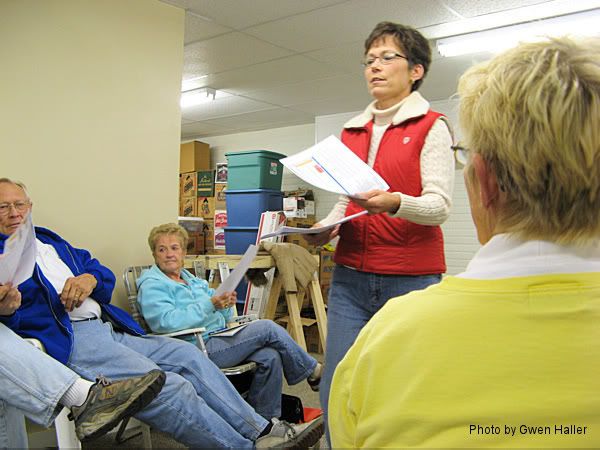
After eating, they conducted their monthly meeting, where I learned that this group had quite a lot going on. In spite of the fire, it was getting pretty chilly, as frost was predicted, so when the meeting was over we took our chairs to their basement and I gave my presentation.

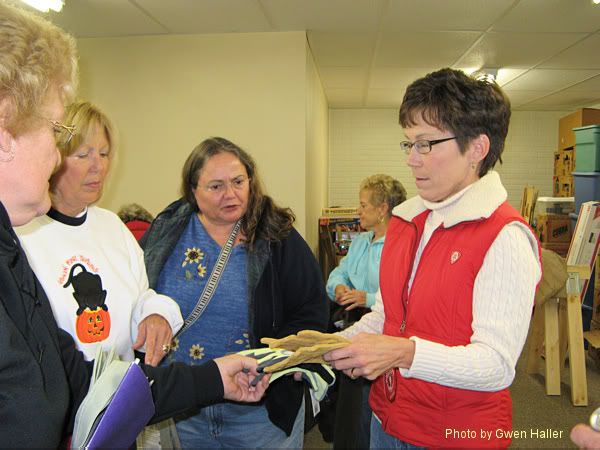
Nancy had said I could speak on any subject I wanted, so I'd decided to talk about garden blogging, since that's the reason she'd contacted me in the first place. Standing in front of a group of Master Gardeners when you've only been gardening seriously for about three years can be mighty intimidating, but they were a friendly sort and I quickly was put at ease.

Talking comes quite naturally for me (no snickers, now!) and before I knew it, I'd taken up about 45 minutes of their time. I explained what a blog was and I'd prepared a handout of the basic things seen on a blog. I told them of all the advantages of both reading and writing blogs and shared some of the wonderful opportunities that have come my way as a result of writing Our Little Acre.

I also encouraged them to start a blog of their own as a group, since one blog can have many writers. I really hope they do, because I would be a regular reader!

Thank you, Nancy, for giving me yet another opportunity to share my love of gardening with others and providing me with an enjoyable evening of meeting your wonderful group.

Luminaries lining the drive

Sunday, October 19, 2008

A-Maze-Ing Corn!


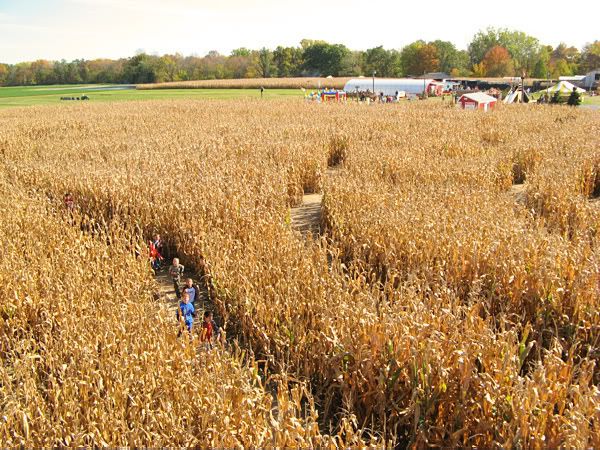
Just like last year, we went to a corn maze near Napoleon, Ohio, with Kara and Adam. But this year, Mom and Dad went with us, as well as my aunt and uncle, who were visiting from Godfrey, Illinois. The four of them had never done a corn maze before and we thought it would be fun to have them go along.

The maze design this year was in honor of Sam Hornish, Jr., winner of the Indianapolis 500 in 2006, who lives nearby. We divided up with the guys against the girls, to see who could finish in the quickest time. Last year, Kara and I beat Adam and Romie, so we had a title to avenge.

Kara and I led the way, with Mom and her sister chatting like magpies behind us. We had to find ten waypoints, which were numbered posts, where we had to make a decision as to which way to go, depending on the answers to question on a Passport we were given at the start.

In the middle of the maze is a tower, which you can climb to see the entire maze. You might think this would help you with the rest of the maze, but it's not tall enough to give that kind of a view. By the time we reached the tower and climbed to the top, we saw the guys way off in the distance and knew that they were way ahead of us and that we had some catching up to do!

Sure enough, they'd beat us by about ten minutes and they now had bragging rights as their prize. We'd had a pretty good time wending our way through the tall corn on a beautiful autumn afternoon, so we all were winners, really...

...until something went terribly wrong.

We wanted to take a group picture, and there were all kinds of places appropriate for doing this, but we chose the stacked straw bales with pumpkins and other fall decorations near the entrance to the maze. Everyone except me took their spots and I commented that there was nowhere for me to sit. Romie invited me to sit on his lap while I asked a nearby group if someone could take our picture. A young woman agreed and I handed over the camera.

What happened next was just a tad chaotic, with a couple members of the family offering alternative suggestions for where I might sit. Uncle Bob said I should sit on the ground in front of the group. As I started to do that, Kara interjected that I could lay on my side, across the guys' laps. Now that sounded like a fun idea, so I tried to quickly get myself in position so that the person taking the picture could go back with her group.

*snap*

What's wrong with this picture?

In my rush to get into position for the picture, I had accidentally elbowed my dad in the nose. He didn't say "Ow!" In fact, he didn't say anything until very quietly, we heard, "Wait. I've got a nosebleed." OMG. I hadn't even felt the contact, in all the hubbub. I felt awful!

He was really nice about it and every time I asked him later how his nose was or told him how sorry I was, he would smile and say, "It's okay. It doesn't hurt now." But I still felt terrible about it happening.

In spite of the mishap, we'd had a good time, but next year maybe I'll have to throw some punches before we do the maze so we girls can take our title back.

These Are Stressful Times


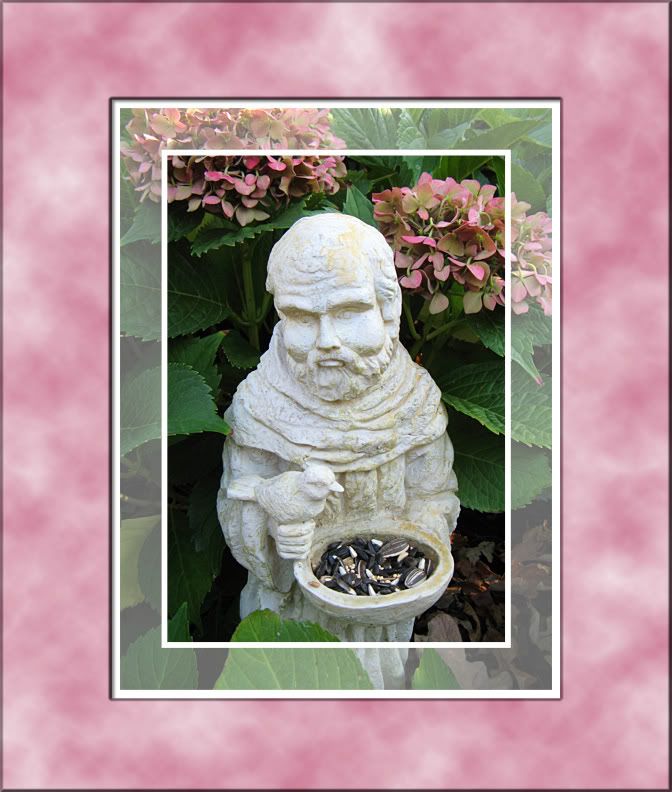
St. Francis Statue in Our Gazebo with Hydrangeas

"Look at the birds of the air; they neither sow nor reap nor gather into barns, and yet your heavenly Father feeds them. Are you not of more value than they? And can any of you by worrying add a single hour to your span of life? And why do you worry about clothing? Consider the lilies of the field, how they grow; they neither toil nor spin, yet I tell you, even Solomon in all his glory was not clothed like one of these. But if God so clothes the grass of the field, which is alive today and tomorrow is thrown into the oven, will he not much more clothe you - O you of little faith?

Therefore do not worry, saying, 'What will we eat?' or 'What will we drink?' or 'What will we wear?' For it is the Gentiles who strive for all these things; and indeed your heavenly Father knows that you need all these things. But strive first for the kingdom of God and his righteousness, and all these things will be given to you as well. So do not worry about tomorrow, for tomorrow will bring worries of its own. Today's trouble is enough for today."


Matt. 6:26-34
NRSV


Join Green Thumb Sunday

Saturday, October 18, 2008

Time To Make the Donuts!


Remember the Dunkin Donuts commercial from several years ago? Fred the Baker wakes in the middle of the night and trudges off sleepily to work so you can have fresh donuts every morning. The feeling conveyed was not of excitement - I mean, who wants to get out of their nice, warm bed while it's still dark to go to work?

A lot of us do just that, and I put in my fair share of years of it, including those that also meant rousing two sleepy girls that needed to go to the sitter's while I "made the donuts." So what do donuts have to do with gardening?

I use the phrase "Time to make the donuts" now and then to refer to something that needs to be done. It's not always something I look forward to doing, but is necessary. In this instance, it means it's time to bring in the tender plants before the frost comes. Some need to be dug and potted up. All need to be checked for hitchhiking bugs and treated with insecticidal soap. And I have to make room in the house for them. Ugh.

If you remember, I had *cough*170+*cough* house plants to take care of last winter. Sure, many of them were in the basement greenhouse, but that's still more than I really enjoy keeping an eye on. Sometimes I just don't feel like checking on them and when I do, there are signs that they needed to be watered a day or two before. Sometimes they get spider mites. It's always something.

I love when I can take most of them outside in the spring and they like it, too. They grow better, they're healthier (not anemic and leggy), and for the most part, Mother Nature takes care of them. I just have to water them now and then and I can use the hose, which is much easier than having to fill and refill the watering can in the house.

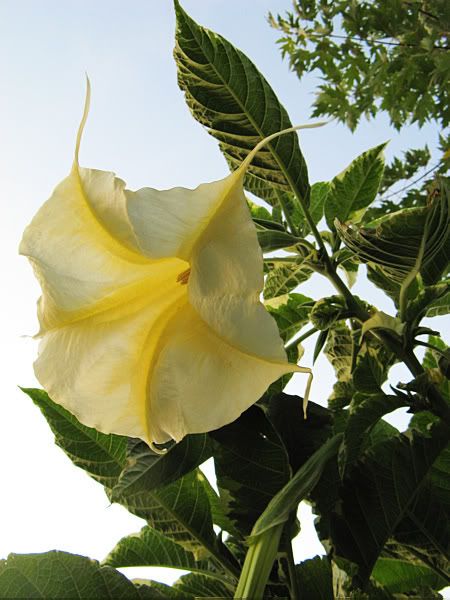
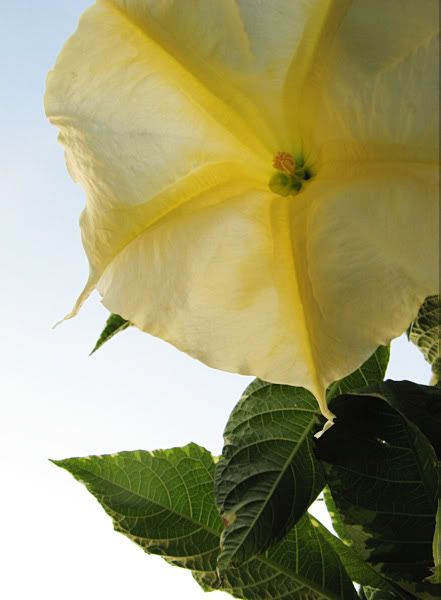
But I'm also not willing to lose most of them. Take the brugmansia, for instance. I raised nearly all of them from sticks that someone sent to me. They're white, pink, peach, and yellow and they smell heavenly - like some girly soap. Last summer, we decided to plant some of them in the ground and they grew much larger, so we did the same this year.

Oh boy.

Last year, Mom had given me a variegated brug that someone had given her. I already had one, but it was much smaller. I didn't get it until fall, so it didn't spend much time outside and then when I took it to the basement, it did okay, except that by spring, it had lost almost all its foliage. That was okay though, because experience taught me that they'll do that, and then in the spring will sprout new leaves.

We took that brugmansia outside this spring and planted it in the new part of Max's Garden, which had freshly-amended soil and was in full sun, which brugs like. We watered it well, since they like that, too, and it grew and flourished. We didn't really notice how much until this week, when it was time to dig it and pot it up for winter.

Our brugmansia plant had turned into a tree. We really hadn't noticed. It's kind of like your kids. Now what??? First, to find a pot large enough to hold it. Check. Second, get that big boy dug up. Uh, check. (She grunts.) Third, lift it out and stuff it into the not-really-big-enough pot. I could never have done this by myself without killing the thing. Romie helped me and its future is yet to be determined, but so far so good and we've got our fingers crossed.


In the meantime, it's residing in the living room, with a southern window exposure. I'm pouring copious amounts of water into the pot and it's lapping it all up like a thirsty camel. It's also blooming like there's no tomorrow. I counted 88 flowers, all in various stages of bloom, and I'm sure I missed some. EIGHTY-EIGHT! It lost several, too, in the transplant. Unbelievable, for what's supposed to be a houseplant for me.

But the best part is the smell. Oh. My. Gosh. Brugmansias have their strongest scent at night. You'd think maybe it was only this way if it's outside, but it's the same when they're in the house. You can smell it all over the house, and we have a two-story house. No need for plug-ins with this in bloom!

Eventually, the brugmansia will retire to the basement for the bulk of the winter, because it will lose its flowers and foliage. I'll reduce the watering and wait for spring. We've already decided that we don't dare plant it in the ground next year or we'll never be able to get it out and it will die. I could take cuttings or prune it back, but it has such a nice form now, I don't want to mess with that.

About the other indoor plants that have been outside all summer - the orchids are now in, as are the Abutilons and tropical hibiscus. The two bougainvillea have been potted up and brought in. These were beautiful small shrubby plants this summer, but we were disappointed that neither of them bloomed this year. 'Imperial Delight' was just gorgeous last summer and this year was just as dry, which promotes blooming. Maybe I watered them a little too much.

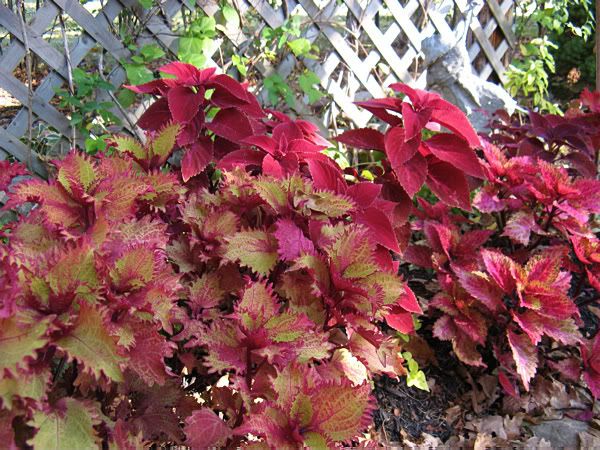
There are still some to bring in and I have to decide whether or not I'm going to pot up the coleus. They are such gorgeous, rich colors and very lush. I've taken cuttings, but the main plants are so nice, I hate to let them succumb to the cold. The weather report tells me I've got a few days to decide.


EDIT: I spoke too soon...

HIGH PRESSURE WILL BRING CLEARING SKIES AND LIGHT WINDS TO THE AREA TONIGHT. AREAS OF FROST ARE EXPECTED OVERNIGHT ESPECIALLY EAST OF HIGHWAY 131 IN MICHIGAN AND EAST OF HIGHWAY 15 IN INDIANA.

THE FROST ADVISORY REMAINS IN EFFECT FROM 2 AM TO 8 AM EDT SUNDAY.

A FROST ADVISORY MEANS THAT FROST IS EXPECTED. SENSITIVE OUTDOOR PLANTS MAY BE KILLED IF LEFT UNCOVERED.

Thursday, October 16, 2008

October's Blooming!


There's still a fair amount of color in the garden, thanks to the unseasonably warm fall we're having. Over the weekend, we broke an old record high temperature. Sunday's previous record high was 83° and we reached 87°!

Though we had a couple of light frosts at the beginning of the month, we've yet to have anything that was damaging to any of the plants.
Some of the perennials have foliage that is turning yellow, but others seem as if they are laughing in the face of the approaching cold weather. I snapped some photos of many of the blooming beauties still present.

Each year, I save the seed from the marigolds for the next year. Right now, the bees are really enjoying them!


'Rhumba' mums are a gorgeous coral color.


Xeranthemum annuum was a new annual for me, and I will definitely grow them again next year. Once they started blooming, they've never stopped, even though I didn't do any deadheading.


Though the foliage doesn't look exactly healthy on this Spanish Flag annual vine ( Ipomoea lobata), the blooms are gorgeous and plentiful. I hope the frost holds off long enough for me to get seeds for next year.


'Clara Curtis' mums are in full bloom.


These are the Coreopsis 'Limerock Dream', which are the most beautiful color of Coreopsis I've ever seen. They're a tender perennial though, being only hardy to zone 7. I'm doing an experiment by planting them in a microclimate at the south of our family room, which is also protected from the west wind, making it at least a zone 6. I plan to also cut the bottoms out of some black plastic pots and put them around them and mulch them heavily to see if I can winter them over.


The white Cosmos are blooming like crazy and the bees are loving them.


Though it is troubled by powdery mildew, the Honeysuckle (Lonicera x brownii 'Dropmore Scarlet') is still producing some nice blooms.


I had great success with the Scotch Heather (Calluna vulgaris 'Robert Chapman') last year, so added another variety of Heather. No identifying tag on these though.


The Convolvulus I grew from seed struggled this year, unlike last year, but it managed to eke out a few small vibrant blooms. That's Echinacea 'Twilight' in the background.


Ornamental strawberry (Fragaria x ananassa 'Pink Panda') is growing by leaps and bounds and producing blossoms and berries, even now. And wow, do they ever taste good! Just like the wild ones I used to pick as a kid!


The Plumbago (Ceratostigma plumbaginoides) has turned a beautiful shade of pink for fall, while blooming its true-blue flowers.


Another annual planted by seed - Snapdragons (Antirrhinum majus) - finally decided to bloom over the weekend, for the first time since planting the seed this spring!


It's easy to see why Sedum sieboldii is called October Daphne. This is really its time to shine.


This Calendula officinalis is one that I grow each year from the previous year's seed. Every year produces many different shades of yellow, orange, and a pinkish shaded one.


Knautia macedonica


One of my new Japanese Anemones - (Anemone x hybrida 'Party Dress')


I love this annual - Scarlet Tassel Flower (Emilia coccinea) - but hate the beetle that's shown here. They like to eat EVERYTHING. I can see that this annual will self-seed, because it's already doing that. This is continually-blooming annual that just gets better and better as summer and fall wear on - deadheaded or not!


This is my third attempt at growing Japanese Anemone 'Whirlwind'. It's done better than any of the previously planted ones, so maybe the third time's a charm?


The Delphinium elatum ('Magic Fountain') just keeps on going...


Endless Summer Hydrangea macrophylla 'Blushing Bride' was my best bloomer of the hydrangeas this summer. It truly was always in bloom, as was my original Endless Summer 'Bailmer'. This bloom just opened this week! You can see earlier blooms that have turned papery and pink on the same plant.


Other plants in bloom at the moment are:

  • Verbena bonariensis
  • African Daisies (Osteospermum)
  • Wave™ Petunias
  • Gaillardia (several different cultivars)
  • Tropical Milkweed (Asclepias currasavica)
  • Roses - 'Cinco de Mayo', 'Lavaglut', 'About Face', 'Memorial Day', several miniatures
  • Geum coccineum 'Cooky'
  • Morning Glories 'Chocolate' and 'Blue Star'
  • Seed dahlias
  • Oxalis deppei
  • Pelargonium 'Mr. Wren' and 'Red Happy Thoughts'
  • Chinese Forget-Me-Not (Cynoglossum amabile)
  • Lavender (Lavandula)
  • Zinnia angustifolia
  • Zinnia 'Profusion Apricot' and 'Profusion Fire'
  • Zinnia 'Chippendale'
  • Cosmos sulphureus
  • Corydalis 'Berry Exciting'
  • Obedient Plant (Physostegia virginiana)
  • Annual Candytuft (Iberis umbellata)
  • Cleome (self-seeded plants from those grown two years ago!)
  • Bachelor's Button (Centaurea cyanus)
  • Globe Amaranth (Gomphrena globosa)
  • German Catchfly (Viscaria oculata)
  • Yarrow (Achillea millefolium)
  • Sweet Pea
  • Dianthus
  • Tropical Hibiscus
  • Heliotrope (Heliotropium arborescens 'Fragrant Delight')
  • Gazania
  • Love-in-a-Puff (Cardiospermum halicacabum)
  • Love-in-a-Mist (Nigella damascena)

Somehow, I have a feeling that next month the garden won't be as freely giving of its blooms. But for now, we'll enjoy the bounty!


Tuesday, October 14, 2008

L-O-L-A Lola


It's official, as of this morning. We have agreed to a reciprocal adoption. Remember the skinny black female stray cat that magically appeared here a few months ago? Her first vet visit (that we know of) was today, with the first order of business being to get tested for feline leukemia. Thankfully, it was negative. We did not want a repeat of our experience with Barney. :-(

For some reason, we thought Lola was less than a year old, maybe because of her initial petite stature. (The poor thing was starving!) We had noticed the notches in the edges of her ears, which might indicate she had some age to her, but still we thought she was youngish.


We should have checked her teeth. (I'm so embarrassed, being a dental hygienist and all!) She has a fair amount of calculus (tartar) on her molars, indicating she's not a kitten. The vet estimates that she's 3-4 years old. I wish she could tell us how old she is, where she came from, whether she's had any kittens before, etc.

I told him that we had suspected she was pregnant when she first arrived, due to the size of her belly, but no other symptoms were present and after two months had passed with no kittens, we rethought things. Maybe her belly was enlarged due to malnutrition? His verdict - it's probably due to her being full of worms. (Ewww.)

So the first order of business was to deworm her, which involved a pill and a half that thankfully, Dr. DuVall gave her. Giving a pill to a cat is tricky and Lola took it like the cat she is. Then she got her first set of vaccines - one for feline leukemia and one for distemper. She seems to be pretty healthy (other than the worms) and weighed in at a whopping 8.8 pounds, which is probably twice what she weighed when she first came around.
Because we don't want any kittens - heaven knows we don't need any more cats - she will make a return trip to the vet on Thursday, in preparation for being spayed on Friday.

She's finding her place among the resident cats, letting out a loud meow if one gets a little too friendly for her taste. She never growls at us and is turning out to be our shadow if we're working in the yard. Hopefully, she'll end up being a nice addition to the family. So far, so good!

Official cat population at Our Little Acre: 9
Unofficial cat population at Our Little Acre:
12 (includes Tiger, the neighbor cat, who apparently would rather play at our house)

Monday, October 13, 2008

I Forgot My Camera


I like to use photos when I make a blog entry. I like to see them in other blogs and they usually help get the message across. But this time, I'm begging off. There are no pictures. Not the photographical kind anyway. Let me try and paint a picture for you with words, if I can...

It's dark outside my window right now. Half an hour ago, it wasn't. I'd called my neighbor to see if she wanted to go for a short walk down to the bridge and back, but she's battling cancer and she'd not had a good day. Some other time, we'll walk together.

Romie said he'd go. He's always up for a walk or a bike ride. That's what made him such a good running partner, back when I was allowed to run. Even when the eye doctor slowed me to a walk, he'd ride his bike beside me because he just couldn't keep up with me walking, even though his legs are longer.

For a second, I thought about taking my camera. You just never know when you might see something you want to take a picture of, and if you don't have it, you berate yourself, mumbling, "You know better..." But I didn't. The batteries were nearly dead, and the memory card was full. So it stayed on the table as we walked out the door.

We're enjoying beautiful, unseasonably warm autumn days now. Yesterday, we broke the old record of 83° with a high of 87°. Today was nearly a carbon copy. As I stood watering the thirsty plants earlier today (since this is The Land That Rain Forgot), I wished for a breeze to cool me.

The first thing we noticed as we headed south down our road was the sky. The sun had set, but the sky was still as blue as if it were the middle of the afternoon. Swirls of cirrus clouds streaked across, painted ever so slightly pink from the sun's reflection. Jet streams criss-crossed the blue parts, and the moon - two days from being full - was hazed by the thin clouds. A lone star shone brightly, and then we thought it must be Jupiter, since it's always so prominent as it makes its way acros the southern sky this time of year.

We approached the cemetery and Romie remarked, "Look at all the different colors of green there. It looks like 3-D." I rolled my eyes and giggled a little bit as I replied, "It is 3-D," but I knew what he meant. It was so...dimensional. So many shades of the same color. It's fall - a time of reds, oranges, yellows - yet even the greens were putting on a show for us.

As the darkness approached from the east and the blue sky was becoming indigo, the pink deepened to rose and the lightness in the sky to our right illuminated the yellow trees, providing stark contrast. And then there they were - two white-tailed deer in the middle of the field. They stared at us for a couple of moments before turning tail and bounding away for the cover of a nearby patch of woods.

With corn in the fields, they venture out in search of a snack, but the sound of the combine in the distance reminded us that soon their cover would be blown and with deer hunting season approaching, they would need to be more careful. With so many yellows and light browns in the landscape, if you weren't looking for them, you wouldn't have noticed them, but Romie had told me about seeing them yesterday, too.

Once they reached the woods, out of our view, it was then that we heard our old friend, Hootie. For the past several years, there's been a Great Horned Owl that haunts this woods and occasionally, he visits our big oak trees in our yard. When he hoots that close to the house, you'd better not plan on sleeping. But tonight he was far enough away to sound romantic and soothing.

In the distance, we could see the ground fog forming from the dust created by that combine as he takes off a field of beans about half a mile away. We could smell it too and I wondered if it would bother Romie's allergies. It gave an ethereal look to the landscape.

As we crossed the bridge, the creek has just enough water in it to reflect the painting in the sky and I once again wished my camera were in my hand. The water is still, as if the creek is doing its best to hang on to the small amount of moisture it has. Evidence of wildlife coming to its edges to drink at an earlier time is imprinted in the sand.

We rounded the slight curve and felt a current of warm air from the woods as we continued down the road. "A warm spot," we said, as we've done many times before on these walks. Why do we mention it aloud each time? Maybe because it's somehow comforting to know that we both experienced it. It's literally a warm fuzzy shared.

It's getting darker, and we know we should turn around and head for home. Though our road isn't one that's heavily traveled, it's dark enough now that it really isn't safe to be walking on the road. Yet we're so taken by the volume of beauty we're experiencing all at once, that without one or the other saying it, we fear that somehow turning around and going back will break the spell. But we made the turn and headed back north.

Just then, we heard voices and turned around to see three people on bicycles turn the corner behind us. We'd been oblivious to them just moments before, when they must have been in our direct line of sight. But there was too much for us to take in, and it wasn't over yet!

On our left, down in a deep ditch, the apple tree that grew wild, still held some red apples. We'd noticed it for the very first time just weeks ago, which struck both of us as strange, since we've been walking this road for more than 31 years. How could we have missed it all this time? But it's nice to know that our eyes are still opened to new things around us that have been there all the time.

The patch of woods into which the two deer had darted earlier was about twenty shades of gold (at least), and the yellow sign that warned of a curve ahead blended into the landscape. The 'S' on the sign foretold not only of a curve in the road, but serendipitously also of the ones on the road, put there earlier by a fishtailing car.

We were in full sensory mode now. It was as if once our antennae were up and receiving, there were more and more signals coming in. The crickets chirping, the scent of beans switching over to corn as we passed the drying stalks, the silhouettes of the mosquitoes swarming just above our heads, and there - once again - the two deer had emerged from the woods to chance another bite of field corn. They had their radar turned on too, hearing us as we talked quietly about them, and they were gone in a flash. They didn't know we only wanted to admire their beauty, but we counted ourselves lucky that we got to see them at all.

We neared home, and gave a nod to the neighbor's cat, which we've dubbed Mr. Ugly. (We don't know its real name, but it's so ugly, it's cute, and I secretly hope one just like it shows up here someday.) Just ahead, we saw a couple of our own kitties - Boo, then Sunny - walking to meet us, as is usually the case when we return home from these walks. We always smile, because we like to think they missed us and that their meows are telling us so.

I mentioned what an overload our senses have taken with this little jaunt. Sight. Hearing. Touch. Smell. Only taste was missing. I grabbed Romie's hand and led him to the back of Our Little Acre. I had the perfect ending in mind, but kept silent. When we came to the back of the property, I reached up and plucked a ripe, red apple from our tree and handed it to him. The crack of his bite into it told me what I already knew - mmmmm...just right. We shared that 'Red Delicious' apple and this time, I think God was pleased.

He's given us so much, hasn't He? In spite of the world economic situation and the chaos that accompanies an election year, He still finds ways to tell us that He's in His heaven and all's right with the world.

And though I don't like what is coming - winter - God spoke to us in a way that He knew we would understand. When the snow bites our cheeks in the deep of February, we will remember this day, this walk, and all that we experienced.


Still, a camera would have been nice.


Friday, October 10, 2008

A Peek Into My Kitchen


I hate cooking. I love gardening. So it probably comes as no surprise that my kitchen always looks like this in September and October:


Romie said the other night, "Is this what's for supper?"

He's so funny.


(HINT: Click on photo to see a larger version and you'll see all kinds of seedheads and seeds, loose and in various containers.)

It's Berry Exciting!


Bloom time is listed as spring and early summer, and don't we wish that's what it was! But my 'Berry Exciting' Corydalis is blooming now for the first time since it was planted in late spring. It was very, very small when I received it and I even wondered if it would survive at all, but slowly, it has increased in size with faithful watering throughout our dry summer, and now it's blooming.

I have another Corydalis (sempervirens - also called Rock Harlequin) that I purchased this year, too, and I'm underwhelmed with it, although I do love its greyish foliage. The blooms are yellow and pink and quite small and there's nothing really remarkable about it. As summer wore on, it declined. Not going dormant really - in fact, it produced seed pods - but not vigorous by any means. I have read that it self-seeds to the point of being a nuisance. We shall see. But this 'Berry Exciting' is gorgeous and only got better as time went on.

Its fern-like foliage is a unique shade of chartreuse with dark edges and it is a graceful addition to the part-shade or sunny garden. The deep plum flowers are a bonus, really. And guess what? They're fragrant. To me, they smell nearly identical to Lily-of-the-Valley, a scent I love.

Corydalis 'Berry Exciting' is supposed to be hardy to zone 5 (I'm in 5b), and I'm hoping this proves to be true, because this is one addition to the gardens that's a keeper.


_____________________
Photo of Corydalis sempervirens from Terrapin Gardens.

Wednesday, October 8, 2008

The Secret of Hardy Mums


I've said before that I love mums, but in the past the mums must not have loved me. I've bought them, planted them, and enjoyed their lovely blooms at a time of year when there isn't a great lot of color in the garden. Then spring comes, and they don't. I remember two autumns ago when I bought a lot of the Prophet Series mums (by Yoder Brothers) and lost every single one of them.

Ouch.

I transferred my affections to asters, and while I do love them, they aren't mums. But I'm not a quitter, and I usually get what I want.

And I. Want. Mums.

So I did some research. I can be taught, and I just knew there was some way to grow beautiful mums for more than one season. I have seen many people do it without even trying, so there must be some way for me to do it, too.

I will say that I've had great success with certain types of mums. Those that are labeled as Dendranthema work well for me. They're usually more of a daisy-type mum and that's okay with me, because I like daisies very much and with them coming in all sorts of colors, that's just all the better. 'Clara Curtis' and 'Bolero' are two that fall into that category. And they spread quickly.

'Clara Curtis'

I have read that Dendranthema is the formerly correct botanical name for what is now classified as Chrysanthemum, but I have found that the mums labeled Dendranthema look different, as I've said. I don't really know what to say about that. I'd like to hear from someone in the know as to why I'm successful with 'Clara Curtis' but not so much with the plain old garden mums.

Those Prophet Series mums are supposed to be fairly hardy, so why weren't they hardy for me? What was I doing wrong? I longed for their wide variation in colors and their volumes of blooms.

This year I saw some Belgian mums. What makes these different or special? I was in a Meijer store and overheard a woman asking the help about them. They mentioned that they were supposed to be a little hardier. So of course, I came home and checked them out online.

Hardiness notwithstanding, these mums are known for their number of blooms. A cushion-type, they've got hundreds on one plant, though they're smaller in size. The stems are stronger, too. How many times have you broken a stem while planting mums? Belgian mums can take more abuse. I read too, that they can bloom in the spring as well. Trim off the spent blooms and then they'll bloom beautifully in the fall. No pinching back until the 4th of July for these either.

I bought one. We'll see how it does. All I really care about is the hardiness.

'High Regards'

But what about the mums I already have and the ones that I long to have? How to get them not to succumb to winter's icy grasp?

Besides making sure the mums I'm buying are indeed hardy garden mums and not the florist mums (which are not hardy here in Zone 5), here's the thing: They need good drainage. Yep. That's it. It's the number one reason for mum failure. They like rich soil, but they'll grow okay in poor dirt. You can fertilize them for more blooms, but they'll bloom very well without it. They like sun or partial shade, but they'll bloom some in full shade, too. But wet feet? They hate it.

This can be a bit tricky, I'm thinking, since they're relatively shallow-rooted. They like it moist right at the surface, but they don't like staying in a cold, wet hole during the winter. So last fall, I made sure I planted the mums my mom passed on to me in soil that I knew would drain well. Every single one of them returned this spring.

A couple more tips: Don't prune them back. The dead stems and foliage will help protect them during the winter. Select and plant them in the spring. This will give them a better chance to become established.


Buoyed by my success, I purchased more mums this spring and a few in late summer. They're strutting their stuff right now and I'm loving it. If they are still around next spring, it will be confirmation that I've conquered my mum difficulties. I think I see more mums in Our Little Acre's future!

'Bolero'

Monday, October 6, 2008

Where Do My Readers Live?


You may have noticed the counter on the left side of my blog - the black one with a white number and a red circle with a stick figure in it. That's a fun little application that lets me see how many people are viewing my site at one time. But it also lets me see where all the readers in the last 24 hours live. (Click on photo to enlarge.)


There's also a heat map showing where the concentration of viewers came from. Interesting that I live in the Midwestern United States and that's where most of my readers live. This being the internet and all, I didn't expect to see such a graphic clustering such as that.


At the time I captured this screen shot, there were three active readers. But just look at all the other locations where readers live! Just a smattering of those shown here:


  • Reykjavik, Iceland
  • Angra, Azores
  • Hanoi, Vietnam
  • Brezice, Slovenia
  • Kuwait
  • Nairobi, Kenya
  • Alexandria, Egypt
  • Viljande, Estonia
  • Tunapuna, Trinidad & Tobago
  • Soyapango, El Salvador
  • Kuala Lumpur, Malaysia
  • Calama, Chile
  • Zanjan, Iran

* cue It's a Small World music *

If you're interested in getting this free application for your own web site or blog, just visit who's.amung.us.


Women in the Outdoors


A few months ago, I was contacted regarding teaching a class about geocaching for a Women in the Outdoors event to be held at Camp Clay near Van Wert. Since it's a hobby of ours that we've enjoyed since early 2004, I felt this was a way of giving back to the community by introducing it to others. I asked my partner-in-crime, Marsha, if she would help me and she enthusiastically agreed.

Women in the Outdoors is an outreach program of the National Wild Turkey Federation, centering on women who enjoy outdoors activities. They hold events all over the United States with the purpose of promoting and introducing various activities to women. Saturday's event was the first time it was held in Van Wert County.

In addition to geocaching, there were classes offered in archery, fly-fishing, canoeing, pottery throwing, making a birdhouse from a gourd, wall climbing, outdoor cooking, walk in the wild, hunting, and bird watching. As instructors, we were allowed to sit in on any class when we weren't teaching.


Our class was one of the first of the day, situated near Rotary Lake. Since we'd had a light frost the night before, there was a beautiful mist coming off the lake.


The ducklings were just sure we had food for them and followed us around as we got prepared for our class. When they found we didn't have any, they stuck around and begged from our students. They were so cute and I loved the whistling sounds they made as they waddled about.


We had hidden two sample caches for the day - one in a Tupperware container in the woods there and a microcache inside one of the tractor tires embedded in the ground at the south edge of the property.

Marsha and I hoped we had done a good job of explaining the basics of geocaching as well as how much fun we have as two girlfriends setting out on an adventure. Our students were great, asking good questions, and we were told later that we'd converted at least two of them, judging from conversations that were overheard after the class.

As Marsha and I were walking back to our cars, we noticed someone go flying by to our left, in the treetops. WHAT??? They had a ZIP LINE??? Oh yeah! I turned to Marsha and announced that I was doing that. She had to leave, so we said our goodbyes, then I headed back towards this zip line thing.


The deal was that you had to climb the wall, up to the platform where you took off on the zip line. Piece of cake, right? HA! It would have been a lot easier if every one of the handholds were able to be fully grasped by your fingers, but some of them are merely roundish bumps and some only have holes for you to put your fingers into. I was thankful for the tether, just in case I lost my grip.


Once I made it to the top, then I prepared for the zip line. Not scary really, but it did give a thrill when I leaned forward off the platform and then again when I rebounded upwards after the initial drop. It was a feeling of being completely weightless, but that only lasted an instant and then the ride to the other pole was just as awesome as I'd anticipated. FUN, FUN, FUN!!!


Time for lunch. We had homemade vegetable soup, homemade chili made with venison, shaved turkey sandwiches, apples from Adam's Apples orchard across the road, potato chips, homemade cookies and glazed Chex mix. Those who had taken the cooking class brought their cooked dishes to the table as well, so I got to taste the roasted salmon, which was delicious.

I got to chat with Dr. John Perchalski and his wife, who are active in the Upper Maumee Valley Naturalists' Club. We discussed bird sightings and I learned that it is illegal to gather any feathers from most birds, specifically a Great Horned Owl. We've got one of those that frequents the woods near us and quite often the large oaks in our yard. They shared a set of CDs which have owl sounds and warbler bird sounds, and are available from the Ohio Division of Wildlife.

What a fun day this was! Hopefully, they'll have another Women in the Outdoors event next year with even more in attendance.

______________
*Photos of me on the climbing wall and zip line were taken by Shannon Babcock.

Thursday, October 2, 2008

Mosquitoes Are Back, and I've Got Just the Thing!


As I think back to our rainy spring, I long for the lush greenness in the garden at that time. But one thing I haven't missed over the course of our hot, dry summer is the mosquitoes.

In the spring, they were so bad you couldn't go out at ANY time of the day without being attacked by several mosquitoes in the span of just a few minutes. There were, of course, things to be done in the gardens, so I could be seen doing the "Skeeter Dance" in an effort to complete my tasks without being bitten.

Without rain, the mosquitoes all but disappeared. But cooler temperatures have taken over and we've gotten some rain in recent weeks, so guess what? They're ba-a-a-ck!


This time, I'm armed.

In the past, I have used citronella candles, spray foggers, a big bug zapper, and bug spray on my person. The candles smell quite nice, but apparently the mosquitoes are willing to fly through the wafting scent to get to me. The foggers are just plain nasty; I feel like I need to wear a protective mask to keep from being fogged myself. And I really hate wearing bug spray, in spite of the newer dry sprays and improved scents. I just don't like the idea of putting that poison on my skin.


The Mosquito 86 System that I tested recently is my weapon of choice against these disease-carrying blood suckers. It uses a solution known as Agent E that you mix with water and carry in a small tank as a backpack. The delivery system channels the solution in the tank through clear tubing to the tube attachment on the end of a leaf blower. Turn on the blower, move a little switch, and you're in business.

You are probably thinking that this sounds as if it works like a fogger. Not so. By making use of the strong force of air that comes out of the blower, the solution is dispersed in a controlled spray and you can direct it very accurately just where you want it. This is helpful in a couple of ways:

  1. There is no airborne mist for you to breathe in.
  2. Better accuracy allows you to put the agent just where you want it and not where you don't.
The Mosquito 86 system can be purchased in several different models. If you already own a leaf blower, you can purchase the attachment that fits over 50 different leaf and lawn blowers. If you don't own a leaf blower, you can purchase a unit that contains both the blower and the appropriate attachment, either in electric or gas-powered models.

I tested the electric model, which I chose because they are generally lighter in weight. There is that matter of the electrical cord (not included), but for the areas where I will be using it, there are outlets within reach, using a 50-foot cord. We spend most of our leisure time in the area adjacent to the house, either on the patio, the deck, or the front porch. The unit itself weighs 6.6 pounds and comes with a two-year warranty.


The solution is provided in a concentrate and you mix it with water in the backpack tank. The active ingredient is permethrin* and it is effective not only on mosquitoes, but also ants, biting flies, fleas, and ticks. It is safe for use around pets and children, once the solution has dried. One application lasts a week and is recommended that you reapply it after a rain. It also kills bees if you spray it directly on them, it is advised that you don't apply it while they are actively feeding. Mosquitoes are generally most active at dusk and later, so that's the ideal time to apply.


Since permethrin* is toxic to cats, this is my only concern, although slight, because as you know, we have several of them here at Our Little Acre. But it's easy enough to keep them in until the spraying is done and dry. The concentration used with the Mosquito 86 system is not at a level known to be harmful to cats or other animals. As with any chemical, care must be taken to use it as directed and with respect, to avoid adverse effects.


I was pretty pleased with my Mosquito 86 and think it's an innovative idea for applying a mosquito-killing agent. As one who seemingly attracts these biting buggers, I now have an effective and easy method of keeping them away from our favorite yard hangouts. With West Nile Virus being reported in our area, mosquitoes do present a very real risk, so I welcome a control product such as this.


More information about the Mosquito 86 can be found at their web site.


*Permethrin is a common synthetic chemical, widely used as an insecticide and acaricide and as an insect repellent. It belongs to the family of synthetic chemicals called pyrethroids and functions as a neurotoxin, affecting neuron membranes by prolonging sodium channel activation. It is not known to harm most mammals or birds. It generally has a low mammalian toxicity and is poorly absorbed by skin. (Wikipedia)


_________________
The product or merchandise being reviewed in this blog post was the sole compensation for testing and reviewing the product. All opinions expressed here are mine, with no suggestions whatsoever by the manufacturer or distributor. If I like it, I'll say so. If I don't, I'll say that, too.

Wednesday, October 1, 2008

Farewell To Summer


We had gone to bed in summer
and we awoke in autumn;
for summer passes into autumn
in some imaginable point of time,
like the turning of a leaf.


– Henry David Thoreau


It's been just like that. One day I'm sweating in a tank top, the next I'm reaching for the sweatshirt. Not that it's a bad thing, for I dearly love the crisp, cool nights of fall and the deep blue cloudless afternoon skies. As I work in the garden or walk down the road, I take a moment and close my eyes so I can focus on how good the sun feels on my skin. I want to etch it in my memory for later recall, when winter's blustery winds are cutting through me.

The chores in the garden have switched gears. I no longer worry about deadheading spent blooms. I now watch as they fade and turn crispy brown, then collect their seeds for planting next spring, or leave them as food for the birds. The roses have been pruned just enough so that winter winds don't whip them about. Seasoned compost has been spread over the vegetable garden and annuals that have lived good summer lives have been added to the compost bin for next year's use.


There are many other tasks to be completed in the coming weeks, as first frost looms near:

  • pot up the brugmansias and bougainvilleas for bringing inside
  • dig up tender bulbs for winter storage
  • plant garlic and bulbs for spring
  • mulching
  • more seed collecting

I like to look back on the summer's garden at this time, measuring the successes and learning from the failures. As always, the spring and summer seasons passed so quickly, but we are fortunate to have cameras to capture the beauty that is now just a memory...


It was a good year.


blogger templates | Make Money Online