Saturday, June 16, 2012

Can't See the Forest For the Peas


No  matter what you do in life nor how much you enjoy doing it, there are always those teeny little Murphy's Law irritations that are slightly... well... irritating. I love to garden and for the most part, it's pure joy. Even weeding. But...

I'm growing peas. Sugar snaps this time around, because as much as I love fresh shelled peas, it just takes too much work to get them ready to eat. It takes longer to shell them than it does to cook and eat them! So sugar snaps are just the ticket because you can have your peas and eat the pods too.

The first picking came a couple of weeks ago. We ate some of them raw, as we walked to the house from the garden. If you've never eaten raw peas fresh out of the garden, put that on your bucket list.
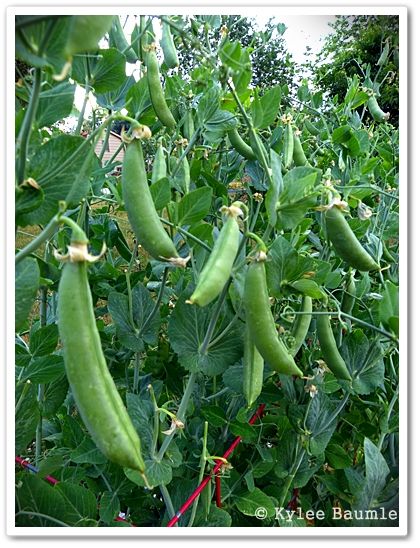

So I carefully picked pea pods that were just right - not too fat and not too flat - and after about 15 minutes, I'd picked all of them that were ready. Or so I thought. I started to walk back up to the house and something caught my eye - one more obesely fat pea pod. I snatched it off the vine and once again headed to the house.

The next evening, there were more peas to pick. The hot weather, coupled with supplemental watering had them maturing quickly. I picked some more and thought I'd gotten them all when once again, I found a pod or two that were past their prime. How does that happen?? I had concentrated intently on not missing any.
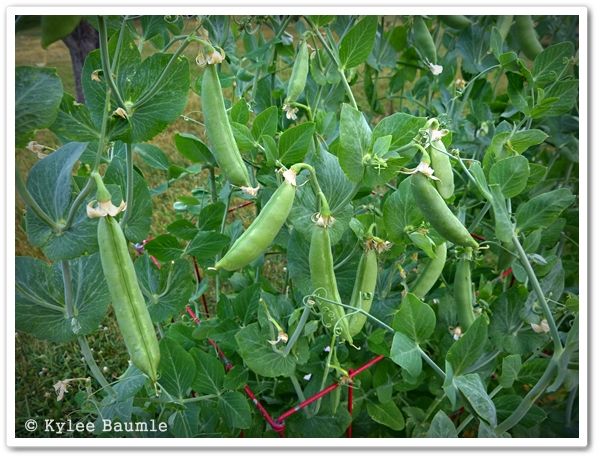

It happens with green beans, too. I'll pick the plants clean, but the next time I go to pick, there are always a few that are bursting at the seams and you just know they were prime for picking three days before.

It's a camouflage issue and just part of the gardening game, but there is a solution - at least for the beans. Grow purple ones that you can't miss!
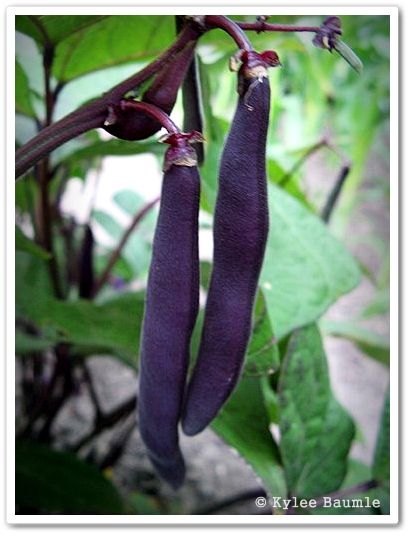
'Royal Burgundy'

Are there purple peas, too?

Why yes. Yes, there are...
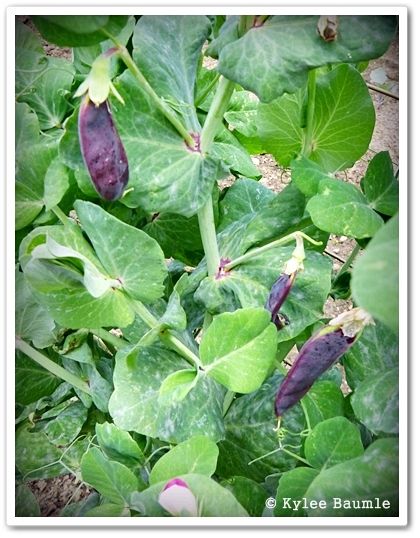
Purple-podded peas in P. Allen Smith's vegetable garden
at Moss Mountain Farm.


Thursday, June 14, 2012

An Ebelskiver Sunday


Until Memorial Day weekend of this year, I'd never even heard of an ebelskiver, much less eaten one. That's not surprising, in a way, because I'm somewhat of a picky eater, I don't particularly enjoy cooking, and I haven't been all that adventurous in either department in the past. I am the proud owner of a raclette grill though, and have been for about 25 years. It's one of our family's favorite meals.

As I was going through emails at the end of last month, there were all those holiday sales and being one who hates missing a good bargain, I skimmed through until this caught my eye:


Williams-Sonoma was tempting me. I bit.

If you've lived a barren and deprived life like I have, and you didn't know what an ebelskiver was either, here's Wikipedia's definition: Æbleskiver (Danish meaning apple slices (singular: æbleskive)) are traditional Danish pancakes in a distinctive shape of a sphere. Somewhat similar in texture to American pancakes crossed with a popover, æbleskiver are solid like a pancake but light and fluffy like a popover. The English language spelling is usually aebleskiver or ebleskiver. (Williams-Sonoma spells it "ebelskiver.") 

Sunday, we used the ebelskiver maker for the first time, and oh baby... Why these delicious little pancake balls had not entered my life before this, I have no idea, but thank you, Williams-Sonoma.

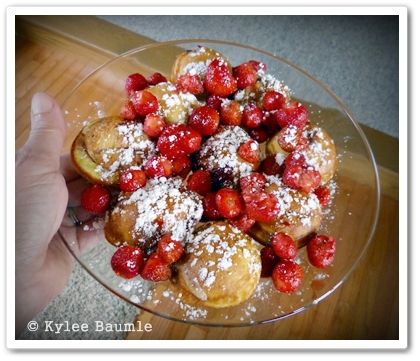
I'd also purchased the special ebelskiver pancake mix, so I stirred some up. To cook them, first a small chunk of butter was put in each well of the maker. Once that melted, I put two tablespoons of batter into each well, and then I added filling. We used fresh strawberries, but you can use jam, nuts, or whatever your little heart desires. An additional two tablespoons of batter was added to the top. When the sides began to pull away, it was time to turn the ebelskivers over to cook the other side. (This was easier than you might think.)

Once done,  I spooned more fresh strawberries over the top and sprinkled them with powdered sugar. Then we ate them. YUM!

My first ebelskivers!

Ebelskivers are best eaten freshly-made and warm, but leftovers kept in the refrigerator aren't too bad reheated or eaten cold either.


Wednesday, June 13, 2012

Wingthorn Rose is Something Special


I've been talking about roses lately - here and here - and last year I was introduced to a very special sort of rose when I attended the Garden Bloggers' Fling in Seattle. I'd never seen or even heard of the wingthorn rose before, but its appearance really got my attention.

It wasn't the blooms, in fact, it wasn't even blooming when I saw it. It wasn't the foliage, although it's rather beautiful, being almost fern-like. No, what I loved about it is the very thing my husband hates about roses - those thorns.

But these aren't just any thorns. When a rose goes by the common name of "wingthorn" you just know that there's got to be something special about its thorns.

When the sun backlights the red thorns of the wingthorn rose, it's just magical.
Rosa sericea var. ptericantha has more thorns than most roses, in fact, the stems can be downright hairy with them. And they're red. How cool is that? Red is my favorite color and these thorns are the most luscious shade of it. But it's only the newer canes that have the red thorns. Once they're there for a year or so, they turn brown, but there's no shortage of new canes if you keep it pruned, so you can enjoy those crimson thorns all season long.


The wingthorn is a species rose native to China that was introduced into the U.S. in 1890. It's hardy to Zone 6, and since I'm in Zone 5b, even with the new zoning map, I wondered if it would survive our winter. I wrapped it with a Plumstone ShrubJacket last fall to help it make it through. It turned out that we had a warmer than usual winter so the rose may have survived without the jacket anyway, but it certainly didn't hurt it to have the extra protection.

April 20, 2012


I got to see it bloom this spring, the only time it does so. The tiny white blooms are unremarkable, consisting of only four petals and total size of about one inch in diameter, but it thrilled me with those gorgeous red thorns that made me buy it in the first place.

Even with our droughtish spring, the wingthorn is thriving with only my occasional supplemental watering.


blogger templates | Make Money Online