Tuesday, June 25, 2019

That Article About Raising Monarchs


Here we go again. Another sensationalist headline of sorts has the monarch world in an uproar.  There's a study - a very limited study - that says that raising monarchs in captivity is detrimental to their navigational abilities. Because of this news release, I've been bombarded with questions as to what I think about it.

First of all, let me state my personal disclaimer. Though I try to keep up on the latest research and am constantly learning, I am not a biologist, entomologist, etc. I have a Science degree, but it's in Dental Hygiene. Do I use some of what I learned in my microbiology, anatomy, chemistry, and other related classes when it comes to my experience with monarchs? Certainly. Do I use principles from studies I was a part of when I worked for a dental research company? Of course. But I come at this issue from a limited perspective with respect to my focused formal secondary education.

Now, to the issue. Here is one version of the article that's causing so much buzz:


https://www.theatlantic.com/science/archive/2019/06/hand-reared-monarch-butterflies-dont-migrate/592423/


Here's a link to the study:  https://www.pnas.org/content/early/2019/06/18/1904690116

And here are some of my thoughts on the information in the articles being circulated in mainstream media:

A spined soldier bug takes a monarch
caterpillar as its lunch in my garden.

We know that in the wild, less than 5% of monarchs will survive from egg to adult. (This is fairly typical in the insect world.) Logic tells me that saving just one female saves not just her, but the 400+ eggs she will lay. Play that out exponentially and it's definitely worth considering that the population will increase, given the number of people who now raise them.

I have never advocated the mass raising of monarchs, for a number of reasons, but what do botanists do when they're trying to bring back a plant that's in danger of extinction? They enlist the help of others in growing it in various hospitable locations. Case in point: Solidago shortii. I personally took part in this effort through the Cincinnati Zoo's CREW program. (http://cincinnatizoo.org/conservation/crew/what-is-crew)


Solidago shortii
'Solar Cascade' was once endangered, but thanks to the CREW
program at the Cincinnati Zoo and Botanical Gardens, it is now available commercially.

I'm not saying that because it worked in the plant world, it will work in the insect world, but there is food for thought there.

I have several issues with the study as well as the article itself (including the headlines that the media puts out there with it), not all of which I'm willing to state publicly. If we were having this discussion in person, I would be more inclined to say them. But one of my reservations with it is already proving to be true. People are reading the widely spread articles, coming to their own conclusions, and spreading those conclusions, even if they aren't necessarily true.  

Another thought I had - and at this point, it's just a thought - how does this study affect all the studies of monarchs being raised in captivity in universities for research? Does this mean that the results there are not entirely valid because the monarchs aren't being raised in their natural environment? (Some are, but some are not, even though they try to mimic it.)


People are reading the widely spread articles, coming to their own conclusions from them, and spreading those conclusions, even if they aren't necessarily true. 

The article has some good information and raises some questions, mostly about commercial breeding, but it's premature to be putting it out there in the media as if it were absolutely proven. The article states that the limited study isn't conclusive, but that fact will get lost in the noise and won't always be included in the message that will be the takeaway. *sigh*


I think two important points need to be made:

  • If raising monarchs is how we have to "save" them, we aren't really saving them. This model isn't sustainable. However, it may help get them over the hump until such a time that their population has increased enough that their numbers are plentiful and self-sustaining.
     
  • Just as their lower numbers are a result of numerous factors that have caused it, a number of things can be done to reverse it. This is a good thing, since not everyone can do everything, but everyone can do something. The results are cumulative.

Personally, I think the most important things we can do is to increase habitat and reduce the use of chemicals. And just as important is increasing awareness by speaking up about the problems that pollinators face and how we can help them. 

"Each one teach one" can be our mantra. We all have a mouth, so let's put it to good use by spreading the word about strategies we know that help and not harm. 


EDITED TO ADD THIS COMMENTARY ON THE ARTICLE AND THE STUDY:

Later today, after I published this blog post, Angie Babbit, of Monarch Watch, so beautifully said what many of us feel in regard to rearing monarchs at home:

We need to focus on keeping people connected to the monarchs in a positive way that lends itself toward conservation. I got a letter from a woman today that said she has been rearing fewer than 100 monarchs a year for a while, and her entire neighborhood has started turning green spaces into habitat because she announces how many she's successfully released each year. Now she's read this news and wants to know if she's doing more harm than good.

Are we really going to tell her that her efforts to rally her neighborhood are misguided? Are we really going to tell people to stop bringing in caterpillars to show their grandchildren the miracle of metamorphosis? This is a sociological phenomenon that's tied to a biological phenomenon that's tied to conservation. A hands-off approach to conservation is going to kill conservation and send thousands of school kids into programs of virtual dissection kits and online atrophy-based education.

“In the end, we will conserve only what we love; we will love only what we understand and we will understand only what we are taught.” ― Baba Dioum

Sincerely,

Angie Babbit
Communications Coordinator
Monarch Watch
The University of Kansas


AND

In reponse to an organization writing to Dr. Karen Oberhauser, who was quoted in the news article:

I talked to the reporter about the inside rearing a fair amount, but he didn’t include that information in the article. It is important to note that the inside rearing in the experiment was done in incubators in which the experimenters could control temperature and light exactly. As a result, the monarchs were not exposed to any natural light or temperature fluctuations; the lights went on and off, and they were kept at a constant temperature. In your exhibit hall, there are windows and diurnal temperature fluctuations which provide exposure to more environmental cues. I’m actually not surprised that they didn’t migrate after being in an incubator. There are plenty of examples of monarchs collected at different stages of development, being reared inside, and successfully migrating.

While I think that the study was really interesting, I’m sorry that this feature of the rearing conditions was not included in the paper itself or in the media reviews.

In my opinion, what you are doing is great. We’re doing the same thing at the UW-Madison Arboretum.

All my best,
Karen


AND

From Dr. Orley "Chip" Taylor of Monarch Watch:


A response to the PNAS paper regarding captive-reared monarchs, by Dr. Chip Taylor
Yes, induction of a non-reproductive condition and migration is fragile. That is known. No one to my knowledge has been able to completely replicate the conditions that result in reproductive diapause and migration in the laboratory.

The system is resilient, complicated and still full of unexplained attributes – as well as unexplainable outcomes – e.g. indoor raised monarchs in FL that were tagged and released in San Antonio with 9 (not 5 as stated in the paper) recovered at the overwintering sites in Mexico. Those rearing conditions (12h day/night, 80F constant temps, with dim light through a small window in the door of the rearing room) fit none of the parameters suggested by experimentation or observation that are thought to lead to either diapause induction or migration.

One might get the impression from the paper that few reared, tagged and released monarchs reach the overwintering sites in Mexico. That is not the case, 33.5% of the recoveries in Mexico from 2004-2015 were of reared, tagged and released monarchs. Wild caught and tagged monarchs have a higher recovery rate 0.9% - vs – 0.5%. There are probably many reasons for this difference.

1. Reared butterflies tend to average smaller – putting them at a glide ratio disadvantage, etc.

2. Taggers tend to tag all monarchs they rear including some that obviously have a low probability of reaching Mexico due to size or condition.

3. The reared monarchs experience a wide range of conditions prior to maturity that may determine whether they are able to become non-reproductive or migrate.

4. Reared monarchs are often released late in the season which reduces the chance of reaching MX [Mexico] and many are reared in the east at latitudes and longitudes with low recovery rates by virtue of distance alone.

5. On the other hand wild caught individuals are in effect a pre-selected group having been on the wing for days or weeks before they were caught and tagged.

The bottom line here is that wild caught and reared monarchs are populations with different morphological and physiological characteristics and therefore different outcomes.

Some who rear/tag and release have figured this out and have increased their recovery rates by rearing monarchs outdoors on living plants with the intention of tagging only the largest and earliest of the monarchs to emerge in late August and early September.

The article gives the impression that many of those who rear, tag and release get their stock from breeders. That’s not the case.

A lot of the rearing appears to be inspired by what could be called “monarch rescue”. It is known and widely reported that 98-99% of all monarch eggs and larvae fail to become adults due to predation, parasitism and other causes. This observation has led many to “save” monarchs by collecting eggs and larvae and rearing them indoors, etc. Aside from enjoying the experience of rearing these interesting butterflies, many justify the practice with the supposition that their efforts are contributing to the population. While there is evidence that some of their efforts result in monarchs reaching MX, the idea that rearing, tagging and releasing monarch will lead to a significant increase in monarch numbers is misguided.

This paper will likely be used to denigrate commercial breeders, However, only one breeder is represented in this study – one who evidently maintains a continuous stock that is quite unique due to origins or inbreeding. There are only a few breeders who maintain monarchs throughout the year. Most start new stocks as early as possible each spring.


Thursday, September 27, 2018

Fall Clean-Up? It's Not What You Think


It's that time of year again. The garden is winding down, things are turning brown, and it's really tempting to just get rid of things that are looking less than pretty. I feel it, too. But in the last several years, I've gotten a different perspective on this fall clean-up thing, from hearing other people share their views on it, but also from being observant in my own garden.

First, I heard, "Leave your grasses and perennials for winter interest." No problem with the grasses, because yeah, they do look beautiful when they catch the snow and it's more fun to look out there and see something taller than my knees.


I heard them mention how seed heads, like those on coneflowers, feed birds and other wildlife, so I started to leave those kinds of things, because winters can be cruel. Heavy snows and frigid temperatures make it difficult for birds and animals to find food, which can be in short supply in the first place.

And then there are the leaves. We've got 100+ trees on Our Little Acre, with several of them being over 200 years old. That means we have a lot of leaves on the ground every fall and even into winter, since the largest trees are oaks. As anyone who has oaks knows, they lose leaves all winter long.

Even though we can't leave all those leaves all winter long, we started leaving a layer of them for both plant insulation and for the insects and other critters that use the leaf litter for winter protection.

These are all good reasons to not do a "scorched earth" method of fall clean-up. I do understand that it means more work in the spring, but from a human standpoint, it's a do it now or do it later kind of thing, not really adding any work to the grand scheme of things. We choose to do it later in an effort to help wildlife.

But the purpose of my post today is to focus on insects, specifically those that we love to see in our gardens in the summer. Did you know that a large number of them spend their winters right here and need the very things that gardeners may remove in the fall?

NEED.

Planting to attract butterflies and pollinators to our gardens is a thing. It's a really hot trend that I hope becomes commonplace, not just for environmentalists.


But it isn't enough to plant what they need during their breeding season. That's commendable, but what about the off season?  

Is it fair to attract them to our gardens and then sabotage our efforts - and their lives - by destroying what they need to complete their life cycle?

Not every insect or arthropod migrates. Many have the ability to lower the freezing point of their bodies and go into a state of diapause. Some can't survive, but they lay eggs that can. Some spend the winter in a pupal stage.

Let's look at these:


  • Lady beetles (ladybugs) - We have elevated ladybugs to their rightful place in the world of environmental sustainability. These small beetles overwinter as adults clustered together under leaf litter. I personally have encountered large numbers of them in spring. In fact, I try not to clear leaves away until I see them moving around and emerging on their own.


  • Swallowtails - These butterflies overwinter in their chrysalides and just because you've never seen them doesn't mean they aren't there. Camouflage is an important factor in their survival. Do you think the Eastern black swallowtails you've attracted to your garden in summer all leave your garden in winter?


    They lay their eggs on your dill, fennel, parsley, rue, and carrot tops. They eat those until they form their chrysalides nearby - in your garden, likely on stiff stems of plants.


  • Leafcutter bees - I personally love these guys. They're the ones that make the round circles in the leaves of some of your garden plants. I smile when I see that, because I know that my garden is helping a native pollinator. They take those leaf rounds back to line their nests, which are often in the hollow stems of plants. They often return to those nests to spend the winter.

Remember too, that even some of the insects that might be undesirable to you are food for those you do want. The food chain is real. The more you clean your gardens of healthy dead material, the more you're disrupting the natural life cycle of the ecosystem.

I'm not discouraging the removal of diseased plants and excessive leaf cover. I just want you to be aware of how many insects and other living things that are loved and important to us in summer, need your garden in winter, too.


Tuesday, September 18, 2018

Monarch Watch Speaks Out About Raising Monarchs at Home


https://monarchwatch.org/
The discussion regarding raising monarchs in the home continues, with Monarch Watch weighing in today about their position on the practice. Dr. Orley "Chip" Taylor, founder of Monarch Watch, and one of the most knowledgeable people on the planet in regard to monarchs, felt compelled to release this statement, which should be of comfort to those who choose to raise monarchs:


Date: Tue, 18 Sep 2018 16:51:02
From: "Taylor Jr, Orley R"
Subject: Rethinking captive rearing


Greetings: I wasn't going to comment publicly on the captive rearing issue. However, since some of you rear monarchs, and Emma Pelton has chosen to post the Xerces [Society] position on our Monarch Watch discussion list, I feel compelled to articulate our position at Monarch Watch along with the reasoning we use to justify our position. For those of you that don't know, the position adopted by Xerces and MJV [Monarch Joint Venture] has created quite a stir on various Facebook sites and more than one Blog.

Our position at Monarch Watch is that we neither encourage or discourage rearing. As I will try to make clear, this is a low priority issue. Further, the concerns are exaggerated and unsupported by data. 

Facts, Observations, Questions, Tagging and Priorities

Facts
Monarch numbers have been declining since the mid 2000s coincident with the adoption of herbicide tolerant crop lines that facilitated the use of glyphosate that all but eliminated milkweed from these row crops.

Habitat loss has been invoked, and supported by data, as the most likely cause of the decline. The alternative hypothesis that the decline is due to an increase in mortality during the migration is unsupported by data.

Habitat loss continues. Estimates are that we are losing 1 million acres of grassland each year and are likely losing at least another million acres due to development and other forms of land conversion.

There is no credible data suggesting that we are restoring habitat for monarchs and pollinators at a rate that matches these losses. In other words, monarchs are losing habitat as we argue about the merits of one detail or another.

Cerro Pelón monarch sanctuary in the state of Mexico, in Central Mexico
February 20, 2018
If my predictions come true, the overwintering population in Mexico will be approximately 5 hectares - maybe more. That translates to at least 60 million monarchs. This will be the largest population since 2008 and may be the last big population for another decade and maybe ever due to changing spring conditions in Texas and higher temperature in May and early June. If you remember the conditions during 2012, those are in our future and it's those conditions that were the precursor to the low monarch return in the spring of 2013 and the alarmingly low population (.67 hectares) that winter.

Monarch larval monitoring and other studies show that 98% of all eggs and larvae succumb to predators or other conditions. 

Observation 

Most of those advocating the reduction and even the cessation of all rearing are not engaged in monarch rearing. Those doing the rearing are being told that what they are doing will have negative consequences for the population. These admonitions are supported by strongly worded opinions and references to conditions that do not apply to the average person rearing monarchs, e.g. the argument about inbreeding and genetic declines. 

While there are lots of data that show that LONG TERM cultures of various species often lose fitness, this argument DOES NOT apply to those who simply collect eggs and caterpillars in their gardens or along roadsides or even those who breed monarchs for 1-2 generations. In fact, it's not even clear that it applies to monarchs. 

How many breeders maintain long term inbreed cultures? We don't know. 
How often do breeders refresh their stocks? We don't know but have been told that "refreshing" stocks is common, mostly from northern states. 
How many breeders rear more than two of three generations per year? We don't know. 

 What does any of that have to do with those who harvest monarch eggs and larvae in their gardens and natural areas for rearing and release? Zero. While many are dismayed by commercial releases of monarchs, it's not prohibited. These "do not rear" directives will not impact commercial releases but they have raised concerns by many lay persons who enjoy rearing monarchs.


Under magnification, Oe spores can be seen as tiny football-
shaped particles among the larger monarch scales that
cover a monarch's body.

The fact that 98% of the monarch immatures are consumed by predators and parasites inspires people to engage in "monarch rescue," that is, harvesting monarch eggs and larvae and rearing them both indoors and outdoors to "save" them from their usual fate. So, is it really a bad thing to do this? What are the risks? 

Yes, the spread of O.e. (Ophryocystis elektroscirrha) could be a risk but that is easy to avoid if the foliage is sanitized before being fed to the larvae. Monarchs to be released could also be checked for O.e. spores and some people do that. Interestingly, we have found that, if you collect all the 5th instar larvae and rear them through indoors, you can suppress the tachinid fly population.

As to whether monarchs should be reared with the goal of increasing the population, the reality is that such efforts are likely to have little or no impact on the overall population. To have a real impact on population growth, monarchs would have to be released in the RIGHT places at the RIGHT times early in the season rather than during the migration.

Questions
        

How many monarchs are reared and released by amateurs relative to the total monarchs in the migration - 40,000 or maybe 60,000? 

We don't know.


Where and when are these monarchs released? Does it make a difference?


I don't have time to elaborate, but the tagging data, as well as the seasonal dynamics, show that the impact associated with the when and where of releases varies greatly across the continent. In short, the outcomes of a thousand monarchs released at three widely (MN, ME, FL) different locations on the same day during the migration are likely to be very different. There are seasonal differences in outcomes as well. 


What happens if O.e. infested adult monarchs are released into the population?


The dangers of O.e. are reasonably clear and infested monarchs should NOT be released at any time. Most of the heavily infested monarchs have a reduced fitness and a low probability of getting to Mexico, let alone returning in the spring. Given that scenario, it's likely that most of the O.e. spores that persist in the population through the winter have been acquired by healthy monarchs through horizontal transfer - that is, the proximity of healthy monarchs to those infested with spores while clustered during the winter or even through contact at roosts through the fall migration. The clear message in these directives is that rearing needs to be conducted in a way that eliminates the release of O.e. infested butterflies.         

Do tagged monarchs have a reduced chance of making it to Mexico?


Tagging may or may not have an impact on whether monarchs get to Mexico. There has never been a fair test. If tagged and wild monarchs of the same age, sex and size distributions were released at the same date and same place, we could determine whether tagging impacted the ability to get to Mexico. (Assuming also that the monarchs were tagged according to our instructions).

Tropical milkweed
Asclepias curassavica
What we do know is that lots of reared and tagged monarchs make it to Mexico some having fed on non-native milkweeds such as Calotropis procera and C. gigantea (both species of giant milkweed) and the much maligned Asclepias curassavica (tropical milkweed).
        

Irrespective of the potential impact of tagging, the data from reared monarchs is quite valuable. Like the data from wild tagged monarchs, it tells us a great deal about the migration - the timing, the pace and the probability of reaching Mexico based on sex, geographic origins and date of tagging.

Further, the recovery of reared monarchs can be used as a control for isotope studies.


Given the habitat losses due to agricultural practices and the continuing loss of habitat, what should our priorities be if our goal is to sustain the monarch migration?


Habitat restoration has to be the number 1 priority. The "All hands on Deck" analysis indicated that we need to re-establish at least 1 BILLION milkweed stems mostly in the Upper Midwest to return the monarch numbers to an average of close to 6 hectares at the overwintering sites. That figure is based on an extinction analysis - that is, the probability of losing the migration due to a series of catastrophic events such as the winter storm of 2002 and 2004. That analysis was conservative in that the projections could only be made using past data and inferences based on those conditions. 

Unfortunately, conditions are changing and if the projections based on climate models come true, and that seems likely, the need to restore habitat is even greater than estimated. 

We have work to do and we need all hands on deck and that means that we need everyone who can to pitch in in any way they can. 

We need people to pass on their enthusiasm for monarchs and their concern for maintaining the migration.         


Should rearing be conducted with the goal of increasing the wild population?

Again, to be clear, at Monarch Watch we neither encourage nor discourage monarch rearing. Looking a the monarch population holistically - and from the standpoint of the year-to-year dynamics of a population that is governed largely by both temperatures, and other weather-related phenomena, as well as habitat limitations, rearing is a minor issue. 


_______________________________________ 


Orley R. "Chip" Taylor [chip@ku.edu]
Founder and Director of Monarch Watch; Professor Department of Ecology and Evolutionary Biology, University of Kansas, Lawrence, KS.
Trained as an insect ecologist, Chip Taylor has published papers on species assemblages, hybridization, reproductive biology, population dynamics and plant demographics and pollination. Starting in 1974, Chip Taylor established research sites and directed students studying Neotropical African honey bees (killer bees) in French Guiana, Venezuela, and Mexico.

In 1992, Taylor founded Monarch Watch, an outreach program focused on education, research and conservation relative to monarch butterflies. Since then, Monarch Watch has enlisted the help of volunteers to tag monarchs during the fall migration. This program has produced many new insights into the dynamics of the monarch migration. 


In 2005 Monarch Watch created the Monarch Waystation program, in recognition that habitats for monarchs are declining at a rate of 6,000 acres a day in the United States. The goal of this program is to inspire the public, schools and others to create habitats for monarch butterflies and to assist Monarch Watch in educating the public about the decline in resources for monarchs, pollinators and all wildlife that share the same habitats.
 __________________

***I have formatted the information provided by Monarch Watch to make it easier to read and have provided some emphasis to some words and phrases. The text provided here is accurate, and is what Monarch Watch issued, with no other changes.
 

Saturday, September 15, 2018

To Be or Not to Be? A Monarch Raiser, That Is.


Nothing like a good controversy to get your butt in gear and finally start blogging again. I never intended to stop, but life just kept getting in the way, and Facebook has made it easy to microblog. But now something has caused such an uproar in the monarch community and beyond, that... well... here we are.

A recent blog post written by someone from The Xerces Society has been making the rounds in the last few days. It's one that has a lot of people really upset and threatens to divide those of us who love the monarch and are doing our darnedest to help them have the population explosion they need.


Lots of people raise monarch butterflies in their homes, and teachers do it in their classrooms. This practice has gone on for decades, but never more than the present, in an effort to bolster the monarch population. But now, in light of this article published just four days ago, lots of people have vowed that they will quit raising monarchs.

Take a deep breath, friends.

Whenever an alarmist article like this appears, I'm skeptical until I can find other information supporting it. I don't care who writes it - scientist or not. If there's one thing I've discovered in the 12 years I've been studying the monarch, even the major players in the scientific community can't agree on some things. The fact is, there are a LOT of things we all have yet to learn about this iconic butterfly we love.

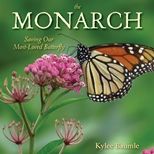
I could probably add another chapter to my book, THE MONARCH: Saving Our Most-Loved Butterfly, on this subject, and certainly more than you want to read in a blog post. But here are some thoughts of mine to consider. It would be best if you read the Xerces Society blog post first, so that you understand what all the hubbub is about and why I say what I do here.


  • First of all, we can't "save" the monarch by raising them inside our homes. There are good reasons to do so, but that alone should not be the rationale behind doing it. It's not sustainable over the long run, not at the levels we're collectively doing it now, and it's not natural. We haven't really saved anything if this is how we have to do it.
  • Secondly, one of the biologists who co-authored the paper cited in the Xerces Society blog post, has come forth with a rebuttal and clarification of the talking points that have monarch lovers so upset. PLEASE read what Christopher Kline has to say about this. I can't stress this enough. Just read it.


This monarch caterpillar fell victim to
a spined soldier bug - a type of stink bug.
We raise monarchs in our homes mainly to protect them from predators. If you've observed monarchs for any length of time, you know firsthand how dismal their mortality rate is. That's not uncommon in the "eat or be eaten" world of insects. But monarch numbers are drastically down compared to just 20 years ago, for many reasons, mainly irresponsible behaviors by us humans.

So there may be something positive in humans taking it upon themselves to attempt to right a wrong that they committed in the first place. Is it natural or ideal to raise monarchs inside? No, but neither are pesticides, herbicides, urbanization, logging, mowing, and other practices that humans have done that have contributed to the monarch's decline.


An important thing to note when reading articles like the one from The Xerces Society

The Xerces Society raises some important points and things to think about. But their blog post is, for the most part, an opinion piece. So is mine.

Remember too, that The Xerces Society is one of the original writers of the petition to have the monarch added to the Threatened Species List under the Endangered Species Act. That decision is due to be announced in 2019, and the raising of monarchs will be greatly changed and curtailed if they are listed. The society certainly has a vested interest in the topic and this article may be speaking with that bias. 

Also, keep in mind that raising monarchs and breeding monarchs are two very distinctively different things. I have never bred monarchs and I don't advocate doing so. There are businesses that do this - some responsibly and some not - and I'm not talking about them here.

I also don't advocate raising huge numbers of them. Doing that requires an extraordinary amount of time, energy, space, and dedication. Not many of us are willing to do this in a way that avoids inherent problems.


Bottom line . . .

Please don't let yourself have a knee-jerk reaction to what the writer of The Xerces Society blog post has said. It might make sense to you right from the get-go, or it might cast doubts on what you've been doing in an effort to help the monarchs. In an ideal world, we wouldn't be in this predicament in the first place. But people smarter than a lot of us (me included) have made some grave mistakes in the past and our wildlife has suffered and is suffering for it.

Personally, I'm of the same mind as Chris Kline, who is qualified to speak on the situation, and I'm perfectly comfortable in continuing to raise small numbers of monarchs in my home. You may not be, and I respect that.

If you save just one female who has the potential to lay
400+ eggs, you may or may not be making a positive difference.
Think about that exponentially for just a little bit


Lastly, thank you to those of you who are doing your part to help the monarchs and other pollinators, whether it be by growing a little milkweed (or a lot), growing more nectar plants, using fewer pesticides and herbicides, contributing financially to those who are working on the monarch's behalf, or even by just keeping the conversation going.

The monarchs have had a banner year here in the Midwest (yay!), which may or may not have had anything to do with our efforts, but keep up the good work. Maybe 20 years from now, we can look back and see that we're making a difference. I believe that we are.


~~~~~~~~~~~~~~~~~~~~~~~~~~~~~~~~~~~~~~~~~~~~~~~~~~


https://amzn.to/2QywmRP
Kylee Baumle is the author of two books, the latest of which is THE MONARCH: Saving Our Most-Loved Butterfly. She is a speaker and writer, who won a 2018 Gold Award for her writings on the monarch.

She will be leading her third tour to the monarch sanctuaries in Mexico in February 2019. For more information on joining the tour, click here


__________________________

***Photo of female monarch laying egg is courtesy of Holli Webb Hearn, creator of The Beautiful Monarch Facebook group, which at last count, has 23,396 members.

Monday, January 22, 2018

Listen to the Sounds of Monarch Butterfly Wings in the Cerro Pelon Reserve in Mexico!


I just learned of a project that allows you to hear sounds in various locations around the world. Called Locus Sonus, it is a French-based research network that focuses on the relationship between sound and space. It had its beginnings in 2005, and works in cooperation with several research labs throughout the world, including the School of the Art Institute (SAIC) in Chicago.

While I don't entirely understand their goal or purpose, what I do know is that they set up listening devices using open mics in places in order to capture their soundscape. Mainly an artistic endeavor, it relies on technology and science to operate.

Why am I interested in this? Because one of the locations where a microphone is located is in the Cerro Pelon monarch butterfly sanctuary in Michoacán, Mexico. By tuning in to this particular channel, you can hear the sounds of monarch butterfly wings, birds chirping, and wind through the trees in the location where the monarch butterflies were first found in their wintering location in 1975.


Click on graphic to enlarge soundmap. To go to the site, click here.


The listening map is located here and you can find the Cerro Pelon mic in Mexico and click on it. You'll want to have your sound turned up to its maximum level in order to hear the low level sounds.

The listening equipment is solar powered, so there will be times when no sound is being transmitted (at night, for example, which will be indicated by the darkened areas on the map) and the volume may vary. It's very new, so there will be times when equipment adjustments are being made. During those times, the microphone may not appear on the map. Check back later. It will be worth it!


Taking it all in at Sierra Chincua sanctuary, March 3rd, 2017.


Having been in a couple of the monarch sanctuaries myself, I can confirm that yes, it's very subtle, very quiet, which is the beauty in it, especially when you're in its midst. Just as in the actual location, you will not hear loud anything streaming through the microphone and you might be underwhelmed by what you hear. But make no mistake, you can hear those delicate wing flutters.


When the sun is out, the monarchs can be seen fluttering about, like
these, in El Rosario sanctuary on March 2nd, 2017.


Because the monarchs are much more active on sunny days, this will affect what you hear when listening in. If it's cloudy or rainy, you won't hear the sounds of butterfly wings, because the monarchs will be clustered together on the trees with very few, if any, flying around. So if you don't hear them at first try, go back and give it a listen on different days at different times. I got lucky and heard the wing flutters the first time I tuned in. 🦋

Enjoy!

Saturday, June 10, 2017

Attracting Beneficial Bugs to Your Garden: A Book Review


If you follow me on Facebook, you know that I'm sort of a bug nerd. I wear that moniker proudly, because insects are some of the most fascinating things ever to roam the earth. Once you start looking at them - really looking at them - you'll see what I mean.

They're bizarre, some of them. Endearing, others. They all have a reason for being here, and it's not to annoy you either. In fact, most of them are doing good things for us and you'd do well to give them the respect they deserve.

http://amzn.to/2seD6eT
Attracting Beneficial Bugs to Your Garden won an
American Horticulture Society Award in 2015.

A good place to start to learn more about them and the role they play in our world, and specifically our gardens, is with Jessica Walliser's book, Attracting Beneficial Bugs to Your Garden: A Natural Approach to Pest Control. I know Jessica personally, a result of being a fellow garden writer and being with her at various gardening events. This girl knows her stuff.

I'm the sort of person who likes knowing all about something, right down to the obscure. Jessica's book satisfies that curiosity in me.


One of my favorite photos in the book is this one, of a lacewing egg.

So you think it's strange to want to attract bugs to your garden? While nature has some gruesome aspects to it, for the most part, it's a wonderful plan and Jessica shows us how we can help make it all work together for good.

Integrated pest management involves organic methods of controlling the insect population in our gardens by encouraging beneficial insects to take up residence there and keep the less desirable ones under control. Will it give you perfect plants with no insect damage? No, but there are ways to put nature to work for you.

Jessica gives us 19 beneficial insect profiles, 39 plant profiles for attracting them, and insectary garden plans to help get you started. She provides a couple of citizen science opportunities for you to participate in as well.

If you've been gardening for any length of time, you realize what a futile effort it is to try to keep them away, so why not try and attract the ones that will work for you? If you can't beat 'em, join 'em. It's really the best way.

http://www.jessicawalliser.com/about-jessica/


Jessica Walliser co-hosts The Organic Gardeners on KDKA radio in Pittsburgh, Pennsylvania, and has written four other gardening books, including her newest, which will be released later this year. Learn more about Jessica and her work at jessicawalliser.com.

~~~~~~~~~~~~~~~~~~~~~~~~~~~~~~~~

http://amzn.to/2s9Hgno


Container Gardening Complete: Creative Projects for Growing Vegetables and Flowers in Small Spaces(October 1, 2017)
http://amzn.to/2s9bGWT


Good Bug, Bad Bug: Who's Who, What They Do, and How to Manage Them Organically


http://amzn.to/2s9L6Nc


A Gardener's Notebook: Life With My Garden
(co-authored with Doug Oster)


http://amzn.to/2sfIFtn


Grow Organic: Over 250 Tips and Ideas for Growing Flowers, Veggies,  Lawns and More
(co-authored with Doug Oster)


Monday, August 15, 2016

Announcing My New Book About Monarchs!


It will come as no surprise to many of you when I tell you I’m writing another book and that the subject of the book is monarch butterflies. It is now listed on Amazon and is available for pre-sale!

http://amzn.to/2b63Pkf


In my newspaper column, on Facebook, and in this blog, I’ve talked about the situation with monarchs: their decline in population, the reasons for that decline, and what we can do about it. It’s a subject about which volumes could be written, but I’m limiting my take on it to just one.

The Monarch: Saving Our Most-Loved Butterfly is an assembling of a wide variety of information that I’ve researched, as well as experienced in my own garden. I have included many astounding facts about the monarch, its physiology, life cycle, and why the monarch matters.

There are a few DIY projects included that are easy and will help our favorite butterfly in some way. Those of you who want to learn more will find plenty of reference material to help you keep adding to your knowledge about the monarch beyond what is in my book (and there’s a lot to learn).

I’ve been intimately involved with monarchs here at Our Little Acre for more than ten years now. I raise them from the egg stage all the way through release of the adult butterfly and in my book, I’ll show you how to do it too.

While there is some technical information presented, with plenty of photos to help illustrate much of it, it won’t overwhelm you. It will fascinate you. If you’re not careful, you might just fall in love with the monarch, as I did so many years ago.


As a citizen scientist, I contribute to the collection of information by monarch researchers by reporting data to Journey North, as well as late summer and autumn tagging of migrating monarchs through the University of Kansas. I’ll share how you can do this, if you so choose.

The Monarch: Saving Our Most-Loved Butterfly is a work of passion and love and my hope is that it will open your eyes to one of nature’s most amazing creatures.

Though the current situation with them could be described as depressing, my book isn’t. There’s plenty of reason for optimism, as you’ll see, and I’ll show you how you can be a part of that.

Yes, you can make a difference. Don’t doubt it.


The book will be released on April 3, 2017, but is available for pre-order now. It's a hardcover book and lists for $18.95. If you order through Amazon now, they guarantee if the price goes lower between now and its release (very likely), they’ll honor the lower price. But my hope is that those of you who read it will find it to be worth far more.


http://www.pollinator.org/


_______________________

This post contains affiliate links.

Thursday, June 23, 2016

Celebrating National Pollinator Week: Food For Thought


It's no secret the pollinators are in trouble. Oh sure, you see plenty of butterflies, bees, flies, and other insects out there and even bats (yes, they're pollinators), so really, what's the big deal, right?


Consider this:

One out of every three bites of food we eat relies on pollinators.


Still not convinced?

To carry that point further, some plants require specific pollinators in order to get good production of their fruit. (And I use "fruit" in the general definition of whatever edible the plant produces.) Bees are the most well-known of the pollinators, but other insects and birds are more efficient at pollinating certain plants.

Zucchini, anyone?


If you're one of the people who has asked me, "Does it really matter if the monarchs disappear?" I can wholeheartedly answer, "YES."

My philosophy in general is this:  I believe that every living thing on the earth is here because it has a purpose.

In regard to the monarchs, perhaps we can live without them, but it's more complicated than that. The monarchs are in decline because of several factors, not the least of which is that their habitat is disappearing due to urbanization, and to a greater extent, due to the agricultural use of pesticides* that kill milkweed, the only food their babies eat.


If you think that monarchs are the only pollinator that is being affected by the pesticides, think again. They're just more visible and recognizable than most. They're the poster child for the greater problem we humans are causing in the environment.

It's a complicated issue, for sure, but if nothing else, during this, National Pollinator Week, please give these things some consideration. Think before you use pesticides yourself. You may not only be saving the pollinator's meal, you could be helping to save your own.


_________________________________________
* Pesticide is the general term used by the FAO (Food and Agriculture Organization), the USDA and the EPA, which includes, but is not limited to herbicides, fungicides, and insecticides. Read more here.


Tuesday, April 19, 2016

Walking On Sunshine


I have this kind of love/hate relationship with dandelions and I'm betting you do too. They're the sort of thing that you can't live with because they irritate you so much and you can't live without them because they just won't let you.


At this time of year, they're fairly innocuous, and to be honest, they've got a lot going for them. We've just emerged from winter and seeing the first dandelion bloom pretty much makes each and every one of us smile, even if it's only on the inside. And one or two of them won't hurt anything anyway. Unless you let it go to seed.


One dandelion bloom produces 54 to 172 seeds and one plant will produce more than 2000 seeds. A single acre of dandelions is estimated to have the capability of producing 240,000,000 seeds a year. Not only that, dandelions do this all on their own because they are apomictic. In other words, no sex is required for them to reproduce. No wonder they pop up anywhere and everywhere.

Even though dandelions don't require pollination to produce seed and thus reproduce, they are well-visited by pollinators such as bumblebees, honeybees, butterflies, beetles, and moths. Dandelions are one of their earliest sources of nectar and far be it from me to deny the bees their breakfast.

But you could be enjoying dandelions for your breakfast too. Every part of the dandelion is edible, with the roots tasting a lot like parsnips, the young greens making a tasty leafy salad, and the blossoms as the basis for a delicate-tasting jelly. And there's wine.

Dandelions pack a punch when it comes to nutrients. According to nutritiondata.com and the USDA, “This food is low in saturated fat, and very low in cholesterol. It is also a good source of folate, magnesium, phosphorus and copper, and a very good source of dietary fiber, Vitamin A, Vitamin C, Vitamin E (Alpha Tocopherol), Vitamin K, Thiamine, Riboflavin, Vitamin B6, calcium, iron, potassium and manganese.”

One serving of dandelion greens (1 cup) has 35 calories, provides 112% of your daily value (DV) of Vitamin A, 32% of Vitamin C, 10% of calcium, and 9% of iron.

We've never had a perfect lawn. Far from it, for several reasons. First of all, we live on an acre that has a lot of grass. We don't weed and feed, and as far as dandelions go, I'm perfectly fine with seeing them peppered throughout the yard as yellow flowers. I don't mind clover either but that's a conversation for another day.

Do we battle dandelions, in spite of all the facts about them that are in the pro column? Sure, because we don't want an entire lawn of them and I don't want them in my gardens. We're not trying to raise them as a crop.

So we dig out the larger ones and we try to mow before they go to seed. We keep just enough around for grandkids to make daisy chains and bring us sunny bouquets. Just enough to provide pollinators with nutrition when it's in limited supply. Just enough to make us smile when we that's exactly what we need.

Kara, age 6, in 1986


_____________________________________
The article, "Walking On Sunshine," first appeared in my weekly newspaper column in the Paulding Progress, published in Paulding, OH.

Tuesday, April 5, 2016

Snow and Sun: A Simple Lesson in Physics


An early spring snow in April survives in shade, but even though the ambient temperature is 27°F, the sun is warm enough to melt it. Radiant heat – the kind the sun gives – heats objects. The grass and earth are warmed, causing the snow to melt. And you thought the sun heated the air, didn't you?

blogger templates | Make Money Online