Tuesday, October 2, 2018

Tithonia Baby Steps


As any die hard monarch mama knows, monarch butterflies love Tithonia, a.k.a. Mexican sunflower. And anyone who is serious about attracting them will have this growing tall and proud in their garden.

Photo by TJ Gehling/CC license 2.0


I was no exception. When offered some free seeds from a wonderful seed company* a couple of years ago, I immediately chose Tithonia rotundifolia 'Torch', and I had visions of a glorious photo shoot in the latter half of summer. The monarchs were going to flock to them by the numbers. Bees and hummingbirds, too!

I couldn't wait.


Year One

So, I planted those seeds that spring. "They're easy!" everyone told me. "You're going to love them!" they said.

Photo by F.D. Richards/CC license 2.0


It was true, the packet and the website (and every other website on the vast world of the internet), claimed they didn't have any special needs, would grow in poor soil, and tolerated drought and neglect. Since they are native to Mexico and I know what harsh growing conditions there can be in much of the landscape there, I just knew that success was a sure thing.

But summer came and went, and nary a Tithonia appeared.

This is not the first time that I've had bad luck with seeds. I've made many mistakes over the years, such as planting seeds too early. And being The Queen of Procrastination, I've planted them too late. I suppose that's not bad luck, that's just bad gardening. In any case, I was no stranger to failure.

The next time I spoke with the seed company's owner at a trade show, I related my experience to her. She was puzzled and repeated what I'd heard over and over, "But those are so easy. I wonder what happened. Here, take another packet and try again."


Year Two

The next year just happened to be one in which I exercised my queenly duties and I got the seeds in the ground late. Not too late, I didn't think, but perhaps I thought wrongly. I kept waiting to see little green seedlings popping up from that "poor" soil, but summer was half over before I even saw them. I got three. And they didn't grow very fast.

My tithonias gave the term "slow flowers"
a whole new meaning.

Before I knew it, frost reared its ugly head and I only had plants barely a foot tall, if that. No blooms, of course. But, HEY! This time I got PLANTS! And I'm pretty sure they weren't weeds. Things were looking up.


Year Three

They say the third time's a charm, and I'm a believer. This year, I got those seeds in the ground at the perfect time. I was determined to make my monarchs happy campers. Though it did take a little while before I saw little green sprouts start peeking out of the ground, things looked very promising.

While others were showing their four-feet tall Mexican sunflowers loaded with blooms (and monarch butterflies perched atop, of course) on Facebook, my half a dozen plants were doing the best they could, which was the best I'd ever seen here at Our Little Acre. By the first of September, they were over three feet tall, and I saw flower buds!!!

By September 13th, I had one glorious vibrant bloom that nearly made me weep. FINALLY, I had grown a Tithonia from seed and it actually bloomed. I can't tell you how happy this made me.

MY  TITHONIA!!!


Then it got cold, like in the low 40s at night cold, and the other blooms stayed closed up tight.

It has gotten warm again in the last few days, so I'm waiting for some more blooms to open. But if I only get that one Tithonia bloom, I have done better than my past efforts. As every gardener knows, there's always next year, and I'm on a roll.


*I'm not naming the seed company to protect the innocent. It wasn't the seeds' fault. It was the gardener's. I can't grow Johnny jump-ups either.


Sunday, January 11, 2015

There Are Marigolds and Then There Are Pot Marigolds


These are not your grandma's marigolds. But wait, she probably grew these too! While I love the traditional marigolds and have never had a single year of gardening that didn't include them of one sort or another, there's another "marigold" that I adore even more. The pot marigold.


Calendula officinalis 'Flashback'

Calendula is commonly known as "pot marigold," and while it's classified as a short-lived perennial and sometimes a hardy annual, in my Zone 5b it's definitely an annual. I've never had a single plant survive winter here. They're pretty good at self-seeding though, so there's that.

Photo by H. Zell
And speaking of their seeds, those look like dried up worms to me. Each flower head has an abundance of the short curved seeds, so there will always be plenty for next year. I've not caught any birds eating them, but I don't know why they wouldn't.

Calendulas are one of the edible flowers, giving salads color, and wereoften used as a saffron substitute and in soups and stews, which probably contributed to them being known as "pot marigolds." Calendula has also been used to provide color to some cheeses and can be used as a fabric dye.

Some pharmacological studies have suggested that Calendula has antiviral and anti-inflammatory properties. Because of this, you'll find it as a common ingredient in products used to treat certain skin conditions.

Calendula is also a host plant for several species of moths, meaning you might find caterpillars on the foliage at some point. I've never found them to do much damage in my garden though.


There are several Calendula cultivars available to be grown by seed, including the one I grew last summer - 'Flashback' from Renee's Garden Seeds - as well as the straight species. Some of those include:

Lemon Cream™
'Pacific Beauty'
'Oktoberfest'
'Deja Vu'
'Triangle Flashback'
'Orange King'
'Zeolights'
'Kablouna'
'Radio'
'Pink Surprise'
'Resina'
'Geisha Girl'
'Ball's Improved Orange'
'Golden Emperor'
'Nova'
'Fiesta Gitana'
'Tangerine Cream'
'Bronzed Beauty'
'Solar Flashback'
'Corniche'
'Faron'
'Candyman Orange Dwarf'
'Mandarin Twist'
'Gold Star'
'Bon Bon'
'Strawberry Blonde'
'Indian Prince'
'Orange Porcupine'


You can buy seeds online from these sources:

Baker Creek Heirloom Seeds
Burpee Seeds
Renee's Garden Seeds
Botanical Interests
Johnny's Selected Seeds
Eden Brothers
Swallowtail Garden Seeds

I promise this isn't an Osteospermum, even though it strongly resembles it.


Calendula officinalis 'Flashback'


Sunday, September 15, 2013

'Glass Gem' Corn Harvest


It's happened again.  A photo I posted on my Our Little Acre Facebook page has gone viral.  It was about a year ago at this time that I posted a photo of our first grandchild there and 4.8 million people viewed that, and shared it  more than 2,000 times.  This time the photo was of the 'Glass Gem' corn I grew this summer.

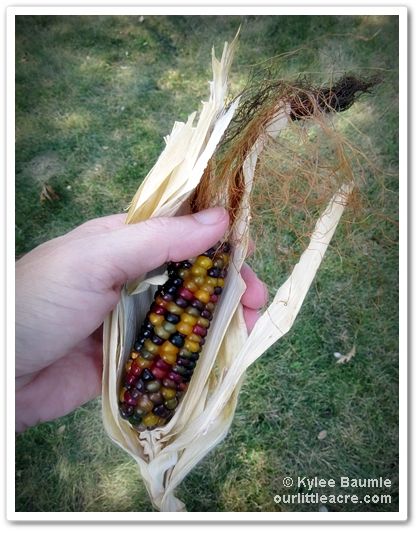
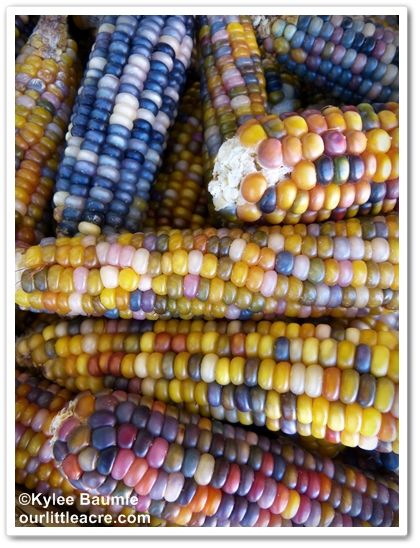
'Glass Gem', lit by the sun

It has already surpassed the Hannah photo in shares (currently at 5,732), but I doubt that it will garner as many likes as our sweet baby (356,315).  Back when all this happened with Hannah's photo, we dubbed it "The Hannah Effect."  I really think maybe she has something to do with this corn thing too, because she spent this weekend with us and was here when I posted the photo.  Viral by association.

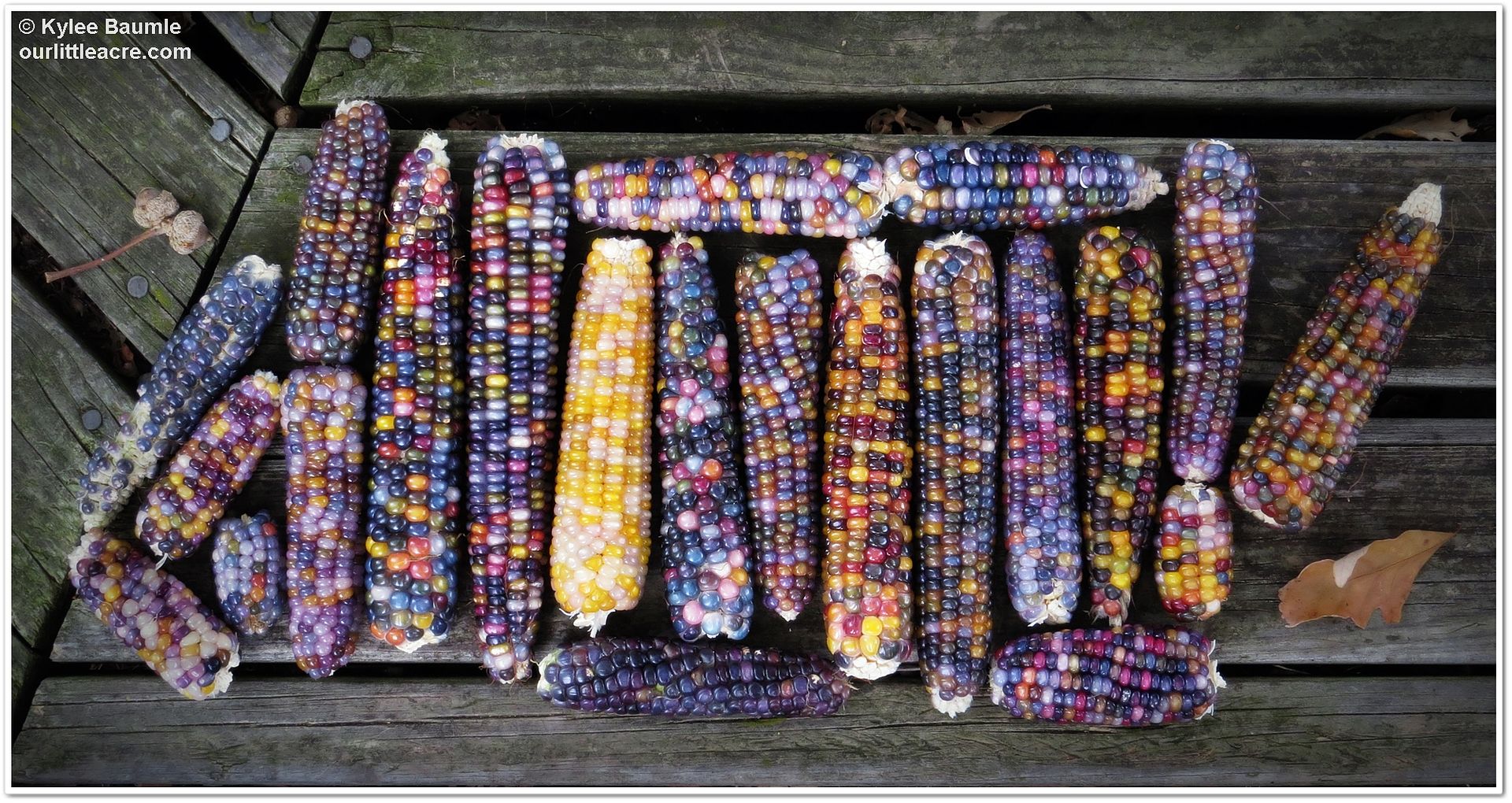
We began harvesting the corn this past week and it lived up to all the internet sensation it was last year.  Each ear that I husked was as beautiful as the one before it.  They didn't all look alike, but they were all beautiful, and the majority of them were multicolored jewels - "glass gems."


Click on the photo to open a larger version so you can appreciate the colors better!


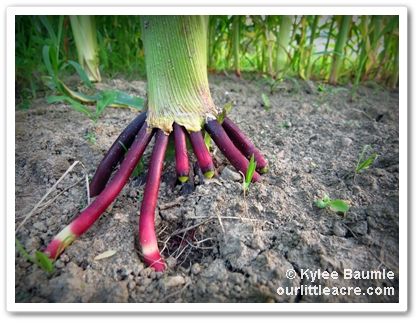
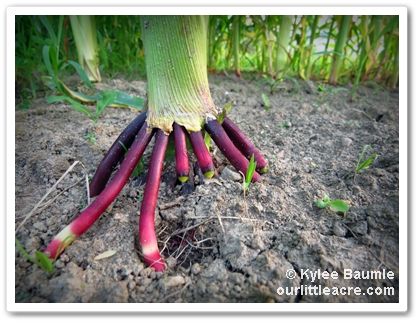
Parts of the corn plant itself were variable.  Some had pinkish-purple roots...


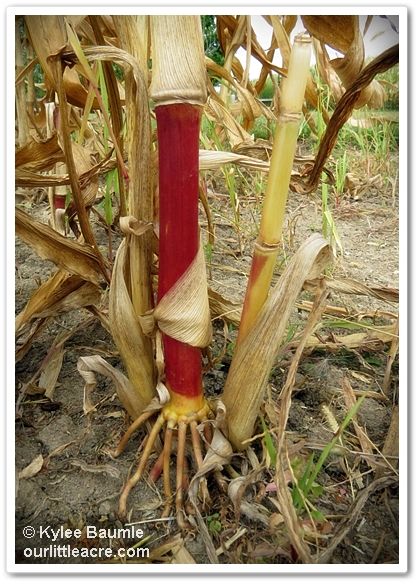
...and some had red stalks...


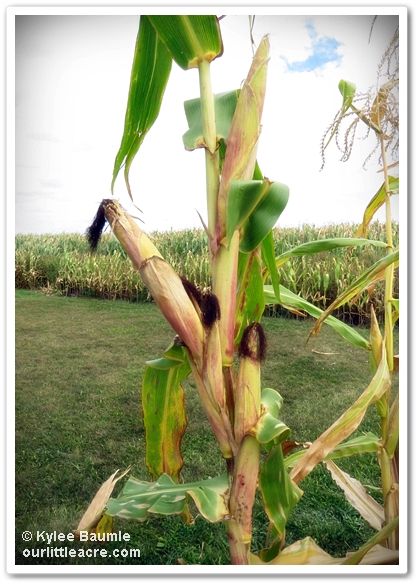
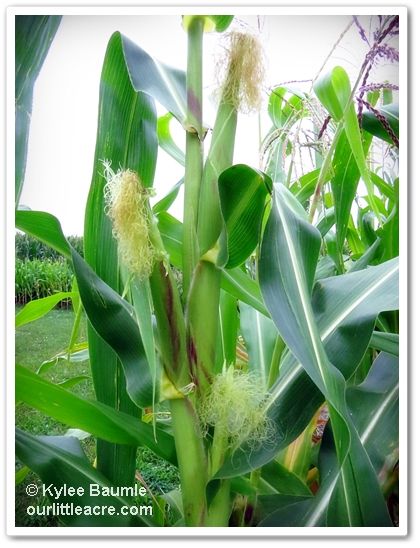
Many of the stalks had double ears, a few had triple, and one even had four ears!


Pretty much all of the corn germinated, but not all of it was pollinated.  And some of it had incomplete pollination.  I worried that there would be cross-pollination with our sweet corn that was planted in the same plot as well as the field corn planted in the adjacent farm field.  And there no doubt was.  But it didn't prevent us from getting stunningly beautiful corn.  We're going to grow it again next year, with seed saved from this year.

On this smaller ear, the colors are darker.


I've gotten many public and private messages asking several questions about this corn, so I want to answer those here:

  1. Is it real?

    Yes, it's real.  I planted the seeds this spring and just harvested it this past week.  The colors you see in the photos are the colors the corn really has.  They are just that beautiful.  So beautiful that I can't stop looking at them. 

  2. Is it a GMO (Genetically Modified Organism)?

    No.  'Glass Gem' seed is an open-pollinated seed, selected by Carl Barnes, a part-Cherokee farmer from Oklahoma, over many years.  He kept selecting the best and most vibrantly colored seed each year and the result is what you see here.

  3. Is it edible?

    Absolutely.  But not as a sweet corn variety.  It can be ground as corn meal or popped.  When popped, the kernels are white.  We're letting it dry out a little longer before we try to pop it, but that's what we're going to do with it, as well as save some seed for planting next year.

  4. Do you sell it?

    No.  I'm just a backyard gardener, like many of you.  I got on a waiting list last year to buy the seed from Native Seeds/SEARCH in Tucson, Arizona.  The seed was rare enough that there was a limit of one packet of 50 seeds per person and we received ours in late winter this year.  They have enough now for purchase that they've been able to lift the one-packet limit. You can purchase the seed here.


So, to summarize: Yes, it's real.  Yes, I grew it. Yes, you can eat it. No, it isn't GMO. And finally, no, I don't sell it. Native Seeds/SEARCH does.  Buy some from them and you'll help support their mission:

"Native Seeds/SEARCH conserves, distributes and documents the adapted and diverse varieties of agricultural seeds, their wild relatives and the role these seeds play in cultures of the American Southwest and northwest Mexico. We promote the use of these ancient crops and their wild relatives by gathering, safeguarding, and distributing their seeds to farming and gardening communities. We are a 501(c)(3) non-profit organization based in Tucson, Arizona."

Buy some and grow it just because it's so beautiful.


Friday, August 9, 2013

About That 'Glass Gem' Corn...


Last year, I fell under the spell of a photo of 'Glass Gem' corn that was making the rounds on Facebook and Pinterest and in investigating the origin, found that the seed was distributed exclusively by Native Seeds in Arizona.  In order to grow this very special corn, I had to get on a waiting list and each recipient would be limited to just 50 seeds.

Serendipitously, I got to visit the home of Native Seeds when I attended the Garden Writers Association annual symposium in Tucson last October.  While there, I learned more about the seed and got to see it up close and personal before receiving my packet in late winter.

It's been a good year for corn.  It's been a good year for just about anything, with the regular rain we've been receiving.  We've been eating sweet corn from our garden for the last two or three weeks, but the 'Glass Gem' has been a slow one.

All our corn was planted on the same day.  We grew three different varieties of regular sweet corn in addition to 'Glass Gem', and each had a different maturity rate.  That way we would have continual harvest for several weeks and no doubt we would be just about sick of eating sweet corn by the time it was over.

Even the roots of 'Glass Gem' are beautiful!


'Glass Gem' isn't meant to be eaten right off the cob, although I do wonder what it would taste like if you did.  It's used for making flour or as popcorn.  We'll try it as popcorn.

I have concerns about what we'll actually get when the corn is ready.  It's being grown in a plot with other corn varieties and the large field behind us has corn in it this year.  No doubt there has been some cross-pollination going on.  It's really too early to tell with this one and maybe because it's so much later than the other corn, there's no need for concern.  We'll see, but it looks like we might have a bumper crop of it, in any case...

Just like the field corn we've seen, 'Glass Gem' has some stalks
with THREE ears on them!


Saturday, March 2, 2013

'Glass Gem' Corn from Native Seeds


Some of you might remember the internet sensation that was 'Glass Gem' corn when it was making the rounds of Facebook and Pinterest last year.  The gorgeous colors exhibited by this heirloom variety are almost too amazing to be believed.  But believe it.  I've seen it in person and it's just that stunning.


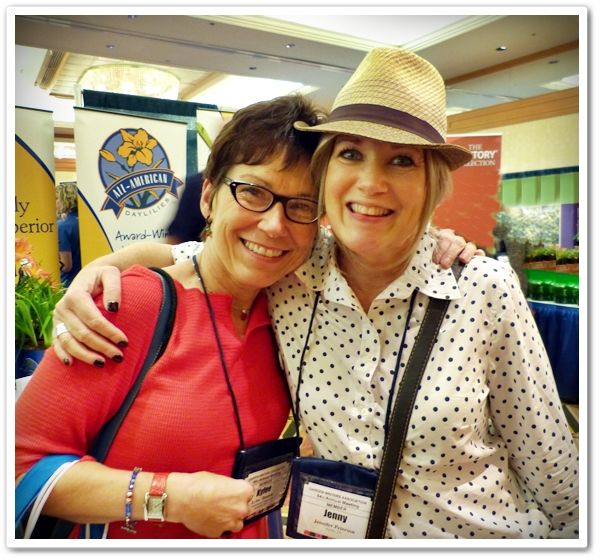
Last October, I attended the Garden Writers Association annual meeting, held in Tucson, Arizona.  It was my first trip to Arizona and was much too short.  I was only there for a few days and one of the big reasons for going was to meet with the co-author of my upcoming book release, Jenny Peterson.  Jenny lives in Austin, Texas, so any chance we have of getting together is taken.

Jenny and me at the GWA meeting in Tucson

One of the places the garden writers visited was Native Seeds/SEARCH in Patagonia.  According to their website:

Native Seeds/SEARCH conserves, distributes and documents the adapted and diverse varieties of agricultural seeds, their wild relatives and the role these seeds play in cultures of the American Southwest and northwest Mexico. We promote the use of these ancient crops and their wild relatives by gathering, safeguarding, and distributing their seeds to farming and gardening communities.

Native Seeds/SEARCH is a non-profit conservation organization based in Tucson, Arizona. Since 1983, we have become a major regional seed bank and a leader in the heirloom seed movement. Our seed bank is a unique resource for both traditional and modern agriculture. It includes over 1,800 varieties of arid-land adapted agricultural crops, many of them rare or endangered. We promote the use of these ancient crops and their wild relatives by distributing seeds to traditional communities and to gardeners world wide.

Currently we offer over 350 varieties from the collection we steward, grown out at our Conservation Farm in Patagonia, Arizona, and associated products through our online store, annual seedlisting, and our retail store. We also offer seeds of crop varieties that are not traditional to the Southwest but that can contribute to regional food security.

When I first saw 'Glass Gem' corn online last summer, I fell in love with its jewel-toned kernels and didn't really care if it was edible or not. While mostly grown for its ornamental beauty, 'Glass Gem' is also used for making flour and is a popping corn!  In any case, I knew I wanted to grow it, so I went to the website, only to find out there was a waiting list.  No big surprise there.

What was a surprise was when we pulled into the Native Seeds/SEARCH location last October and I realized we were at the source of 'Glass Gem' corn.


There it was, looking as beautiful as I'd seen it online:

'Glass Gem'


'Glass Gem' is an heirloom variety selectively bred over a period of years by Carl Barnes, a part-Cherokee farmer from Oklahoma.  He shared his seeds with one of his students, Greg Schoen, who then shared them with Bill McDorman, now executive director at Native Seeds/SEARCH.

Bill McDorman, executive director of Native Seeds/SEARCH,
speaking to members of the Garden Writers Association
in October 2012


Sold only through the Native Seeds/SEARCH website, I received notification yesterday that I could purchase 'Glass Gem' now.  Over 7,000 people are on the waiting list and through a special link, only those people can purchase one packet of 50 seeds.  With that many people (and more) wanting these seeds, it's doubtful that everyone will be able to get them, at least not this season.

I'm pretty excited that I will be able to grow this beauty here at Our Little Acre this year.  Of course, I'll be saving the seed from this year's crop so that I can continue to grow it.  It could be interesting though, to see what happens in my garden, since the farmer's field that is directly adjacent to the gardens will be growing corn this year and will likely cross-pollinate with it (depending on the stages of development for each at the time of pollination).  And "it" undoubtedly will be one of the Monsanto-bred varieties.  That's another story for another day...


More from my visit to Native Seeds/SEARCH:

The beauty of seeds...

Renee Shepherd, seedsman extraordinaire and owner of
Renee's Garden Seeds, learns about these native seed varieties.

Hopi rattle gourd seeds (Lagenaria siceraria)


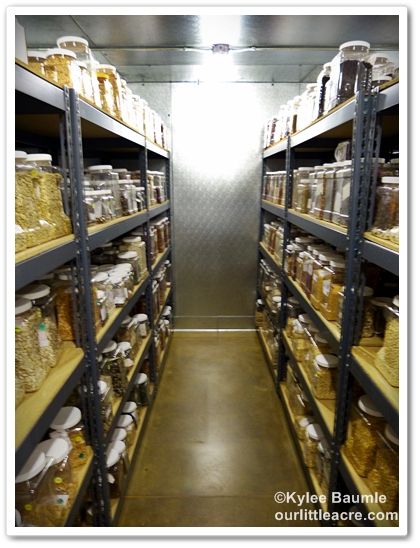
Native Plants/SEARCH operates a regional seed bank, with over
1,800 varieties of arid-land adapted agricultural crops, many of
them rare or endangered.


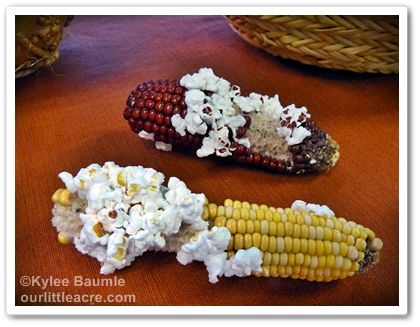
Popcorn!


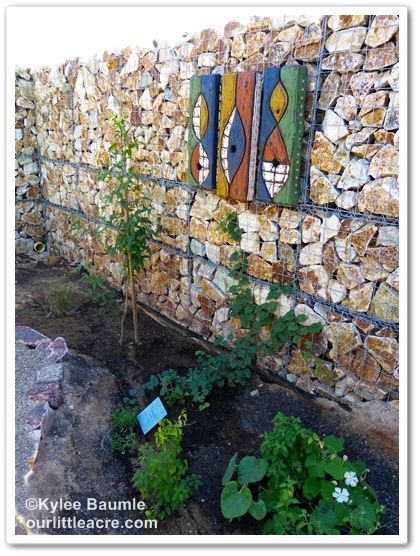
Love the art and the gabions!

Visit Native Seeds/SEARCH for more information and to order very unique seeds for your own garden.


Friday, January 6, 2012

Save the Heirlooms! (And a Giveaway)


When our grandparents were busy plowing the fields and hoeing the gardens, they were likely growing plants from seeds that were saved from year to year. They saved the seeds from the best plants each season and each year the results were [theoretically] better than the year before. Why were they better? Because the plants that did well in their unique growing situation were more likely to do well in that same situation again. They thrived because they adapted to their environment. Same plants, only better.

'Sun, Moon and Stars' Watermelon
(Heirloom, introduced commercially in 1926)
Yes, it's usually larger than this!


Seeds that are saved in this way are open-pollinated, meaning one kind of plant wasn’t purposely pollinated with another to create a specific and different plant. They simply were pollinated naturally by insects, the wind, or birds. With hybrids, two different plants are purposely cross-pollinated with a specific purpose in mind – to create a plant with a specific color, growth habit, hardiness, or some other desirable trait.

As more and more plants are created by the hybridizers, the heirlooms (as those plants that have been passed down over the years via saving seeds are called) are disappearing. This is especially worrisome when it comes to seeds that grow edibles. Many of the varieties that our ancestors enjoyed are becoming scarce, if not non-existent. The diversity of crops, which is vital to the health of our homegrown food supply as well as the insect population (the balance of good guys to bad guys), is taking a huge hit.

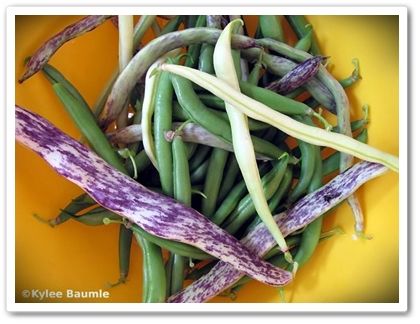
The purple streaked beans are 'Dragon Tongue', an heirloom from 18th
century The Netherlands.

I’m not against hybrids. Thousands of beautiful and delicious plants have been created by hybridization and I grow many of them in my gardens. I just hate to see so many of the heirlooms disappearing. We need to grow more of them to assure that they won't be lost. Hopefully, you're already growing some heirlooms in your gardens!

Emilee and Jere Gettle,
with daughter Sasha
Jere and Emilee Gettle, owners of Baker Creek Heirloom Seed Company in Mansfield, MO (home of Laura Ingalls Wilder), have devoted their lives to the preservation of heirloom seeds. They recently wrote a book about it. The Heirloom Life Gardener is a great read on the subject of heirlooms and how to grow them.

You can see my review of their book on my garden book review site,  Gardening by the Book, as well as on Horticulture magazine’s website.


And, since I received two copies of their new book, I’m giving one away to one lucky reader! All you need to do to be entered to win is leave a comment to this blog post and tell me what heirlooms you plan to grow this year. Are you trying a new one or do you have a favorite that you grow every year? Be sure to fill out the Rafflecopter form too, so I’ll have a way to contact you if you win. The giveaway ends in three days, at midnight EST this coming Monday, so don't wait to enter!

Friday, February 25, 2011

Community Garden Projects : Coming to a Blog Near You!


Ginkgo Organic Gardens - Chicago, IL
Community gardens are a popular and good thing. For those that live in apartments or have no place to put a garden of their own, community plots of earth are a great way to exercise gardening muscles and grow your own food and flowers.

Gardeners also have local organizations they belong to, such as garden clubs and Master Gardener groups. But there's yet another larger community of gardeners - those who connect via Twitter, Facebook, and garden blogs. The internet has made it wondrously possible for us to communicate with gardeners all over the world, thus opening up our world to greater learning and relationships with those that share our passion for growing.

As the 2011 growing season gets underway, many have created opportunities for gardeners to connect on an even more intimate way, by joining together in community gardens of another sort.


~ ~ ~ ~ ~ ~ ~ ~ ~ ~ ~ ~ ~ ~ ~ ~ ~ ~ ~ ~ ~ ~ ~ ~


The World's Largest "Community" Garden - The Beekman Boys at Beekman 1802 and Williams-Sonoma are pairing up with gardeners the world over in growing the same 10 heirloom vegetables. You can sign up for customized e-mails that will help you every step of the way and you can share your progress on their site.


You can order the seeds at Williams-Sonoma online or you can purchase them in their stores. For more information, visit those Beekman Boys.


~ ~ ~ ~ ~ ~ ~ ~ ~ ~ ~ ~ ~ ~ ~ ~ ~ ~ ~ ~ ~ ~ ~ ~


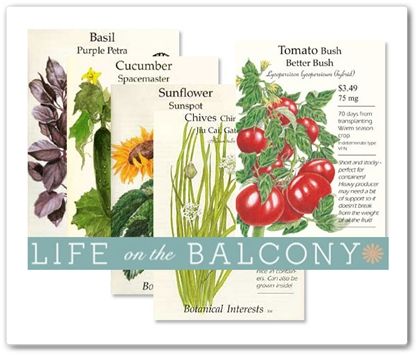
Community Container Garden at Life on the Balcony - Fern Richardson has created an edible container garden and has suggested that we all plant the same thing, then compare notes as they grow. Her container recipe includes:

  • ‘Spacemaster’ Cucumber
  • ‘Better Bush’ Tomato
  • ‘Sunspot’ Sunflowers
  • ‘Purple Petra’ Basil
  • Garlic Chives


To make it easier, she has partnered with Jayme Jenkins of aHaModernLiving.com, where you can buy all five Botanical Interests seed packets for $10.95. And you'll get 10% off your purchase (of anything at aHa! Modern Living!) using the code LOTBseeds.


~ ~ ~ ~ ~ ~ ~ ~ ~ ~ ~ ~ ~ ~ ~ ~ ~ ~ ~ ~ ~ ~ ~ ~


The Sunflower Project has as its goal to encourage us to not give up on the dream of world peace:
"Sunflowers sprouting tall across our Earth will remind us to trust in nature as our most important resource, and let others know that we, the people on the planet, want clean air, water and food, as well as peace in our homes, schools, and between nations.

The Sunflower Project vision is to see all people in every corner of the globe who are concerned about nuclear war, pollution, violence, injustice, and/or threats to the balance of nature, to plant at least one sunflower seed in a sunny place where it will be noticed."

For more information on participating, visit their website at www.sunflowerproject.com.


~ ~ ~ ~ ~ ~ ~ ~ ~ ~ ~ ~ ~ ~ ~ ~ ~ ~ ~ ~ ~ ~ ~ ~


The Great Sunflower Project is yet another involving the planting of sunflowers, but specifically the 'Lemon Queen' variety. They have chosen this particular sunflower because of its universal attraction to bees. Once the sunflowers are in bloom, participants count the number of bees seen pollinating a single plant for 15 minutes, twice a month. Data is then entered on the website, where it will be used to determine where pollinators may need help.


Renee's Garden Seeds have joined in on the project by selling 'Lemon Queen' sunflower seeds and if you use the code FR225A on your order, Renee's will donate a portion of the sales to the project.


~ ~ ~ ~ ~ ~ ~ ~ ~ ~ ~ ~ ~ ~ ~ ~ ~ ~ ~ ~ ~ ~ ~ ~

If you know of another such project that any gardener can participate in, please let me know and I'll edit this post to include it. Let's grow together in 2011!

~ ~ ~ ~ ~ ~ ~ ~ ~ ~ ~ ~ ~ ~ ~ ~ ~ ~ ~ ~ ~ ~ ~ ~


Friday, January 14, 2011

America's Homegrown Veggies Radio Show


About a month ago, I got an e-mail from Kate Copsey, host of America's Homegrown Veggies Radio Show, asking if I would be a guest on her show. Needless to say, I was honored and agreed. I'd met Kate in Dallas, TX, during the GWA Annual Symposium, when we bumped into each other and I noticed on her name tag that she was from my part of Ohio.  I introduced myself and told her we were "almost neighbors!"

Today, I traveled to Kate's home, near Toledo, to tape the show, which airs tomorrow morning.  It's done in four segments, each 13.5 minutes long, with breaks for commercials. Fifty-four minutes, talking about vegetables? I worried that this was an awfully long time for me to be in conversation about vegetables, but Kate is a pro at what she does. She knows the questions to ask and how to put her guests at ease.


Before we knew it, the time was up and the recording session was over. The show will air tomorrow (Saturday) at from 10:00-11:00 Eastern Time on America's Web Radio. The episode is available after the show as well, in case you want to hear it and aren't around when it initially airs.

America's Home Grown Veggies airs each Saturday at 10:00 A.M., Eastern Time. Kate has had a wide variety of guests, all with a love for growing vegetables and other edibles.

Thank you for asking me to be on your show, Kate. It was fun to "talk shop" with you!


Wednesday, June 30, 2010

What's Wrong With My Melons?


Though we had an early start to the planting and growing season this year, it seems like I was still rushed a bit to get things planted in the garden.  Life had me rushing to and fro and fitting everything in when and where I could, so the garden got planted some days while on autopilot.  What that meant was that some things never got labeled and I couldn't quite recall what they were.  Time would tell...

A few weeks ago, I was working in the garden and noticed the melon plants had germinated and put up their cotyledons, and some of their true leaves.  I knew I'd planted two hills of watermelon and two hills of muskmelon, but couldn't remember which was which.  It didn't really matter, anyway.  I knew the muskmelons would grow on the muskmelon plants and the watermelons on the watermelon plants and that's all that counted.

But what was this?  Yellow spots on the leaves of two of the hills of melons.  Oh dear.  We'd had plenty of rain this spring, more than usual.  Is that what was causing the yellow spotting?  Or was it some sort of disease?


And then it dawned on me.  These were the watermelon plants.  I'd been given seeds for 'Moon & Stars' watermelon at the plant swap at the Chicago Flower and Garden Show in March, and the leaves were supposed to look like this! 'Moon & Stars' is an heirloom variety that has dark green skin with tiny yellow speckles (stars) surrounding a larger one (moon) and the foliage is speckled, too.

I look forward to eating this melon that was first introduced to the public as 'Sun, Moon, and Stars' in 1926 by Peter Henderson and Company and was thought to be extinct until 1981, when Merle van Doren of Missouri offered some of his seeds to Kent Whealey of Seed Savers Exchange.


Photo from VictorySeeds.com

Wednesday, August 13, 2008

I Miss My Blog!


I'm just waiting for things to get back into a routine here after a three-day weekend spent geocaching in beautiful urban Kendallville, Indiana, followed by two days of working, one night spent at Jenna and Joe's, and seven-mile and four-mile runs on Sunday and Tuesday. I'm kinda tired.

But once again, there's much to blog about - new things since the last time I got behind and posted a list. I've got some nice photos taken at Earth Girl's haunt, the Gene Stratton-Porter Historical Site. We visited there on Saturday and enjoyed the beautiful weather for a stroll through the wildflower gardens and a tour of the cabin.

Meanwhile, the garden has gone on in spite of our absence. The tomatoes are coming on and how! This is absolutely by far the best tomato year we've ever had. There's one large Brandywine ripening, but we've been enjoying the yellow pears and Sungolds and other minis for a couple of weeks now. Well, Romie is anyway. I don't care for raw tomatoes. I like them in salsa though, and might make some this year.

We've picked the last of the sweet corn and have enough for a couple of meals yet. We decided we need to grow 'Sugar Pearl' again next year because it took the prize for the crispest, sweetest corn we've ever eaten.

I'm thinking of tearing out the purple bean plants because they're looking very tired although they're still producing a fair amount of beans. We prefer the green ones, but we're actually getting tired of eating beans.

I don't want to jinx it, but I haven't found a single Japanese Beetle in the last three days. Maybe their invasion of Our Little Acre has come to a close. This was the worst year yet for them, since I started keeping track in 2006.

The honeysuckle is blooming again, and the hummingbirds have returned. They also like the red daylilies, as well as the 'Fireball' hardy hibiscus.


'Plum Crazy' is blooming, too. The size of the blooms on those things is amazing. Ten-plus inches across!


Some parts of the garden are looking like they're preparing for fall. Some plants have finished blooming and are starting to dry and die back. I'm sure the hot, dry weather we've had has played a part in that. The daylilies are mostly finished, although 'Franz Hals' is in its prime, providing striking color in the middle of Max's Garden.

Speaking of cats, we've had two strays that are getting braver and seem to want to join our already large family. One buff-colored tabby and a skinny black one have been sneaking into the pool house and garage to get some food. Romie calls them "Blondie" and "Blackie", which goes against his rule that no cat gets a name until they let us pet them. Blondie is close to that point, but Blackie is very timid.


We don't need more cats...


blogger templates | Make Money Online