
Wednesday, October 17, 2018

Wednesday Vignette: Coleus ColorBlaze® Torchlight™


This is my first time participating in the Wednesday Vignette meme, hosted by Anna at Flutter & Hum. I've watched my friend, Loree Bohl (Danger Garden), participate for a long time, and I always enjoy it.

When I walked around the corner of the pool house last week and saw this trial plant from Proven Winners® cozying up to my small cat statue, I knew I had to jump in myself.

Coleus ColorBlaze® Torchlight™

When I received Coleus ColorBlaze® Torchlight™ (Solenostemon scutellarioides) as a small plant this spring, I placed it on the north side of our pool house. That little flower bed spends most of the summer as shades of green and often is neglected, both in terms of care and observation. I thought by placing this colorful coleus there, it might add a little spark to an otherwise ho-hum scenario.

Mission accomplished.


Coleus ColorBlaze® Torchlight™
Solenostemon scutellarioides

Zones: 10-11
Light: Sun or Shade
Mature Size: 24-36 inches
Water Needs: Average

This new coleus will be available in garden centers in Spring of 2019.


My end-of-season evaluation

I'm a lazy gardener. When trialing plants, I usually don't give them any special treatment and in most cases, I "set it and forget it." I try to make sure new plants get the water they need, but that's about it. This coleus was planted in spring and to be honest, I completely ignored it, not even watering it as much as I should have. It also wasn't planted in the best soil - unamended heavy clay. (Shame on me.)

It has never bloomed, which I consider to be an asset for a coleus, as I remove their flowers anyway.  It still looks good, this late in the season, but if I grow it again I'll pinch out the growth tips to encourage additional branching. I would also be sure to underplant it with a low grower like the Heuchera shown here, to hide its skinny ankles. Amended soil would be a good thing, too.

It'a beautiful coleus that adds color to monochromatic spaces with little to no effort required on the part of the gardener. And that' why it's a "proven winner" in my Zone 5b Northwest Ohio garden.

___________________
I was provided with this plant free of charge to trial in my garden. Though it's not a requirement to participate in the trialing program, I'm sharing my experience and honest thoughts on growing it.


Saturday, January 20, 2018

How the Lifesaver Plant Got Its Name


Winter is a time when most of my houseplants get the most love they're ever going to get. That's because if I want to keep these plants - mostly tropicals - they have to live in the house with us during the winter and I generally pay more attention to those things that share my living space. We're in Zone 5b here and it gets way too cold for them to stay outside year round.

These begonias do well in the bright shade of the pergola, but need to
go inside for the winter.

One day, in the summer of 2016, I went nursery hopping with my good friend, Shelley, and while I showed some restraint as we visited various places, only buying what I needed for a photo shoot for a trade industry magazine article I was doing, I found something I couldn't live without. It only cost a few dollars, but we all know that when it comes to plants, cost often has little to do with our buying decisions.

I'd heard about the lifesaver plant many years ago and had seen photos of it - such a cactus-y looking thing with surreal candy blooms. I wondered if those flowers (I felt funny even calling them that) really looked as plasticky in real life.


But now here it was, right in front of me, and oh boy, yeah. It really did look like its photos. So I bought it. In the time since that day, it has taken turns growing in the house, in the conservatory, and outside during the summer. It seems to be a happy camper no matter where it is. You've got to love a plant like that.
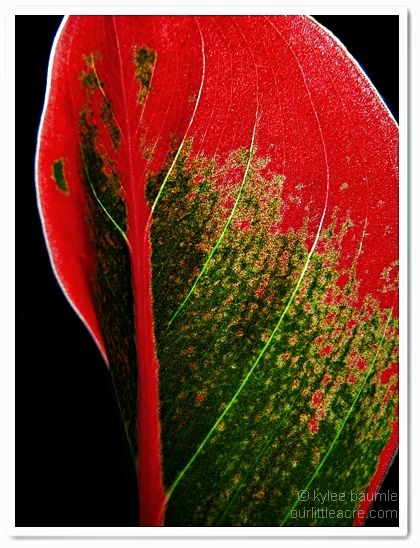


Here are the growing stats:

Common name: Lifesaver plant
Botanical name: Huernia zebrina
Plant type: Succulent
Zone: 10
Light: Full sun
Water: Let dry thoroughly between watering, then soak. Tolerates neglectful watering.
Height: Under 6 inches 
Bloom time: Intermittent


FUN FACT: Huernia zebrina belongs to the same family as milkweed -  Apocynaceae. But no, monarch butterflies don't use it as a host plant. 😉


http://amzn.to/2EYfttk


For ideas on how to use houseplants that coordinate with your personal style and decor, see my first book, co-authored with Jenny Peterson: Indoor Plant Decor: The Design Stylebook For Houseplants. (2013, St. Lynn's Press)


Tuesday, April 19, 2016

Walking On Sunshine


I have this kind of love/hate relationship with dandelions and I'm betting you do too. They're the sort of thing that you can't live with because they irritate you so much and you can't live without them because they just won't let you.


At this time of year, they're fairly innocuous, and to be honest, they've got a lot going for them. We've just emerged from winter and seeing the first dandelion bloom pretty much makes each and every one of us smile, even if it's only on the inside. And one or two of them won't hurt anything anyway. Unless you let it go to seed.


One dandelion bloom produces 54 to 172 seeds and one plant will produce more than 2000 seeds. A single acre of dandelions is estimated to have the capability of producing 240,000,000 seeds a year. Not only that, dandelions do this all on their own because they are apomictic. In other words, no sex is required for them to reproduce. No wonder they pop up anywhere and everywhere.

Even though dandelions don't require pollination to produce seed and thus reproduce, they are well-visited by pollinators such as bumblebees, honeybees, butterflies, beetles, and moths. Dandelions are one of their earliest sources of nectar and far be it from me to deny the bees their breakfast.

But you could be enjoying dandelions for your breakfast too. Every part of the dandelion is edible, with the roots tasting a lot like parsnips, the young greens making a tasty leafy salad, and the blossoms as the basis for a delicate-tasting jelly. And there's wine.

Dandelions pack a punch when it comes to nutrients. According to nutritiondata.com and the USDA, “This food is low in saturated fat, and very low in cholesterol. It is also a good source of folate, magnesium, phosphorus and copper, and a very good source of dietary fiber, Vitamin A, Vitamin C, Vitamin E (Alpha Tocopherol), Vitamin K, Thiamine, Riboflavin, Vitamin B6, calcium, iron, potassium and manganese.”

One serving of dandelion greens (1 cup) has 35 calories, provides 112% of your daily value (DV) of Vitamin A, 32% of Vitamin C, 10% of calcium, and 9% of iron.

We've never had a perfect lawn. Far from it, for several reasons. First of all, we live on an acre that has a lot of grass. We don't weed and feed, and as far as dandelions go, I'm perfectly fine with seeing them peppered throughout the yard as yellow flowers. I don't mind clover either but that's a conversation for another day.

Do we battle dandelions, in spite of all the facts about them that are in the pro column? Sure, because we don't want an entire lawn of them and I don't want them in my gardens. We're not trying to raise them as a crop.

So we dig out the larger ones and we try to mow before they go to seed. We keep just enough around for grandkids to make daisy chains and bring us sunny bouquets. Just enough to provide pollinators with nutrition when it's in limited supply. Just enough to make us smile when we that's exactly what we need.

Kara, age 6, in 1986


_____________________________________
The article, "Walking On Sunshine," first appeared in my weekly newspaper column in the Paulding Progress, published in Paulding, OH.

Monday, December 14, 2015

In a Vase on Monday: A First


I have never met Cathy at Rambling in the Garden, host of the blog meme, In a Vase on Monday. I've never participated in the meme before today, but I'm familiar with it because of someone I have met.

Everything looks as if it was created expressly for Loree's garden - the plants,
the containers, the structures... She is an incredibly talented designer.

"Careful, you could poke an eye out."

Loree Bohl, who lives and gardens in Portland, Ore., has posted her version of the meme a dozen or so times. When the Garden Bloggers Fling was held in Portland in 2014, I was privileged to get to see her garden - Danger Garden - in all its spiky glory. I've long been a fan of her blog and seeing all those glorious plants in person as well as her edgy design was one of the highlights of that trip.

I don't often cut things from my garden, preferring instead to enjoy them in their natural setting. But today, as we were experiencing way above normal temperatures for the middle of December, I got the urge to go out and cut whatever I thought might go together in a vase. On Monday.

Because I don't cut things from my garden, I'm not the most accomplished flower arranger. Those things take practice. But I'm pretty happy with how this one turned out. It even looks a little Christmas-y, though that wasn't the intent.

Red is the accent color in our kitchen and dining area. Chihuly's Burned Ikebana hangs on the wall, and photos of grandchildren Anthony and Hannah keep a
handmade angel (by mom) company on the mid-century buffet.


I worked hard to find something in bloom, impossible at this time last year, which had us with several inches of snow on the ground. Though we were at nearly 70° on Saturday and Sunday this year, it will be a couple of days yet before the fall self-seeded Calendula blooms open up.


But there were some wonderful things out there just the same. I used:

  • Panicum virgatum 'Northwind'
  • Baptisia Twilite Prairieblues™
  • Washington hawthorn (Crataegus phaenopyrum)
  • Colorado blue spruce (Picea pungens)
  • Sweet autumn clematis (Clematis terniflora)
  • Coral bells (Heuchera 'Tiramisu')


The vase is one of a set of three that I purchased at West Elm in Austin, Texas,
when Jenny Peterson and I were working our book,
Indoor Plant Decor: The Design Stylebook For Houseplants

I doubt I'll participate in In a Vase on Monday again until spring comes along and I've got something different to choose from the garden for cutting. But you can follow along at Cathy's blog here.

Thanks, Loree, for inspiring me to play.


Monday, February 16, 2015

Longwood Gardens: Shades of Gray


It would just be too tacky to make a play on "that movie" that premiered over the weekend, so I won't do that. But I have to show how much better Mother Nature does it anyway.

In my last blog post, I shared some photos of last spring's visit to Longwood Gardens.The conservatory there is a world all in itself, with each partof it worthy of an essay highlighting its features. It was the lovely shades of gray in its Silver Garden that especially caught my eye this visit.

Take a look:


So many of these plants exhibiting gorgeous shades of gray/silver/blue look as if they would be feathery soft to touch (and some are), however those stunning agaves are anything but. Flowers are beautiful, to be sure, but the Silver Garden of the conservatory is a prime example of how foliage, with subtle hues and bold textures, can be a stunning element of design.

http://www.amazon.com/gp/product/0985562226/ref=as_li_tl?ie=UTF8&camp=1789&creative=390957&creativeASIN=0985562226&linkCode=as2&tag=theliteraryworld&linkId=7PJ357WGNEJPX6VX Fellow St. Lynn's Press authors, Christina Salwitz and Karen Chapman, have written one of the best books on this subject – Fine Foliage: Elegant Plant Combinations for Container and Garden.


Tuesday, September 30, 2014

Hairy Spiderwort - A 2011 GWA Treasure!


Back in the late summer of 2011, I attended the Garden Writers Association Annual Symposium, held in Indianapolis that year. As with all GWA symposiums, plants and design are front and center for most of the tours and this was no exception.

The original 1970 Robert Indiana "LOVE" sculpture stands in front of
the Indianapolis Museum of Art.

One of my favorite places was the Indianapolis Museum of Art. We had our breakfast there and then toured the gardens on the grounds. There wasn't nearly enough time for me to properly see everything that was there and I vowed to make a return trip soon. Regretfully, I've not yet done that.


The variety of plants and design at the White River Gardens was inspirational.

Same thing with the White River Gardens at the Indianapolis Zoo, which was an optional tour the day after the symposium officially ended. The grounds there were nothing short of amazing and as I've said before, some of the most attractive and interestingly designed gardens I'd ever seen for a space such as theirs. I also saw paw paw fruits on a tree for the first time and a staff member gave one to me to take home for tasting.

Whenever you get gardeners together like that, you know there will be plants going home with you. I don't remember each plant that Mom and I packed into the van as we headed home, but I do remember one, because it would require special care and I still have it.

Tradescantia sillamontana - August, 2011

While at the White River Gardens, we ate lunch and had plants for dessert. No, that's not quite right, but as we left the room where we ate, we each picked up a small Tradescantia sillamontana, commonly known as hairy spiderwort.

If you're familiar with spiderworts at all, you know that some of them are hardy to Zone 5 and some are not. I've got a couple hardy ones in my own garden...

Golden Spiderwort
Tradescantia x andersoniana 'Sweet Kate'

Dwarf Virginia Spiderwort
Tradescantia x andersoniana 'Bilberry Ice'

The one we received that day was not hardy, and some people passed on it because of that. Never one to pass on a plant with a coolness factor, I picked up my little hairy spiderwort and carried it home.

Tradescantia sillamontana is only hardy to Zone 10 (think southern Florida or Mexico, where it originates) so it's definitely a houseplant for me. In the time that I've gotten it, it has gotten quite a bit larger, partly because I've trimmed the ends and rooted them back in the pot, which is super easy to do.

Almost a succulent and xerophytic, hairy spiderwort needs the same growing conditions as plants that truly are both of these things. Well-draining soil, minimal watering (especially in winter), and a brightly lit location will keep it happy. I can't say that I haven't abused this plant, because I have. I very nearly had to dispose of it a couple of winters ago, because it got overwatered, but I cut back on the watering and it bounced right back.

Hairy spiderwort
(Tradescantia sillamontana)

This summer, for the first time since I got it, I put it outside. It was in a location that got very little direct sun (only a couple of hours in the morning) and it was rather protected from the west so there was little wind and only when we got heavy driving rains (or rains from the east) did it get much water. Because of the brighter light, its foliage color changed to a bit of a burgundy color which is quite attractive.

I love the "stacked" habit of the leaves and the burgundy color that it
takes on in the presence of brighter summer light.

Though our summer was cooler than normal, the plant thrived. It's been just beautiful all summer. Now that frost is coming soon, it's back in the conservatory for the winter. It will slow down its blooming and stop for most of the winter, but next spring it will start up again and be its beautiful hairy pinky-lavender self.

Though the foliage doesn't resemble my hardy spiderworts, its flower is a
dead giveaway to its genus, Tradescantia.


Wednesday, March 5, 2014

Wordless Wednesday: Aglaonema Red


 Chinese Evergreen
Aglaeonema
Zones 10-12
One of the easiest houseplants EVER

Featured on page 115 of Indoor Plant Decor: The Design Stylebook For Houseplants


Wednesday, February 26, 2014

Wordless Wednesday: The Impressionable Agave


Impression of crenulated edges of new foliage on Agave


Tuesday, December 17, 2013

"Fine Foliage" Book Giveaway


You know how excited Jenny and I were that Indoor Plant Décor: The Design Stylebook for Houseplants made the Amazon Best Books of 2013 list about a month ago?  Well, I know a couple of other authors who knew just how we felt.  Christina Salwitz and Karen Chapman wrote Fine Foliage: Elegant Plant Combinations for Garden and Container and their book made the list, too!

I did a review of it over on Horticulture's website, back in April:

Besides being a neat little package of horticultural eye candy that could stand on this merit alone, Fine Foliage delivers much more for beginning and seasoned gardeners alike. For those challenged or overwhelmed by the plant choices available for combining in the garden or the container, Karen and Christina come to the rescue, giving more than 60 examples of what works together, without the use of blooms.

Starting out by explaining the science behind their beautiful combinations, readers will soon learn how to start playing with possibilities in their own gardens. Most of the book, however, is a graphic volume of recipes, one after another, of simply gorgeous plant pairings, with such names as “Bright Lights, Big City,” “Deep Sea Jungle,” and “Ribbons and Curls.” To make things even easier, shade plants and sun plants are given separate sections, and other vital growing requirements such as hardiness zone are provided.

With its genius play on texture and color, Fine Foliage will almost make you forget that flowers exist. Or at the very least, that you don’t need to rely on them for beauty in the garden.

I've often said if I were forced to choose between flowers and foliage that I'd choose foliage every time. (Thank goodness I don't have to choose though!) Christina and Karen's book illustrates beautifully why I feel this way.

http://www.amazon.com/gp/product/0985562226/ref=as_li_ss_tl?ie=UTF8&camp=1789&creative=390957&creativeASIN=0985562226&linkCode=as2&tag=theliteraryworld


I've got an extra copy of Fine Foliage here that I'm going to send to one lucky reader.  All you have to do to enter to win is to leave a comment on this blog post, telling me the name of one of your favorite foliage plants.  If you don't have one, just tell me you'd like to win the book.

Be sure to include a way to contact you if you're the winner.  I'll pick a winner sometime after midnight this Friday, December 20th, using Random.org's Random Number Generator.  If it all goes well, the book could be in your hands by Christmas.  U.S. entries only, please.

~~~~~~~~~~~~~~~~~~~~~~~~~~~~~~~~~~~~~~~


The winner is jchapstk !  You'll be receiving your book this week!  Congratulations and enjoy!  Thanks to all who entered.  The book can be ordered from Amazon.com if you want a copy of your own.  And you know you do.  :-)


Wednesday, November 27, 2013

Wordless Wednesday: LEAVES


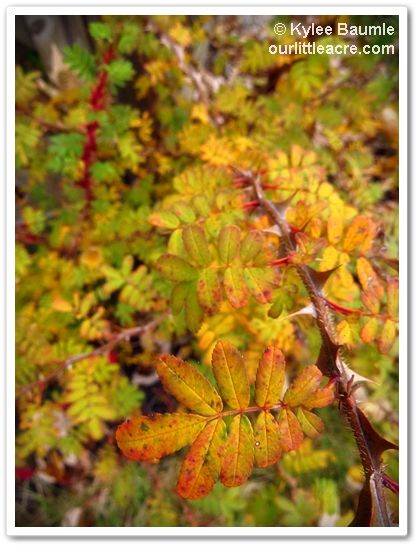
Wingthorn rose
(Rosa sericea)


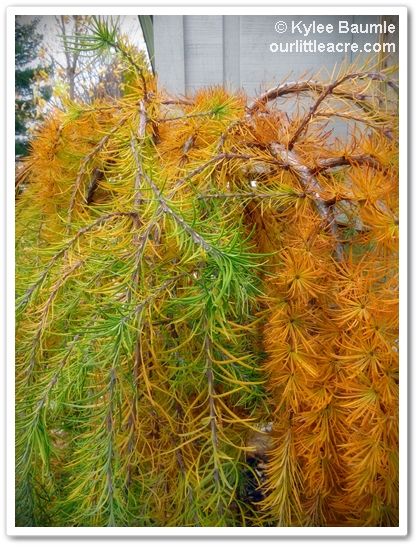
Weeping larch
(Larix decidua 'Pendula')


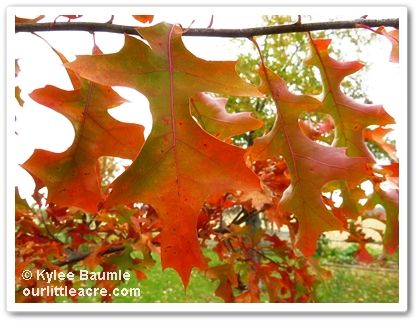
Pin oak
(Quercus palustris)


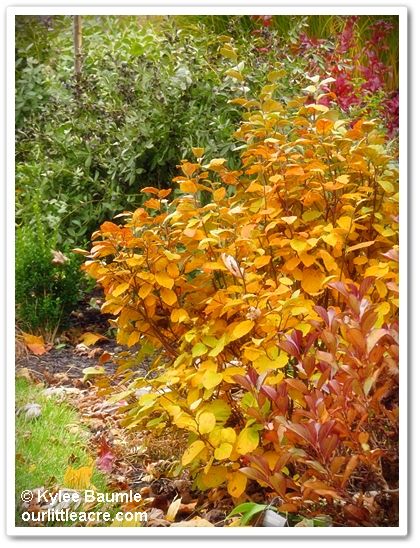
Dwarf Fothergilla
(Fothergilla gardenii 'Mt. Airy')


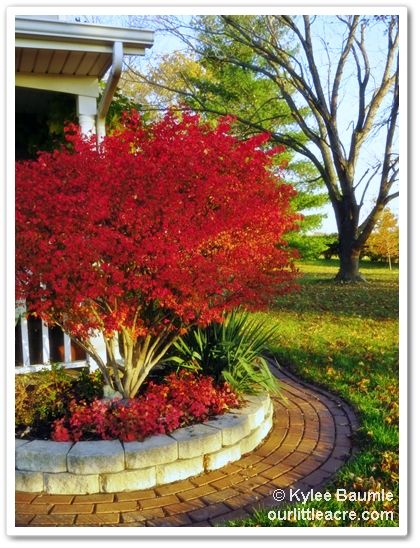
Burning Bush
(Euonymus alatus)


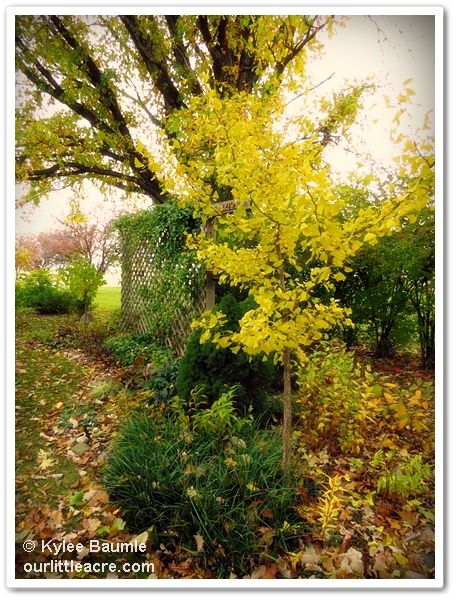
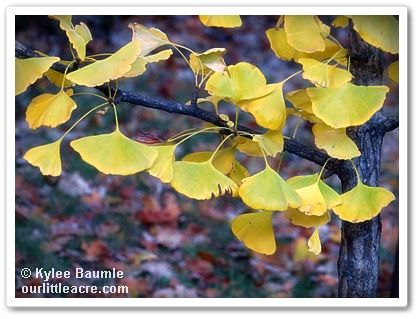
Ginkgo biloba


Ginkgo biloba


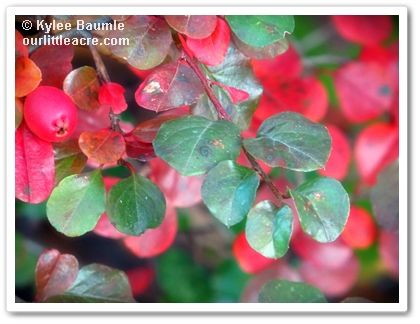
Cotoneaster


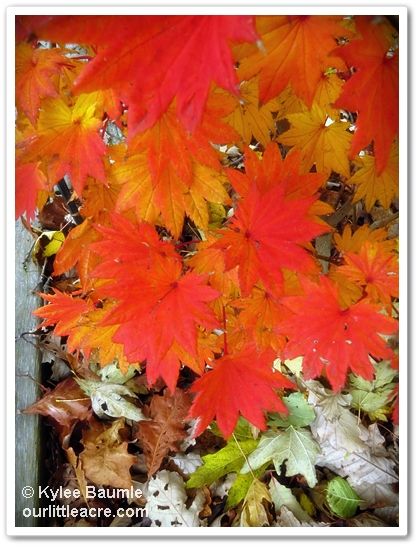
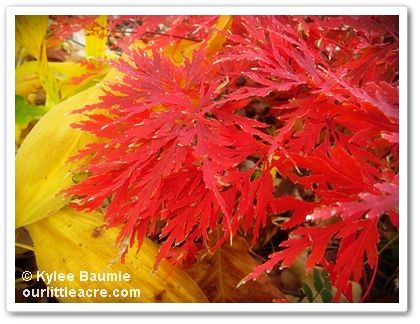
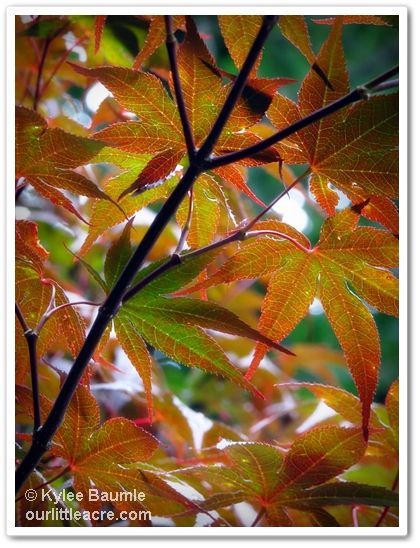
Japanese maple
(Acer palmatum var. dissectum 'Inaba shidare')


Japanese maple
(Acer palmatum 'Full Moon')


Japanese maple
(Acer palmatum var. dissectum 'Orangeola')


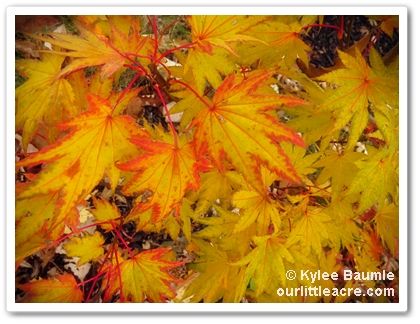
Japanese maple
(Acer palmatum 'Autumn Moon')


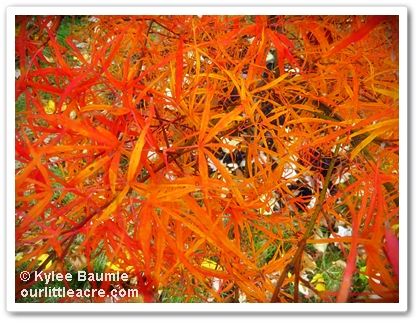
Japanese maple 'Harp Strings'
(Acer palmatum 'Koto-no-ito')


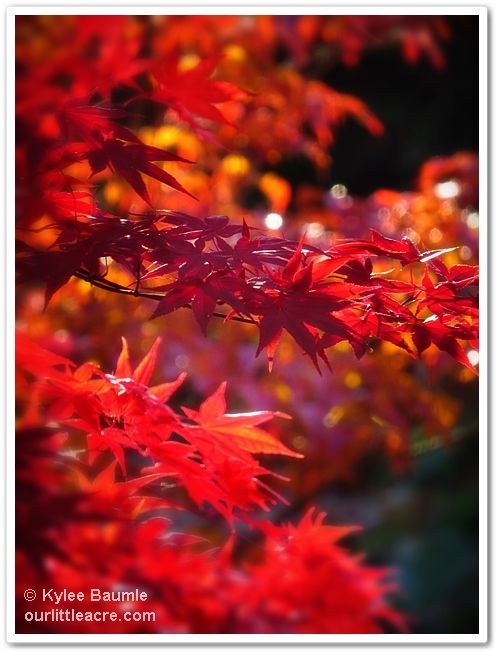
Japanese maple
(Acer palmatum 'Emperor I')


Kousa dogwood
(Cornus kousa)


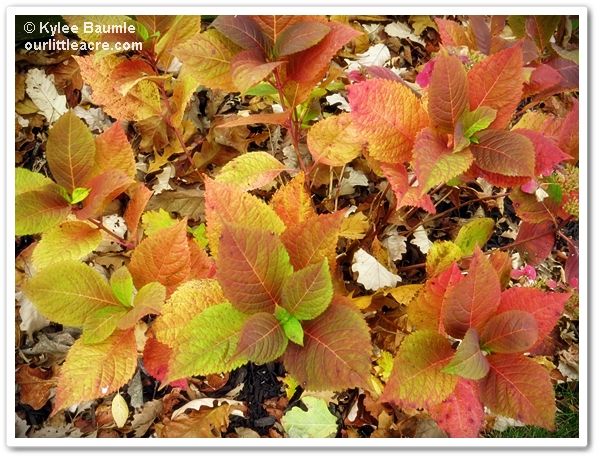
Hydrangea macrophylla


Endless Summer® Hydrangea


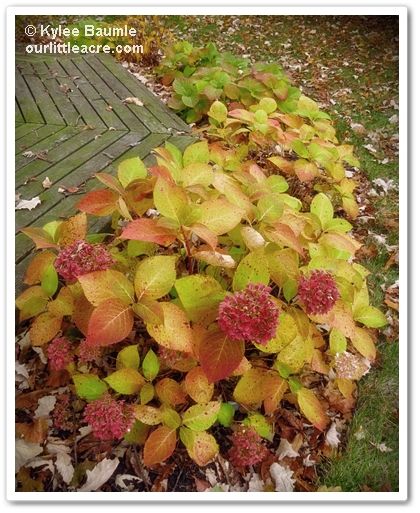
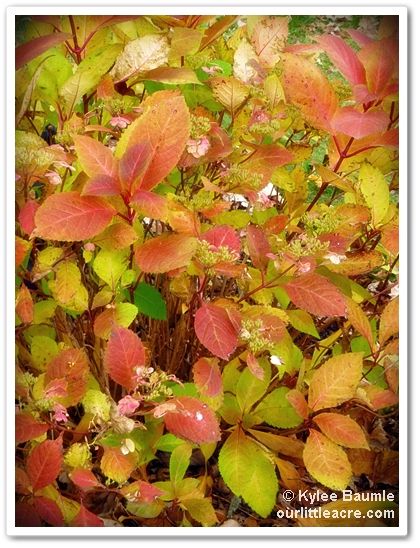
Hydrangea
(Hydrangea macrophylla 'Lady in Red')


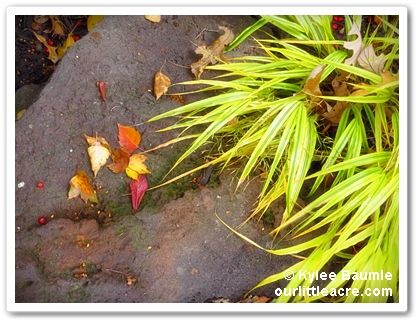
Japanese Forest Grass
(Hakonechloa macra)


Sedum


Snow Fountains Weeping Cherry
(Prunus 'Snofozam')


Japanese maple
(Acer palmatum 'Emperor I')


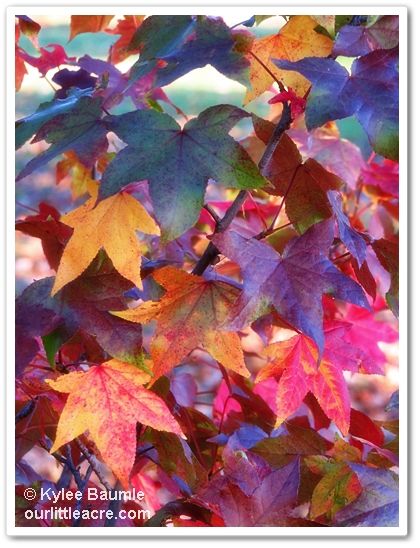
Sweetgum
(Liquidambar styraciflua)


blogger templates | Make Money Online