Wednesday, July 12, 2017

When You Need To Do Some Megaweeding


In a normal year, we would be running the sprinklers on the garden about now, because it would be so hot and dry, with no promise of rain. But this is not a normal year. I'm not sure what that even is anymore. We've just come out of one of the wettest Junes on record and July is off to a soggy start.


Last night, we had over four inches of rain and we really didn't need any. There was water laying in the field across the road and our next-door neighbor had lakefront property right out his front door. We've got two sump pumps in our basement and both of them running together could barely keep up with the water coming in. Fortunately, we weren't one of several residents in the area that lost that battle.

All this rain means the gardens are looking fantastic. The hostas appear to be on steroids. The double daylilies are blooming 100% double, for once. And the weeds are growing so fast and so big that I don't recognize them.


About those weeds... The gardens proper are doing fine in that department, thanks to either full plantings or mulch that's doing its job. But two areas are in desperate need of help. The Berry Barn, which I had completely weeded four weeks ago - it looked fantastic, I promise - now looks as if I haven't set foot in it all year.


And the grape arbor, well, let's talk about the grape arbor. We first planted grapes in 2008 - Mars, Reliance, and Himrod. We enjoyed these seedless table varieties for many years, until the last couple, when they just didn't do well.

This spring, ironically, none of the Reliance vines made it through the winter. One Himrod bit the dust and the other one isn't looking that good either. Both of the Mars vines made it, but they aren't producing a single grape. This has caused us to reevaluate this grape thing.

Romie wanted to just tear out the arbor and be done with it, but I wouldn't have any of that. I love that arbor, grapes or no grapes. So we I decided we'd let the grapes that remain do their thing and plant various clematis vines in place of the grapes that died.

"What if the clematis starts climbing all over the grapes?" he said. "Then they'll look pretty," I said. And that was that. But this post is about weeding, and the base of the grape arbor was absolutely solid weeds.

See the weeds at the rear of the grape arbor base? The whole thing
looked like that when I started weeding.


Dandelions, various grasses, a couple of types of clover (and they'd produced seed pods by now), poison ivy, plantain, baptisia seedlings, white mulberry, thistles, Washington hawthorn seedlings, creeping euphorbia, and various other weeds had made themselves right at home while we mulled over what to do.

Since the arbor was staying and we were growing desirable things on it, these weeds had to go, but oh my gosh, where to start? Images of a bulldozer came to mind, but we didn't have one. I love my family of Cobrahead weeders, but this was no match even for those.

But sometimes, ever so rarely, I have moments of brilliance. They're so few and far between that I'm prouder of them than I have a right to be, mainly because I know that every other person on the planet already knew about this long before I did. But dang, if I wasn't excited about the idea that popped into my head one day when I was doing absolutely nothing and having a good time of it.

What if... just what if I took my grandpa's manure fork (it looks like a pitchfork) and skimmed across the top of the weed-infested soil, about 2-3 inches deep, loosening the soil so that I could sift out the weeds? This would be better than hoeing because if you cut some of those weeds, that just means if you don't remove all the pieces, you're screwed. Some weeds are like earthworms - cut them up and they make new ones from the pieces.

I tried my method on a defunct strawberry bed first. It was a small area and I wanted to use the plot for something else. Oh. My. Goodness. Why I had not thought of this earlier, I don't know, but I now don't look at the weediest of beds with disdain anymore. It's actually kind of fun, because it's a much quicker and easier way of removing large quantities of weeds.

What about the dandelions though? No fork is going to remove those that easily. No, I still had to pull those out individually (unless they were small), but by loosening the soil around them, it made it that much easier to pull them out and get all the roots, especially with soggy soil.


Until the rains came last night, I made quick work of the grape arbor area. I'll finish up when we dry up a little bit. It won't take me long to finish the grape arbor and then I'll move to the other side of the yard and take care of the mess in the Berry Barn.

Hallelujah! Who knew weeding could be so easy? (You don't really believe me, do you? Try it!)


Saturday, June 10, 2017

Attracting Beneficial Bugs to Your Garden: A Book Review


If you follow me on Facebook, you know that I'm sort of a bug nerd. I wear that moniker proudly, because insects are some of the most fascinating things ever to roam the earth. Once you start looking at them - really looking at them - you'll see what I mean.

They're bizarre, some of them. Endearing, others. They all have a reason for being here, and it's not to annoy you either. In fact, most of them are doing good things for us and you'd do well to give them the respect they deserve.

http://amzn.to/2seD6eT
Attracting Beneficial Bugs to Your Garden won an
American Horticulture Society Award in 2015.

A good place to start to learn more about them and the role they play in our world, and specifically our gardens, is with Jessica Walliser's book, Attracting Beneficial Bugs to Your Garden: A Natural Approach to Pest Control. I know Jessica personally, a result of being a fellow garden writer and being with her at various gardening events. This girl knows her stuff.

I'm the sort of person who likes knowing all about something, right down to the obscure. Jessica's book satisfies that curiosity in me.


One of my favorite photos in the book is this one, of a lacewing egg.

So you think it's strange to want to attract bugs to your garden? While nature has some gruesome aspects to it, for the most part, it's a wonderful plan and Jessica shows us how we can help make it all work together for good.

Integrated pest management involves organic methods of controlling the insect population in our gardens by encouraging beneficial insects to take up residence there and keep the less desirable ones under control. Will it give you perfect plants with no insect damage? No, but there are ways to put nature to work for you.

Jessica gives us 19 beneficial insect profiles, 39 plant profiles for attracting them, and insectary garden plans to help get you started. She provides a couple of citizen science opportunities for you to participate in as well.

If you've been gardening for any length of time, you realize what a futile effort it is to try to keep them away, so why not try and attract the ones that will work for you? If you can't beat 'em, join 'em. It's really the best way.

http://www.jessicawalliser.com/about-jessica/


Jessica Walliser co-hosts The Organic Gardeners on KDKA radio in Pittsburgh, Pennsylvania, and has written four other gardening books, including her newest, which will be released later this year. Learn more about Jessica and her work at jessicawalliser.com.

~~~~~~~~~~~~~~~~~~~~~~~~~~~~~~~~

http://amzn.to/2s9Hgno


Container Gardening Complete: Creative Projects for Growing Vegetables and Flowers in Small Spaces(October 1, 2017)
http://amzn.to/2s9bGWT


Good Bug, Bad Bug: Who's Who, What They Do, and How to Manage Them Organically


http://amzn.to/2s9L6Nc


A Gardener's Notebook: Life With My Garden
(co-authored with Doug Oster)


http://amzn.to/2sfIFtn


Grow Organic: Over 250 Tips and Ideas for Growing Flowers, Veggies,  Lawns and More
(co-authored with Doug Oster)


Tuesday, June 28, 2016

It Was an Actual Cherry HARVEST!


Back in 2011, while attending a regional GWA (Garden Writers Association) meeting in Chicago, I received a couple of small seedlings of a dwarf sour cherry shrub - 'Carmine Jewel'. Gurney's supplied them to us as part of the swag that we usually get when we attend such meetings.

I brought them home and planted them back near our apple trees. They didn't grow much the first couple of years and then those pesky wabbits chewed them off at the ground one winter. (Grrr... That's what I get for boasting about never having any rabbit issues.) I was certain they were both goners, but they came back from the roots - like gangbusters!


Last year, we had three blooms on one shrub and ended up with one cherry. I couldn't decide what to make with that cherry, so I simply ate it. 

Did I mention these were sour cherries?


This year, I was taken aback when I saw how profusely both shrubs were blooming and I made plans for pies, cobbler, jelly... Once the cherries started turning red, I netted them so the birds didn't get to them before I did.


In the end, there weren't as many as I'd hoped there would be, but...

CHERRIES, Y'ALL!


I haven't yet decided what I'm going to make (after I pit them...gah), but I think it might be this:


● Tart Cherry Crisp ●

(Recipe from Taste of Home)

________________________________

The 'Carmine Jewel' Dwarf Cherry was bred at the University of Saskatchewan and was introduced to the public in 1999. It is a shrub-type cherry that reaches a maximum height of about 6½ feet and a spread of about 5 feet, making it ideal for limited space gardens. 

Self-pollinating, it is one of the first cherries to ripen in early summer, with stunningly heavy yields in its fifth year, with 20-30 pounds of cherries per shrub not uncommon.

'Carmine Jewel' is is rated for zones 2b-7, making it very hardy. It is a firm cherry with small pits, making it excellent for drying. It has few disease and pest problems, making it a good choice for organic production.


It seems that it's a common error among backyard gardeners to pick these cherries before they're completely ripe. They're nearly black when at their peak and will be quite a bit sweeter if you can be patient. I noticed a few cherries falling off the trees, so I started harvesting them - in error. They will still be fine to eat in recipes, but next year, I'll know to wait a little longer.

___________________________

A tardy thanks to Gurney's for providing these shrubs free of charge at our GWA meeting.
___________________________


Thursday, June 23, 2016

Celebrating National Pollinator Week: Food For Thought


It's no secret the pollinators are in trouble. Oh sure, you see plenty of butterflies, bees, flies, and other insects out there and even bats (yes, they're pollinators), so really, what's the big deal, right?


Consider this:

One out of every three bites of food we eat relies on pollinators.


Still not convinced?

To carry that point further, some plants require specific pollinators in order to get good production of their fruit. (And I use "fruit" in the general definition of whatever edible the plant produces.) Bees are the most well-known of the pollinators, but other insects and birds are more efficient at pollinating certain plants.

Zucchini, anyone?


If you're one of the people who has asked me, "Does it really matter if the monarchs disappear?" I can wholeheartedly answer, "YES."

My philosophy in general is this:  I believe that every living thing on the earth is here because it has a purpose.

In regard to the monarchs, perhaps we can live without them, but it's more complicated than that. The monarchs are in decline because of several factors, not the least of which is that their habitat is disappearing due to urbanization, and to a greater extent, due to the agricultural use of pesticides* that kill milkweed, the only food their babies eat.


If you think that monarchs are the only pollinator that is being affected by the pesticides, think again. They're just more visible and recognizable than most. They're the poster child for the greater problem we humans are causing in the environment.

It's a complicated issue, for sure, but if nothing else, during this, National Pollinator Week, please give these things some consideration. Think before you use pesticides yourself. You may not only be saving the pollinator's meal, you could be helping to save your own.


_________________________________________
* Pesticide is the general term used by the FAO (Food and Agriculture Organization), the USDA and the EPA, which includes, but is not limited to herbicides, fungicides, and insecticides. Read more here.


Tuesday, April 19, 2016

Walking On Sunshine


I have this kind of love/hate relationship with dandelions and I'm betting you do too. They're the sort of thing that you can't live with because they irritate you so much and you can't live without them because they just won't let you.


At this time of year, they're fairly innocuous, and to be honest, they've got a lot going for them. We've just emerged from winter and seeing the first dandelion bloom pretty much makes each and every one of us smile, even if it's only on the inside. And one or two of them won't hurt anything anyway. Unless you let it go to seed.


One dandelion bloom produces 54 to 172 seeds and one plant will produce more than 2000 seeds. A single acre of dandelions is estimated to have the capability of producing 240,000,000 seeds a year. Not only that, dandelions do this all on their own because they are apomictic. In other words, no sex is required for them to reproduce. No wonder they pop up anywhere and everywhere.

Even though dandelions don't require pollination to produce seed and thus reproduce, they are well-visited by pollinators such as bumblebees, honeybees, butterflies, beetles, and moths. Dandelions are one of their earliest sources of nectar and far be it from me to deny the bees their breakfast.

But you could be enjoying dandelions for your breakfast too. Every part of the dandelion is edible, with the roots tasting a lot like parsnips, the young greens making a tasty leafy salad, and the blossoms as the basis for a delicate-tasting jelly. And there's wine.

Dandelions pack a punch when it comes to nutrients. According to nutritiondata.com and the USDA, “This food is low in saturated fat, and very low in cholesterol. It is also a good source of folate, magnesium, phosphorus and copper, and a very good source of dietary fiber, Vitamin A, Vitamin C, Vitamin E (Alpha Tocopherol), Vitamin K, Thiamine, Riboflavin, Vitamin B6, calcium, iron, potassium and manganese.”

One serving of dandelion greens (1 cup) has 35 calories, provides 112% of your daily value (DV) of Vitamin A, 32% of Vitamin C, 10% of calcium, and 9% of iron.

We've never had a perfect lawn. Far from it, for several reasons. First of all, we live on an acre that has a lot of grass. We don't weed and feed, and as far as dandelions go, I'm perfectly fine with seeing them peppered throughout the yard as yellow flowers. I don't mind clover either but that's a conversation for another day.

Do we battle dandelions, in spite of all the facts about them that are in the pro column? Sure, because we don't want an entire lawn of them and I don't want them in my gardens. We're not trying to raise them as a crop.

So we dig out the larger ones and we try to mow before they go to seed. We keep just enough around for grandkids to make daisy chains and bring us sunny bouquets. Just enough to provide pollinators with nutrition when it's in limited supply. Just enough to make us smile when we that's exactly what we need.

Kara, age 6, in 1986


_____________________________________
The article, "Walking On Sunshine," first appeared in my weekly newspaper column in the Paulding Progress, published in Paulding, OH.

Tuesday, February 2, 2016

A Gift of Tulips in Winter


www.stargazerbarn.com
It was the coldest day of the year so far (23°F, with a low of 1° overnight) in mid-January, when our doorbell rang. Our house faces west and it was windy, so you can imagine the blast of cold air that greeted me as I opened the door to receive a box from the FedEx delivery man.

I knew when I saw the box that what was inside it was going to be like a breath of spring - just what I needed.

TULIPS!

These flowers were packed very well, with a zip-tie around the flowers
and through the box so they wouldn't move around during shipment.

I'd met the folks from Stargazer Barn when I was at P. Allen Smith's Moss Mountain Farm in Arkansas last May during the 5th Annual Garden2Blog event. They provided oodles of gorgeous fresh blooms for our Field to Vase Dinner we had at the farm on our last night there. It was a magical evening...


One of the best things about the event was getting to wear flower crowns.
Here, I'm with my co-writer and best bud, Jenny Peterson.

Stargazer Barns is a California-based grower of fresh-cut flowers, which ships throughout the U.S. Most of our cut flowers in this country come from South America, but in recent years, American growers are taking back as much of the industry as they can by raising awareness that we can and do grow gorgeous flowers right here in our own country.

The Slow Flower movement has Debra Prinzing to thank for getting the ball rolling, with her publication of both The 50 Mile Bouquet and Slow Flowers (2012 & 2013, St. Lynn's Press). I encourage you to read Debra's explanation of what "slow flowers" means.

Now that you have an idea of the goal and purpose of buying American Grown flowers, just take a look at the flowers I got - 24 'Ile de France' long-stemmed tulips - complete with a galvanized French-style vase, three Tulip Perfume fragrances, along with a bar of Dick Taylor craft chocolate!

This is how the tulips looked when they arrived. In just a couple of days
they opened up, and lasted more than a week.


These are what you get when you order the Sensory Seduction Collection. The flowers are beautiful enough, but with the other items it makes for a really special gift.

Stargazer Barn grows their own flowers in Humboldt County, California, and the other two gifts in the collection are also Humboldt County businesses. I love how they've collaborated to create an All-American gift package.

 
The chocolate bar is almost too pretty to eat! Almost...

'Lemon Sugar', 'Mandarin Peony', and 'Coconut' spray bottled scents
come packaged in their own ribbon-tied box.

http://www.veriflora.com/
Stargazer Barn is certified by Veriflora™, a third-party organization which uses a strict set of standards to govern sustainable growing conditions, protection of local ecosystems, energy efficiency, waste management as well as worker wages and conditions.

There are many other options for sending a gift of flowers (and more), and through March 1, 2016, you can use the promotion code flowerhouse to receive 15% off your order (excluding tax and shipping).

I'll be back in a few days to share more luscious flowers and gifts from Stargazer Barn, but for now, enjoy the spring cheer of these tulips!


__________________________________
I received the Sensory Seduction Collection from Stargazer Barns free of charge. No other compensation was given and I'm happy to share these beautiful flowers with you. Perhaps they will be something you might want to send to someone else or enjoy in your own home.

Sunday, July 26, 2015

I Went to a Garden Party...


Actually, I was the host for the garden party. I've been wanting to do this for several years now, because I could think of nothing more delightfully summery than to stroll through my gardens with friends, as we sipped on drinks, and chatted about the weather, families, flowers... anything, really. And this summer, we did it.

Photo by Susan Pieper

With the unpredictable weather we'd been having, I knew I was taking a real chance that it would be suitable on July 23rd for spending the day outside, but that's what faith is for, right? And it could not have been lovelier.

Nearly 20 of us gathered in the backyard and by the day's end, looking back I think I can say it was the highlight of my summer, eclipsed only by grandson Maverick's birth two weeks later. ❤

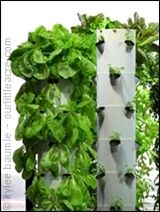
The Tower Garden provided plenty of leafy greens for our salads, and
celery for the Bloody Marys.

This summer was the first time I'd ever used a Tower Garden, and my intent was to serve a meal using the bounty from it and the rest of my garden, with a little help from the grocery store. Meghan Fronduti, my Tower Garden connection, encouraged me to do this and with Meghan in your corner, you think you can do just about anything.

My girl Jenny flew up from Texas for the party and she was such a help to me in pulling this off. I don't "do" parties, but if I can get Jenny to help me again, I just might do another one!

The Menu

We strolled and chatted and shared laughter and stories, and then settled down next to the pool for Curried Tuna Apple Salad on a bed of lettuce from the Tower Garden.


I made bite-sized biscuits containing petals from Calendula grown in my gardens out back. I used my friend Teresa O'Connor's recipe, and while the orange petals didn't really add flavor to the biscuits, they made them look pretty. They do add antioxidants and Calendula is often used as a more affordable substitute for saffron.

Not just a pretty face in the garden!
#edibleflowers

Various drinks were served, including water infused with cucumbers and strawberries (from the garden). There were Bloody Marys, with celery sticks harvested from the Tower Garden. This was a first for me for growing celery and while I had my doubts as to whether it was possible to grow it in the Tower Garden, it did beautifully!

For dessert, we had miniature cheesecakes, topped with blueberries from my Brazelberries® Peach Sorbet™ plants, grown in our Berry Barn.


After we finished eating, we all retired to a shady spot under one of our 200-year-old oak trees for a fun White Elephant type of gift exchange. In this instance, I provided the gifts, mostly from the bounty of swag bag items I've received over the years.

Photo by Meghan Fronduti

One member (not naming any names) liked her gift so well that she hid it and gave the stink eye to anyone who even looked her way with the intent of stealing it. It was all in good fun.

Crescent Garden provided a couple of containers that I fell in love with at
P. Allen Smith's Moss Mountain Farm in April. This one is "Eye Am" and it's
available in several colors.

The table arrangements were simple Ball jars filled with local wildflowers that
Jenny and I cut from the roadside nearby that morning - black-eyed Susans,
Queen Anne's lace, ironweed, and wild lettuce.

There's always a cat or two patrolling Our Little Acre.
Photo by Marsha Ross


The entrance to Max's Garden
Photo by Marsha Ross

Several people wore garden hats, including Marsha Ross and my mom.

Thank you, Meghan, for taking this photo of Jenny and me. We rarely get
our picture taken together, for some reason.

 
The day was warm and the pool was tempting, so Angie Bidlack, Sarah
Messmann and Kara Fritz took advantage of it.

The new kitchen saw its first party as the bar lived up to its name.

It was a beautiful afternoon with so many lovely guests, I'm not sure we could duplicate it, but I'm giving it some thought for next year. Thank you to everyone that attended, because without each and every one of you, this little get-together would not have happened.


blogger templates | Make Money Online