
Wednesday, October 17, 2018

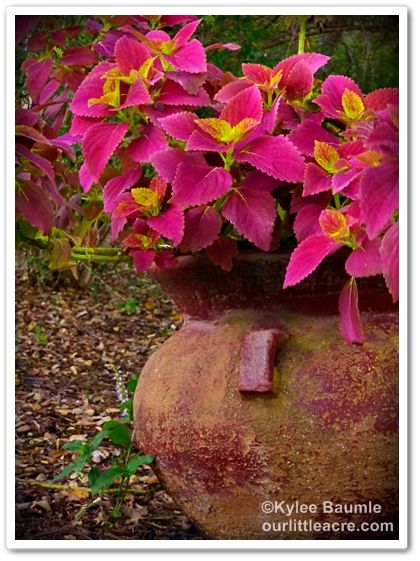
Wednesday Vignette: Coleus ColorBlaze® Torchlight™


This is my first time participating in the Wednesday Vignette meme, hosted by Anna at Flutter & Hum. I've watched my friend, Loree Bohl (Danger Garden), participate for a long time, and I always enjoy it.

When I walked around the corner of the pool house last week and saw this trial plant from Proven Winners® cozying up to my small cat statue, I knew I had to jump in myself.

Coleus ColorBlaze® Torchlight™

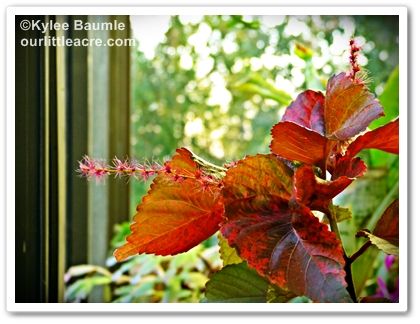
When I received Coleus ColorBlaze® Torchlight™ (Solenostemon scutellarioides) as a small plant this spring, I placed it on the north side of our pool house. That little flower bed spends most of the summer as shades of green and often is neglected, both in terms of care and observation. I thought by placing this colorful coleus there, it might add a little spark to an otherwise ho-hum scenario.

Mission accomplished.


Coleus ColorBlaze® Torchlight™
Solenostemon scutellarioides

Zones: 10-11
Light: Sun or Shade
Mature Size: 24-36 inches
Water Needs: Average

This new coleus will be available in garden centers in Spring of 2019.


My end-of-season evaluation

I'm a lazy gardener. When trialing plants, I usually don't give them any special treatment and in most cases, I "set it and forget it." I try to make sure new plants get the water they need, but that's about it. This coleus was planted in spring and to be honest, I completely ignored it, not even watering it as much as I should have. It also wasn't planted in the best soil - unamended heavy clay. (Shame on me.)

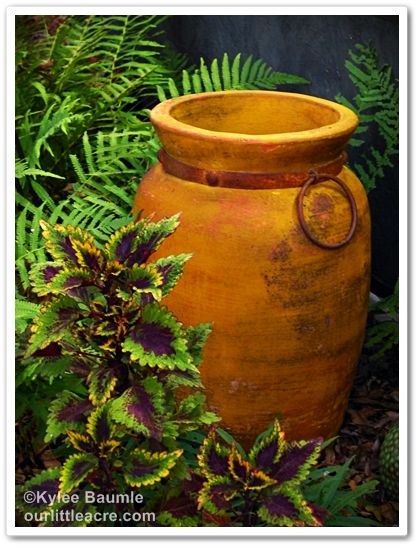
It has never bloomed, which I consider to be an asset for a coleus, as I remove their flowers anyway.  It still looks good, this late in the season, but if I grow it again I'll pinch out the growth tips to encourage additional branching. I would also be sure to underplant it with a low grower like the Heuchera shown here, to hide its skinny ankles. Amended soil would be a good thing, too.

It'a beautiful coleus that adds color to monochromatic spaces with little to no effort required on the part of the gardener. And that' why it's a "proven winner" in my Zone 5b Northwest Ohio garden.

___________________
I was provided with this plant free of charge to trial in my garden. Though it's not a requirement to participate in the trialing program, I'm sharing my experience and honest thoughts on growing it.


Tuesday, October 2, 2018

Tithonia Baby Steps


As any die hard monarch mama knows, monarch butterflies love Tithonia, a.k.a. Mexican sunflower. And anyone who is serious about attracting them will have this growing tall and proud in their garden.

Photo by TJ Gehling/CC license 2.0


I was no exception. When offered some free seeds from a wonderful seed company* a couple of years ago, I immediately chose Tithonia rotundifolia 'Torch', and I had visions of a glorious photo shoot in the latter half of summer. The monarchs were going to flock to them by the numbers. Bees and hummingbirds, too!

I couldn't wait.


Year One

So, I planted those seeds that spring. "They're easy!" everyone told me. "You're going to love them!" they said.

Photo by F.D. Richards/CC license 2.0


It was true, the packet and the website (and every other website on the vast world of the internet), claimed they didn't have any special needs, would grow in poor soil, and tolerated drought and neglect. Since they are native to Mexico and I know what harsh growing conditions there can be in much of the landscape there, I just knew that success was a sure thing.

But summer came and went, and nary a Tithonia appeared.

This is not the first time that I've had bad luck with seeds. I've made many mistakes over the years, such as planting seeds too early. And being The Queen of Procrastination, I've planted them too late. I suppose that's not bad luck, that's just bad gardening. In any case, I was no stranger to failure.

The next time I spoke with the seed company's owner at a trade show, I related my experience to her. She was puzzled and repeated what I'd heard over and over, "But those are so easy. I wonder what happened. Here, take another packet and try again."


Year Two

The next year just happened to be one in which I exercised my queenly duties and I got the seeds in the ground late. Not too late, I didn't think, but perhaps I thought wrongly. I kept waiting to see little green seedlings popping up from that "poor" soil, but summer was half over before I even saw them. I got three. And they didn't grow very fast.

My tithonias gave the term "slow flowers"
a whole new meaning.

Before I knew it, frost reared its ugly head and I only had plants barely a foot tall, if that. No blooms, of course. But, HEY! This time I got PLANTS! And I'm pretty sure they weren't weeds. Things were looking up.


Year Three

They say the third time's a charm, and I'm a believer. This year, I got those seeds in the ground at the perfect time. I was determined to make my monarchs happy campers. Though it did take a little while before I saw little green sprouts start peeking out of the ground, things looked very promising.

While others were showing their four-feet tall Mexican sunflowers loaded with blooms (and monarch butterflies perched atop, of course) on Facebook, my half a dozen plants were doing the best they could, which was the best I'd ever seen here at Our Little Acre. By the first of September, they were over three feet tall, and I saw flower buds!!!

By September 13th, I had one glorious vibrant bloom that nearly made me weep. FINALLY, I had grown a Tithonia from seed and it actually bloomed. I can't tell you how happy this made me.

MY  TITHONIA!!!


Then it got cold, like in the low 40s at night cold, and the other blooms stayed closed up tight.

It has gotten warm again in the last few days, so I'm waiting for some more blooms to open. But if I only get that one Tithonia bloom, I have done better than my past efforts. As every gardener knows, there's always next year, and I'm on a roll.


*I'm not naming the seed company to protect the innocent. It wasn't the seeds' fault. It was the gardener's. I can't grow Johnny jump-ups either.


Wednesday, August 26, 2015

Wordless Wednesday: Make Love, Not War


Morning Glory
Ipomoea nil 'Tie Dye'

~~~~~~~~~~~~~~~~~~~
 
Why do plants do this (have variegated blooms)? Here's one explanation:

"The Japanese morning glory has an extensive history of genetic studies. Many mutants in the colors and shapes of its flowers and leaves have been isolated since the 17th century, and more than 200 genetic loci have been localized for the 10 linkage groups. They include over 20 mutable loci, several with variegated flower phenotypes. In a line of Japanese morning glory bearing variegated flowers called flecked, a transposable element of 6.4 kb, termed Tpn1, was found within one of the anthocyanin biosynthesis genes encoding dihydroflavonol-4-reductase (DFR). The 6.4-kb element carries 28-bp perfect terminal inverted repeats, the outer 13 bp being identical to those of the maize transposable element Suppressor-mutator/Enhancer. It is flanked by 3-bp direct repeats within the second intron of the DFR gene, 9 bp upstream of the third exon. When somatic and germinal excision occurs, it produces excision sequences characteristic of plant transposable elements. Cosegregation data of the variegated flower phenotype and the DFR gene carrying Tpn1 indicated that the mutable phenotype is due to excision of Tpn1 from the DFR gene. Sequences homologous to Tpn1 are present in multiple copies in the genome of Japanese morning glory." (http://www.plantcell.org/content/6/3/375.abstract)

Ummm...okay.


Tuesday, July 7, 2015

I Bought it For the Foliage


This spring, I was walking around the garden centers, in search of petunias to fill lots of spots in the garden, since I had declared this year to be The Year of the Petunia here at Our Little Acre. I found an orange one that I decided I needed, and not too far away on the bench was a plant with foliage that looked like it was just made to go with that petunia.

I can imagine all kinds of wonderful things this would complement!

I bought them both and potted them up in a hanging container for the gazebo:


Even though I knew full well that the beautiful-foliaged plant was a Fuchsia, for some reason I didn't expect it to do this:


This just might be my most favorite plant of the summer.

~~~~~~~~~~~~~~~~~~~~~~~~~

Fuchsia austromontana 'Autumnale'
Zone: 10-11
Light:  Part shade to Shade


Sunday, January 11, 2015

There Are Marigolds and Then There Are Pot Marigolds


These are not your grandma's marigolds. But wait, she probably grew these too! While I love the traditional marigolds and have never had a single year of gardening that didn't include them of one sort or another, there's another "marigold" that I adore even more. The pot marigold.


Calendula officinalis 'Flashback'

Calendula is commonly known as "pot marigold," and while it's classified as a short-lived perennial and sometimes a hardy annual, in my Zone 5b it's definitely an annual. I've never had a single plant survive winter here. They're pretty good at self-seeding though, so there's that.

Photo by H. Zell
And speaking of their seeds, those look like dried up worms to me. Each flower head has an abundance of the short curved seeds, so there will always be plenty for next year. I've not caught any birds eating them, but I don't know why they wouldn't.

Calendulas are one of the edible flowers, giving salads color, and wereoften used as a saffron substitute and in soups and stews, which probably contributed to them being known as "pot marigolds." Calendula has also been used to provide color to some cheeses and can be used as a fabric dye.

Some pharmacological studies have suggested that Calendula has antiviral and anti-inflammatory properties. Because of this, you'll find it as a common ingredient in products used to treat certain skin conditions.

Calendula is also a host plant for several species of moths, meaning you might find caterpillars on the foliage at some point. I've never found them to do much damage in my garden though.


There are several Calendula cultivars available to be grown by seed, including the one I grew last summer - 'Flashback' from Renee's Garden Seeds - as well as the straight species. Some of those include:

Lemon Cream™
'Pacific Beauty'
'Oktoberfest'
'Deja Vu'
'Triangle Flashback'
'Orange King'
'Zeolights'
'Kablouna'
'Radio'
'Pink Surprise'
'Resina'
'Geisha Girl'
'Ball's Improved Orange'
'Golden Emperor'
'Nova'
'Fiesta Gitana'
'Tangerine Cream'
'Bronzed Beauty'
'Solar Flashback'
'Corniche'
'Faron'
'Candyman Orange Dwarf'
'Mandarin Twist'
'Gold Star'
'Bon Bon'
'Strawberry Blonde'
'Indian Prince'
'Orange Porcupine'


You can buy seeds online from these sources:

Baker Creek Heirloom Seeds
Burpee Seeds
Renee's Garden Seeds
Botanical Interests
Johnny's Selected Seeds
Eden Brothers
Swallowtail Garden Seeds

I promise this isn't an Osteospermum, even though it strongly resembles it.
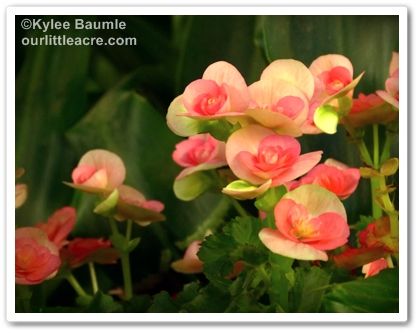

Calendula officinalis 'Flashback'


Thursday, May 8, 2014

Garden2Blog 2014: Return to Little Rock!


Boy, do I feel blessed.  Or lucky.  Or both.  In 2011, I got to visit someone who became one of my favorite people, who lives in a house on a property that most of us just dream about.  It was the very first Garden2Blog, held at P. Allen Smith's Moss Mountain Farm just outside Little Rock, Arkansas.

Garden2Blog 2011
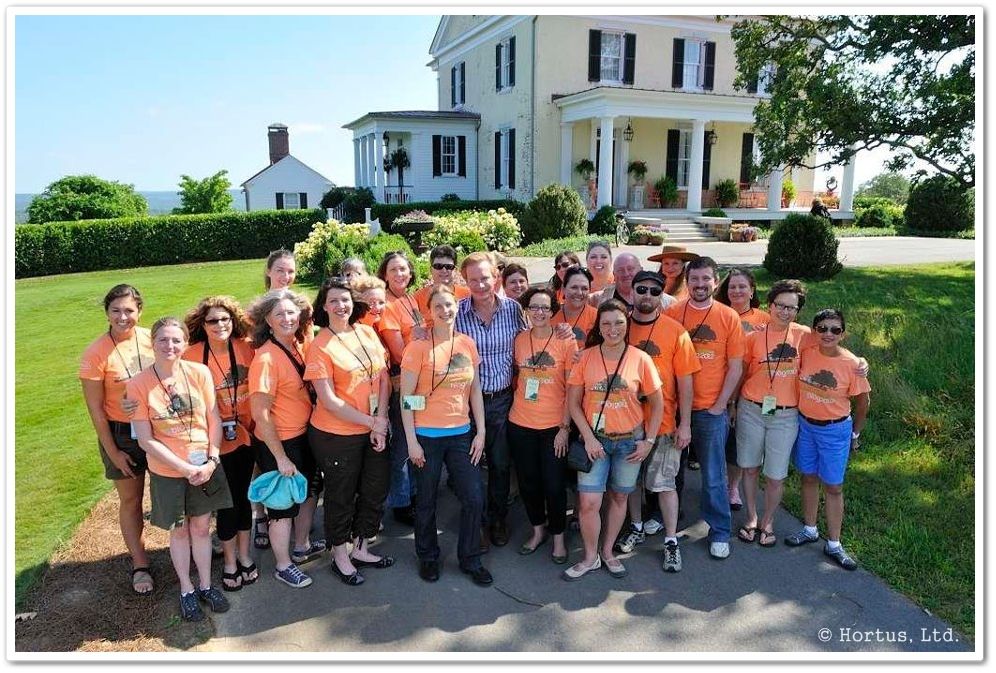
Twenty (give or take) garden bloggers from around the country spent two days touring private gardens and whooping it up at Allen's farm, all the while learning great stuff about plants and gardening and garden products.  We garden bloggers enjoyed each others' company too, because you know when that many people who enjoy the same thing get together, all kinds of shenanigans are sure to happen.  Some people call it networking.  Whatevs.

Then the next year came along and lo and behold, I got to go again!  About half the bloggers in 2012 had been there the year before and half of them were first-time attendees.  Just when I thought it couldn't be as fun as it was the first time, it was even more so.  And this time we didn't have a tornado breathing down our necks.  We had the best time.  Again.

Garden2Blog 2012   

I was pretty sure I'd had all the fun I was going to get to have at Moss Mountain Farm those two years, but guess what?  I got invited back this year!  In about ten days, I'll be heading to Little Rock again and you can bet I'll be cherishing every moment I spend there, because for SURE this will be the last time, I just know it.  And boy am I grateful for what I know will be a third charming time.

The festivities have actually already begun.  Two weeks ago, we were sent a package from one of the event's sponsors - Jobe's Organics - and we were instructed to use the materials to plant a container and video the process.  We got a plastic container, some Jobe's Organic potting soil, some Jobe's Organic fertilizer, and a $10 gift card to either Lowe's or Home Depot to help buy plants for the container.  Mine was from Lowe's, since that's the closer store to me.

Now videos and I are not the best of friends.  You don't really see me in too many videos on this blog or elsewhere, do you?  Some people are good at them and actually love doing them (*waves at Shawna*), but I'm sort of uncomfortable with them.  This one was actually kind of fun though, because I got this idea of showing, not telling.  So without further ado, here's my 1:23 video:


I did it in one take, which is a good thing, because I would have hated to have to put those plants back in their pots and the potting soil back in the bag and do it all again.


Some potting tips:

  • Make sure your pot has a hole for drainage in the bottom.  I had Romie drill one in the bottom of this pot because it didn't already have one.  You can use a container with no drainage hole, but you have to be really careful about overwatering if you do that.
  • This potting soil didn't already have fertilizer added to it, so I put the proper amount in it (according to package directions) before adding the plants.
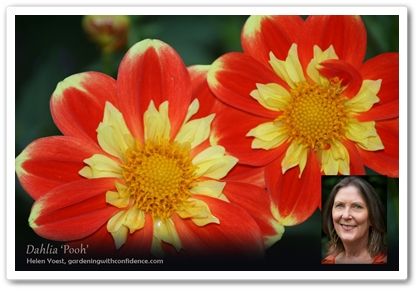
  • The old formula of Thriller + Filler + Spiller still works well.  I used Juncus grass as my thriller (something tall), Dahlia 'Pooh' as my filler (medium height), and Nemesia Sunsatia® Lemon as my spiller (something to spill out over the side).  All three plants like pretty much the same light and moisture, so watering will be easy to manage.
  • Because containers dry out faster than in-ground plantings, keep an eye on them, especially during hot and dry weather.  Don't forget that wind can dry out plantings faster, too.  And when you water, do it thoroughly, until the water runs out the bottom.  Let the top inch or so dry out before watering again. Most plants don't like to be sopping wet all the time.
  • Since you're watering the containers often and water runs out, the fertilizer may need to be replaced every so often, depending on what kind you use.  Some potting soils have extended release fertilizers but the Jobe's I used is organic, unlike those other ones that last for three months or so.  Organic is good.
  • If any of your plants start looking sad as the season draws to an end, take those out and replace them with something new that goes with your theme. By that time, the garden centers may have some good deals on some suitable replacement plants, and you'll have a whole new look to your container!

I mentioned a theme, didn't I?  My theme for my container in the video was to plant something for the hummingbirds.  They're drawn to red, which the dahlia provides and I added a hummingbird feeder in red and yellow colors that echo the flowers.  We'll see if the hummers find it!

https://www.facebook.com/Garden2Blog

__________________________
As I said, the planter, soil, fertilizer, and a $10 Lowe's gift card were provided by Jobe's Organics and the container video project was part of the P. Allen Smith Garden2Blog 2014 experience.  I paid the amount over $10 needed to buy the plants and the hummingbird feeder.


Wednesday, December 18, 2013

Wordless Wednesday: Abutilon


Parlor Maple
(Abutilon pictum)

Zone 9-10
3-10' tall
Sun to Part Shade
Blooms all year
Keep soil moist


Sunday, September 8, 2013

What Really Worked -- My Favorite New Plant This Year


This is part of a series of posts by garden writers highlighting one plant that did exceptionally well in their gardens this year.  For other posts in the series, see the links at the end of this blog post. 


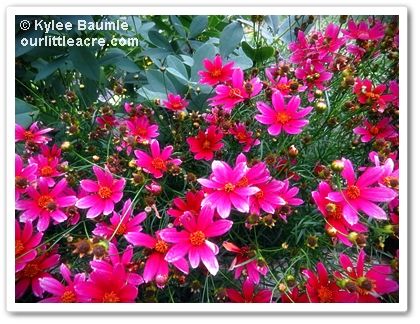
Sometimes you buy a plant and with your purchase comes previewed hype, raising your expectations for its performance.  Sometimes it lives up to that, and sometimes it doesn't.  But other times, you get a plant just because you like how it looks at the time you saw it in the garden center, and you hope it continues to look at least that good in your garden for more than a few weeks out of the year.

Last year, I planted a new (to me) Coreopsis called 'Center Stage'.  It has verticillata in its parentage (Coreopsis verticillata × Coreopsis ‘Limerock Ruby’), making it a hardy variety for my Zone 5b garden.  (USDA puts me in Zone 6a now, but I don't believe that and don't garden for it.)

In spite of my planting it too close to both a rose and a Baptisia, 'Center Stage' has been a real trouper - as in stealing the show from the rose (bless its heart, it managed to push a few blooms up through the Coreopsis).  Not only that - and this is HUGE in the world of threadleaf Coreopsis - it doesn't require deadheading!


I made a confession on my Our Little Acre Facebook page a week or so ago, in which I admitted to deadheading - not shearing - my threadleaf Coreopsis plants.  Most gardeners will just wait until the first flush of blooms is over and then take the pruners to the entire plant and shear them all off, maybe removing a fourth of the plant's upper growth.

The problem with that for me is that I hate cutting off unopened buds and with these types of Coreopsis, that simply can't be avoided.  So I patiently cut the spent blooms off individually and by the time I'm done, my back and neck are usually done, too.  But I can't help it.  For what it's worth, it pains me to thin things like beets and carrots, too.  I've been known to transplant beet thinnings in between the rows.

So the fact that 'Center Stage' doesn't even need deadheading is like music from heaven to my ears.  I will say, when I read that, I didn't believe it, but I'm here to tell you it's true.  I didn't deadhead that plant even once all summer and it has bloomed continually, even on the north side of that large Baptisia.

I'll be moving 'Center Stage' next spring, to a place where it can truly live up to its full potential.  That means full sun (it can be grown in part shade too), good drainage, and a space of at least 2½-3 feet around. Terra Nova, who introduced the plant in 2011, lists it as hardy for Zone 5-10.


See what other garden writers loved in their gardens this year:

Steve Bender ~ Alabama


Carolyn Binder ~ Florida


Helen Yoest ~ North Carolina


Shawna Coronado ~ Illinois


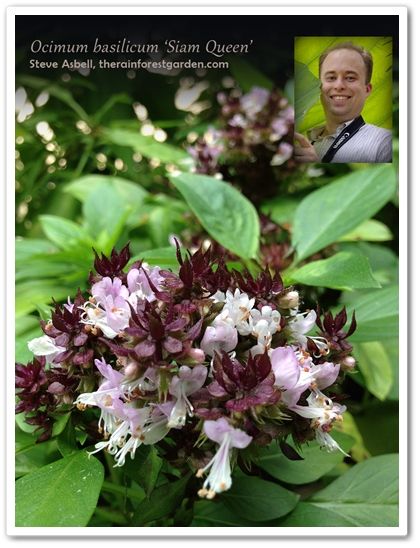
Steve Asbell ~ Florida


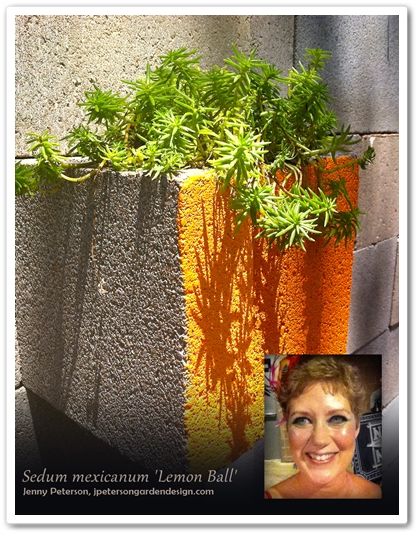
Jenny Peterson ~ Texas


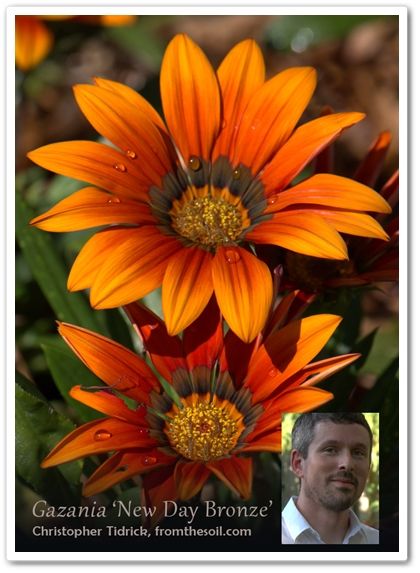
Christopher Tidrick ~ Illinois


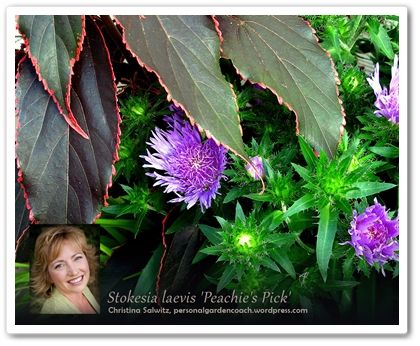
Christina Salwitz ~ Washington

What worked well for you this summer?


Wednesday, August 7, 2013

Failproof Groundcover


If you could invent a plant, wouldn't you want it to have these characteristics?

  • Drought tolerant
  • Quick to establish
  • Easy to propagate
  • Pest-proof
  • Stands up to foot traffic
  • No special care required

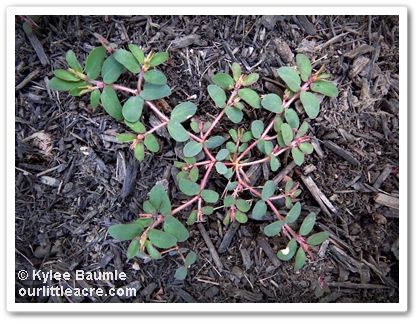
Euphorbia humistrata fits the bill.  It's an annual, but it might as well be a perennial because in effect, it acts like one.  Once you have it, there's no need to replant it year to year. It looks beautiful draping over a retaining wall edge.  A nearly identical plant (Euphorbia maculata) has unique burgundy markings on its foliage.  Both grow quickly, so what more could you want in a groundcover?

Prostrate spurge
Euphorbia humistrata

What?  You're turning up your nose at this?

I think it's time we stop trying to beat this thing and join it.  It's the latest, greatest plant you never knew you wanted.  If you already have it, don't you agree that it's the easiest thing to grow since...say...dandelions? 

I've got a good crop of it going here and I'm willing to sell you some seedlings at the bargain basement price of 50 cents per plant.  How many do you want?


Wednesday, November 28, 2012

Wordless Wednesday: Growing in Austin


Coleus (Solenostemon scutellarioides)

Rieger Begonia (Begonia x hiemalis)

Croton (Codiaeum variegatum 'Mammy')

Artemisia 'Powis Castle'

Copperleaf (Acalypha wilkesiana)

Coleus (Solenostemon scutellarioides) and unknown fern

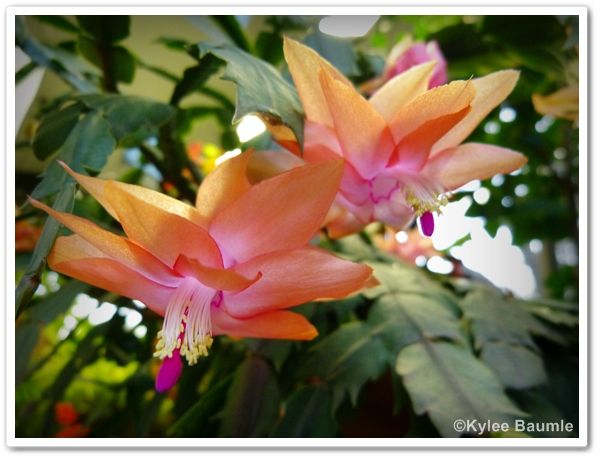
Thanksgiving Cactus (Schlumbergera truncata)

Copper Canyon Daisy (Tagetes lemmonii)

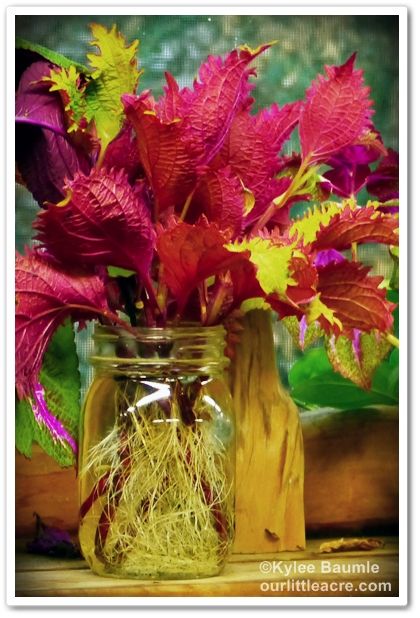
Rooted coleus (Solenostemon scuttelarioides)


Thanks to Sherry Richardson and Jacque Gregory for sharing their beautiful greenhouse and gardens with me during my visit to Austin.


Wednesday, October 31, 2012

Wordless Wednesday: Cotton


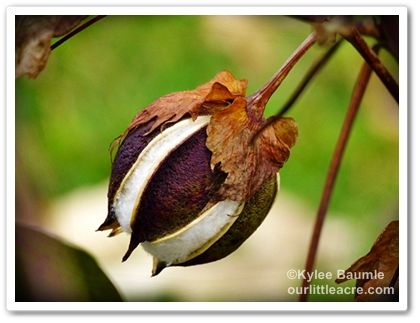
Red foliated white cotton 
(Gossypium hirsutum)
31 Oct 2012


Sunday, October 7, 2012

Frost Bouquets


A couple of weeks ago, we had one night where frost was predicted. It was a bit early and thank goodness, we managed to slip under the radar that night. It was patchy around us, but we have just enough tree cover that afforded us a bit of protection.

Tonight, we won't be that lucky, I'm afraid. They're predicting a low of 29° and if we hit that, it won't just be a dusting of frost, it will be a freeze. I got the last of the tender plants put in the conservatory or brought into the house for the winter, but there was one other thing left to do that's de rigueur on the eve of the first real frost/freeze.

The cosmos are blooming like there's no tomorrow and for them, there isn't. The zinnias that I planted too late (by seed) just started blooming two weeks ago and are loaded with buds. The rains in recent weeks did the roses a world of good and so many of them are blooming as if it were June. So what's a gardener to do?

Make frost bouquets.


When frost is imminent, I cut flowers and bring them in. No frost is going to have the pleasure of ruining my flowers' good time. I'll get to enjoy them for another week and I don't have to put a coat on to do it.


blogger templates | Make Money Online