
Tuesday, October 2, 2018

Tithonia Baby Steps


As any die hard monarch mama knows, monarch butterflies love Tithonia, a.k.a. Mexican sunflower. And anyone who is serious about attracting them will have this growing tall and proud in their garden.

Photo by TJ Gehling/CC license 2.0


I was no exception. When offered some free seeds from a wonderful seed company* a couple of years ago, I immediately chose Tithonia rotundifolia 'Torch', and I had visions of a glorious photo shoot in the latter half of summer. The monarchs were going to flock to them by the numbers. Bees and hummingbirds, too!

I couldn't wait.


Year One

So, I planted those seeds that spring. "They're easy!" everyone told me. "You're going to love them!" they said.

Photo by F.D. Richards/CC license 2.0


It was true, the packet and the website (and every other website on the vast world of the internet), claimed they didn't have any special needs, would grow in poor soil, and tolerated drought and neglect. Since they are native to Mexico and I know what harsh growing conditions there can be in much of the landscape there, I just knew that success was a sure thing.

But summer came and went, and nary a Tithonia appeared.

This is not the first time that I've had bad luck with seeds. I've made many mistakes over the years, such as planting seeds too early. And being The Queen of Procrastination, I've planted them too late. I suppose that's not bad luck, that's just bad gardening. In any case, I was no stranger to failure.

The next time I spoke with the seed company's owner at a trade show, I related my experience to her. She was puzzled and repeated what I'd heard over and over, "But those are so easy. I wonder what happened. Here, take another packet and try again."


Year Two

The next year just happened to be one in which I exercised my queenly duties and I got the seeds in the ground late. Not too late, I didn't think, but perhaps I thought wrongly. I kept waiting to see little green seedlings popping up from that "poor" soil, but summer was half over before I even saw them. I got three. And they didn't grow very fast.

My tithonias gave the term "slow flowers"
a whole new meaning.

Before I knew it, frost reared its ugly head and I only had plants barely a foot tall, if that. No blooms, of course. But, HEY! This time I got PLANTS! And I'm pretty sure they weren't weeds. Things were looking up.


Year Three

They say the third time's a charm, and I'm a believer. This year, I got those seeds in the ground at the perfect time. I was determined to make my monarchs happy campers. Though it did take a little while before I saw little green sprouts start peeking out of the ground, things looked very promising.

While others were showing their four-feet tall Mexican sunflowers loaded with blooms (and monarch butterflies perched atop, of course) on Facebook, my half a dozen plants were doing the best they could, which was the best I'd ever seen here at Our Little Acre. By the first of September, they were over three feet tall, and I saw flower buds!!!

By September 13th, I had one glorious vibrant bloom that nearly made me weep. FINALLY, I had grown a Tithonia from seed and it actually bloomed. I can't tell you how happy this made me.

MY  TITHONIA!!!


Then it got cold, like in the low 40s at night cold, and the other blooms stayed closed up tight.

It has gotten warm again in the last few days, so I'm waiting for some more blooms to open. But if I only get that one Tithonia bloom, I have done better than my past efforts. As every gardener knows, there's always next year, and I'm on a roll.


*I'm not naming the seed company to protect the innocent. It wasn't the seeds' fault. It was the gardener's. I can't grow Johnny jump-ups either.


Wednesday, July 12, 2017

When You Need To Do Some Megaweeding


In a normal year, we would be running the sprinklers on the garden about now, because it would be so hot and dry, with no promise of rain. But this is not a normal year. I'm not sure what that even is anymore. We've just come out of one of the wettest Junes on record and July is off to a soggy start.


Last night, we had over four inches of rain and we really didn't need any. There was water laying in the field across the road and our next-door neighbor had lakefront property right out his front door. We've got two sump pumps in our basement and both of them running together could barely keep up with the water coming in. Fortunately, we weren't one of several residents in the area that lost that battle.

All this rain means the gardens are looking fantastic. The hostas appear to be on steroids. The double daylilies are blooming 100% double, for once. And the weeds are growing so fast and so big that I don't recognize them.


About those weeds... The gardens proper are doing fine in that department, thanks to either full plantings or mulch that's doing its job. But two areas are in desperate need of help. The Berry Barn, which I had completely weeded four weeks ago - it looked fantastic, I promise - now looks as if I haven't set foot in it all year.


And the grape arbor, well, let's talk about the grape arbor. We first planted grapes in 2008 - Mars, Reliance, and Himrod. We enjoyed these seedless table varieties for many years, until the last couple, when they just didn't do well.

This spring, ironically, none of the Reliance vines made it through the winter. One Himrod bit the dust and the other one isn't looking that good either. Both of the Mars vines made it, but they aren't producing a single grape. This has caused us to reevaluate this grape thing.

Romie wanted to just tear out the arbor and be done with it, but I wouldn't have any of that. I love that arbor, grapes or no grapes. So we I decided we'd let the grapes that remain do their thing and plant various clematis vines in place of the grapes that died.

"What if the clematis starts climbing all over the grapes?" he said. "Then they'll look pretty," I said. And that was that. But this post is about weeding, and the base of the grape arbor was absolutely solid weeds.

See the weeds at the rear of the grape arbor base? The whole thing
looked like that when I started weeding.


Dandelions, various grasses, a couple of types of clover (and they'd produced seed pods by now), poison ivy, plantain, baptisia seedlings, white mulberry, thistles, Washington hawthorn seedlings, creeping euphorbia, and various other weeds had made themselves right at home while we mulled over what to do.

Since the arbor was staying and we were growing desirable things on it, these weeds had to go, but oh my gosh, where to start? Images of a bulldozer came to mind, but we didn't have one. I love my family of Cobrahead weeders, but this was no match even for those.

But sometimes, ever so rarely, I have moments of brilliance. They're so few and far between that I'm prouder of them than I have a right to be, mainly because I know that every other person on the planet already knew about this long before I did. But dang, if I wasn't excited about the idea that popped into my head one day when I was doing absolutely nothing and having a good time of it.

What if... just what if I took my grandpa's manure fork (it looks like a pitchfork) and skimmed across the top of the weed-infested soil, about 2-3 inches deep, loosening the soil so that I could sift out the weeds? This would be better than hoeing because if you cut some of those weeds, that just means if you don't remove all the pieces, you're screwed. Some weeds are like earthworms - cut them up and they make new ones from the pieces.

I tried my method on a defunct strawberry bed first. It was a small area and I wanted to use the plot for something else. Oh. My. Goodness. Why I had not thought of this earlier, I don't know, but I now don't look at the weediest of beds with disdain anymore. It's actually kind of fun, because it's a much quicker and easier way of removing large quantities of weeds.

What about the dandelions though? No fork is going to remove those that easily. No, I still had to pull those out individually (unless they were small), but by loosening the soil around them, it made it that much easier to pull them out and get all the roots, especially with soggy soil.


Until the rains came last night, I made quick work of the grape arbor area. I'll finish up when we dry up a little bit. It won't take me long to finish the grape arbor and then I'll move to the other side of the yard and take care of the mess in the Berry Barn.

Hallelujah! Who knew weeding could be so easy? (You don't really believe me, do you? Try it!)


Saturday, June 10, 2017

Attracting Beneficial Bugs to Your Garden: A Book Review


If you follow me on Facebook, you know that I'm sort of a bug nerd. I wear that moniker proudly, because insects are some of the most fascinating things ever to roam the earth. Once you start looking at them - really looking at them - you'll see what I mean.

They're bizarre, some of them. Endearing, others. They all have a reason for being here, and it's not to annoy you either. In fact, most of them are doing good things for us and you'd do well to give them the respect they deserve.
http://amzn.to/2seD6eT
Attracting Beneficial Bugs to Your Garden won an
American Horticulture Society Award in 2015.

A good place to start to learn more about them and the role they play in our world, and specifically our gardens, is with Jessica Walliser's book, Attracting Beneficial Bugs to Your Garden: A Natural Approach to Pest Control. I know Jessica personally, a result of being a fellow garden writer and being with her at various gardening events. This girl knows her stuff.

I'm the sort of person who likes knowing all about something, right down to the obscure. Jessica's book satisfies that curiosity in me.


One of my favorite photos in the book is this one, of a lacewing egg.

So you think it's strange to want to attract bugs to your garden? While nature has some gruesome aspects to it, for the most part, it's a wonderful plan and Jessica shows us how we can help make it all work together for good.

Integrated pest management involves organic methods of controlling the insect population in our gardens by encouraging beneficial insects to take up residence there and keep the less desirable ones under control. Will it give you perfect plants with no insect damage? No, but there are ways to put nature to work for you.

Jessica gives us 19 beneficial insect profiles, 39 plant profiles for attracting them, and insectary garden plans to help get you started. She provides a couple of citizen science opportunities for you to participate in as well.

If you've been gardening for any length of time, you realize what a futile effort it is to try to keep them away, so why not try and attract the ones that will work for you? If you can't beat 'em, join 'em. It's really the best way.

http://www.jessicawalliser.com/about-jessica/


Jessica Walliser co-hosts The Organic Gardeners on KDKA radio in Pittsburgh, Pennsylvania, and has written four other gardening books, including her newest, which will be released later this year. Learn more about Jessica and her work at jessicawalliser.com.

~~~~~~~~~~~~~~~~~~~~~~~~~~~~~~~~

http://amzn.to/2s9Hgno


Container Gardening Complete: Creative Projects for Growing Vegetables and Flowers in Small Spaces(October 1, 2017)
http://amzn.to/2s9bGWT


Good Bug, Bad Bug: Who's Who, What They Do, and How to Manage Them Organically


http://amzn.to/2s9L6Nc


A Gardener's Notebook: Life With My Garden
(co-authored with Doug Oster)


http://amzn.to/2sfIFtn


Grow Organic: Over 250 Tips and Ideas for Growing Flowers, Veggies,  Lawns and More
(co-authored with Doug Oster)


Monday, June 15, 2015

What Happened to Our Pine?


We've been inundated with rain this spring. I hate to ask for it to stop though, because it's about this time of year that it stops and doesn't return for a couple of months, which has me doing rain dances. But really... enough for now!

We had a particularly windy storm pass through this afternoon that put an additional half-inch in the rain gauge, and except for a brief break, it's been raining ever since.

During that break, I walked out to the garden to take a photo of something and noticed a large branch from one of the pine trees lying on the ground next to it.


It almost looked as if it had been pruned away, but when I looked up at the tree, I could see that it came from the top. Closer examination of the broken end revealed what looked like rot that may have been a result of insect damage or a fungus.

Something's not right here...


There is a small amount of dead material at the place where this broke away. I know there are a number of rot diseases that can affect pines, but I'm just not sure what this is.

Can anyone shed some light on it?


Tuesday, July 8, 2014

A Case of Mistaken Identity: Who's to Blame?


It can happen to anyone. You buy a plant, thinking you're getting one thing, only to find out later it wasn't what you thought it was.  Sometimes it's the bloom color that's a dead giveaway, and sometimes it's something else. I shop in all different places for my plants - Lowe's, Meijer, local and non-local IGCs, Walmart, and mail order nurseries. I've had this happen at least once with every one of them.

The latest incident happened just today. I stopped at Lowe's on my way home from babysitting for our adorable grandson, Anthony, to pick up a roll of landscape fabric.  We're redoing a stone path that has sunken down over the years and Romie wanted to put this under the gravel.

As I walked into the garden center, a red yarrow caught my eye.  I have been wanting a red one and I thought I'd get either 'Paprika' or 'Strawberry Seduction'.  I'd only seen 'Strawberry Seduction' in one place (a local IGC), but it was pretty small and I wanted a bigger pot. I'd had 'Paprika' several years ago and I liked it, but it somehow got destroyed by one project or another.

What I saw at Lowe's were two different yarrows:  Achillea millefolium 'New Vintage Red' and Achillea millefolium Song Siren 'Layla'.  The only difference I could see in the two was that 'Layla' was just a tad bit more true red and slightly shorter.  I doubt that most shoppers would even notice the difference as they were placed in the same location, mixed up together.

Does this look like violet to you?

'Layla' looked more like the shade of red I wanted, but the tag said its bloom was violet.  It sure didn't look violet to me, and when I asked the young man who checked me out what color he thought it was, he said, "Scarlet."  Precisely.  I bought three of them.

After I got home I planted them up and as I pushed them out of their black plastic nursery potS, I noticed the stickerS on each one said ACHILLEA SONG SIREN LAURA. 

What???

Which is it?

I went ahead and planted them at the back of the fence, thinking these were going to be 20-22" tall at maturity.  After all, that's what the tag said they would be. I mulled around in my mind what might be the explanation for the discrepancy in the labeling - typo, wrong tag, wrong label on the pot itself...

When I got back in the house, I did a Google search to see if there was indeed an Achillea Song Siren 'Laura'.  Yup.  And guess what color 'Laura' is.  RED.  'Laura' also only has a height of 14-16".  So...good news on the color issue and bad news on the height.  I need to move it. I have a second spot where it will look nice, in front of the Sunjoy® Gold Pillar barberries, so tomorrow I'll put them there.

Now my questions are:

  • Who is responsible for the mislabeling? The grower? (In this case, Corso's.)  Lowe's?  
  • Who puts the removable tag into the pots before they're put on the retail benches for sale?  
  • Do I let Lowe's know that all their  Achillea millefolium Song Siren 'Layla' plants are actually 'Laura'?

So many questions...


Wednesday, August 7, 2013

Failproof Groundcover


If you could invent a plant, wouldn't you want it to have these characteristics?

  • Drought tolerant
  • Quick to establish
  • Easy to propagate
  • Pest-proof
  • Stands up to foot traffic
  • No special care required

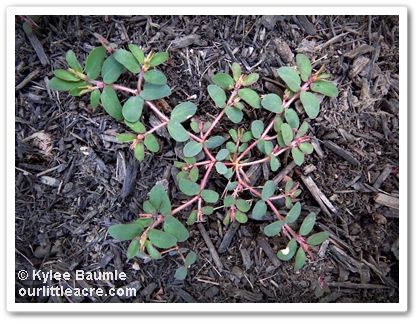
Euphorbia humistrata fits the bill.  It's an annual, but it might as well be a perennial because in effect, it acts like one.  Once you have it, there's no need to replant it year to year. It looks beautiful draping over a retaining wall edge.  A nearly identical plant (Euphorbia maculata) has unique burgundy markings on its foliage.  Both grow quickly, so what more could you want in a groundcover?

Prostrate spurge
Euphorbia humistrata

What?  You're turning up your nose at this?

I think it's time we stop trying to beat this thing and join it.  It's the latest, greatest plant you never knew you wanted.  If you already have it, don't you agree that it's the easiest thing to grow since...say...dandelions? 

I've got a good crop of it going here and I'm willing to sell you some seedlings at the bargain basement price of 50 cents per plant.  How many do you want?


Tuesday, August 6, 2013

For the Last Time — Lobelia


U.S. Fish and Wildlife Service
The third time's a charm, they say.  Well, I say, not quite.  It remains to be seen.  When I first started gardening in earnest, I wanted to grow it all and that included one of Ohio's native wildflowers, Lobelia cardinalis.  It's a tricky one, it turns out.

I first saw it in person during a 2006 visit to GardenFair, held at Winterthur in Delaware, that great estate of the du Pont's.  In the Quarry Garden, the lobelia was in full bloom and its bright red color was stunning.  I wanted some of that.

It wasn't difficult to find lobelia to buy, but I only purchased one plant and it went into our shade garden near the house.  I don't think that one even lasted one season.  A couple of years later, I purchased some blue lobelia (Lobelia syphilitica) and it met a similar fate.

Then I was advised that lobelia likes to grow in clumps and if you want to successfully grow it, you'd better plant at least three together.  This spring, I saw some beautiful plants at Oak Park Landscape and Water Garden Center and couldn't resist trying again.

Lobelia likes it wet and though my shade garden isn't overly so, this was a good year to grow plants that like moisture.  We've had unusually regular rains so if ever I was going to have success growing lobelia, this was the year.  But I didn't count on the slugs.

Here's my lobelia, with its stems chewed all to heck by what I'm guessing are those darn slugs.


Unfortunately, I didn't notice it until they'd done a fair amount of damage. The three plants were doing pretty well but I lost two stems before I decided to take action by putting sand around the base of the plants.  Hopefully it's not too late to save them.


And bless it's little heart, it's trying to bloom in spite of its injuries...


If I lose my lobelia this time, I'm done.  I'll just have to admire it in someone else's garden.


Saturday, July 20, 2013

Rock 104: Music to Repel Raccoons By


Rock 104 (Ft. Wayne, IN) might not consider this to be a ringing endorsement and maybe it won't turn out the way we're hoping, but we've just got to do something before the raccoons decimate our first sweet corn crop in three years.

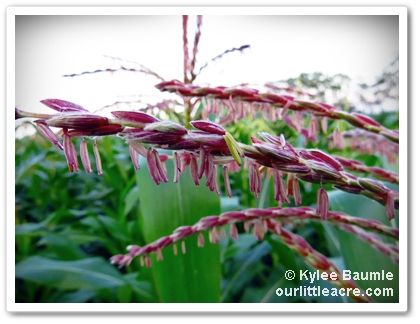
All tasseled out and heavy with pollen!
We haven't grown sweet corn for the last few years because it takes a fair amount of room to grow it, if you want a crop of any size. But this year, we planted it over in Neighbor Tim's yard and thanks to wonderful and regular rains, we've got a great stand.  Some of it will be ready in a week or so and I'm already drooling, just thinking about slathering it in butter and salt and making a meal of it.

When Romie informed me that our sweet corn patch had had visitors last night, I knew it meant the raccoons had found it.  So much for my bragging just this week that in all the time we've grown sweet corn here, that we'd never had a serious problem with coons.  A few ears here and there, but no big deal.  Until now.

As cute as they are, I'm not willing to share my sweet corn with the raccoons.
Photo from Wikimedia Commons/D. Gordon E. Robertson

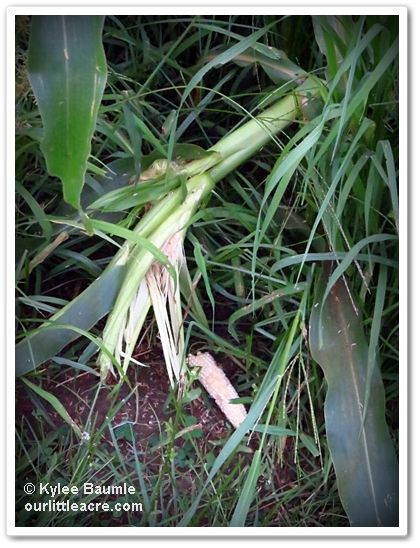
With all the rain, unfortunately, we've let the grass get out of hand in the corn, but that allowed us to see just where the coons had been.  They were fairly picky about what they wanted to snack on and all told, they got about 10 ears on this go-round.  They also knocked over a few stalks that still had intact ears on them, which I uprighted.

He didn't even finish his meal!
 

What a waste...

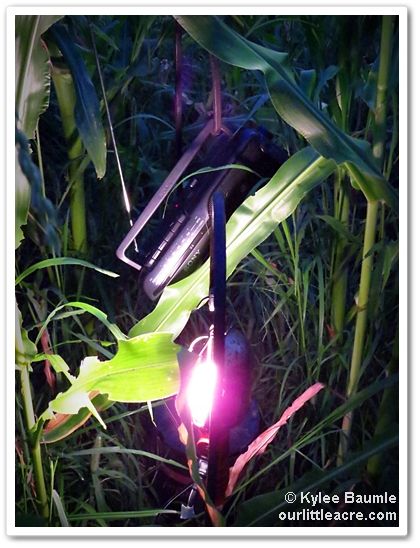
So we pondered what to do about it.  There are various methods for keeping raccoons out of the corn, and we decided to put a radio in the middle of the patch, along with a light, and we're blasting Rock 104 all night long. We'll see if our raccoons are headbangers or not.

The radio and a trouble light are both hung from shepherd's hooks in the middle of the corn patch.

Ironically, "Midnight Rider" was playing on the radio when we first turned it on.


Next year, I think we'll invest in an inexpensive electric fence for the corn patch to keep the thieves out. All this corn be OURS!


Saturday, May 4, 2013

Tree Peony Suckers


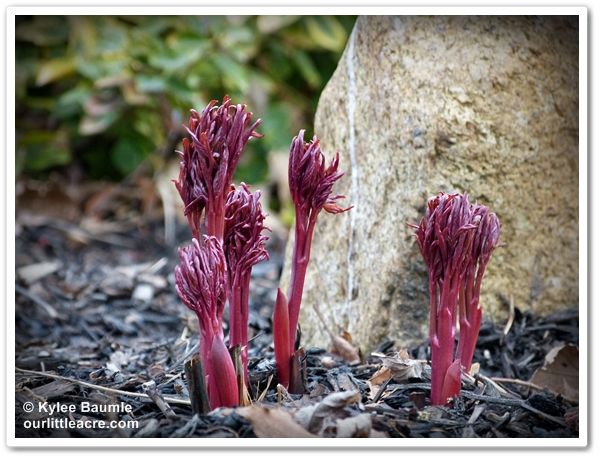
Just a few weeks ago, I was rejoicing that the herbaceous peonies (Paeonia lactiflora) were emerging and I remarked on Facebook that they resembled hands reaching to the sky.


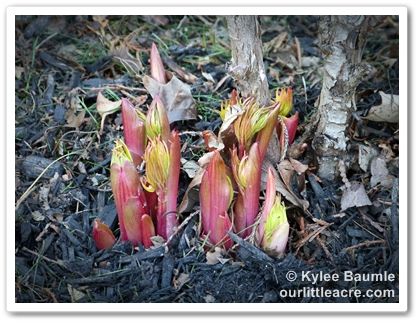
But when I saw this at the base of my tree peony, I wasn't happy at all:


Tree peonies (Paeonia suffruticosa) are generally grafted onto a P. lactiflora root and occasionally they'll try to grow from below the graft.  Since you probably paid good money for that tree peony, you don't want something sapping the strength from it and that's just what the herbaceous peony shoots will do.  Besides which, they'll bloom like an herbaceous peony, too.

So, what's a good peony mother to do?

Nip it.  Nip it in the bud.  Carefully cut the suckers off at the ground and keep them cut.  Later, in the fall, you can dig around the roots and see if the tree peony portion has formed its own roots.  If so, you can trim away the herbaceous roots to prevent suckering in the future. (Instructions for this can be found at peonies.org.)

I'm not sure that's entirely necessary though.  I feel more secure in just keeping the suckers trimmed away.  Can someone smarter than I am about these things comment here and let me know if this is an acceptable way of dealing with this issue, or whether I will eventually need to deal with the herbaceous roots in a more permanent fashion?

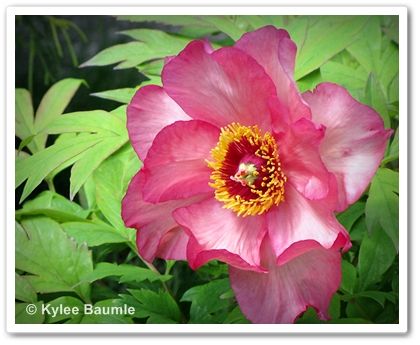
Tree peony (unknown cultivar)


Monday, August 6, 2012

Pathway Becomes a Solution for Standing Water


As part of the Lowe's Creative Ideas Garden Club Team, our assignment last month was to solve a problem. I shared how we replaced a half-dead shrub with a very cool trellis design, but we had another problem area that needed to be taken care of.

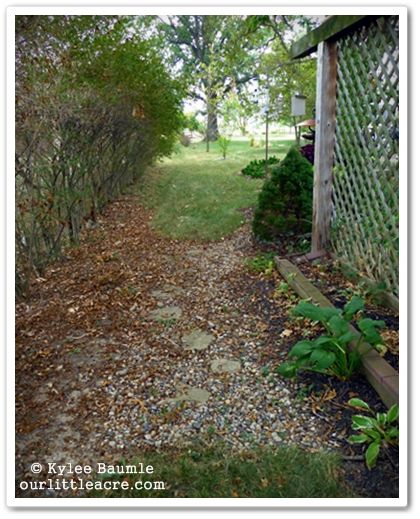
Behind our honeysuckle trellis lies a narrow pathway between our property and our neighbors'. The pathway actually belongs to our neighbors, but it lies on our side of a row of tall shrubs and the former neighbors agreed to let us take care of this area, and the current ones agreed as well. It's where my native wildflowers grow in the spring and we use this area frequently when going from the front yard to the back.


The problem here is one that we've had for some time, and I actually worked to fix it a few years ago, but the problem has returned, due to settling and compaction. What problem is that? Whenever we get a decent rain, water pools in this low area. Though this hasn't been much of a problem this summer because rain has been nearly non-existent, over the weekend we got over two inches - more than we'd gotten all summer prior to this. And I'm pretty hopeful that we'll get more rain someday.

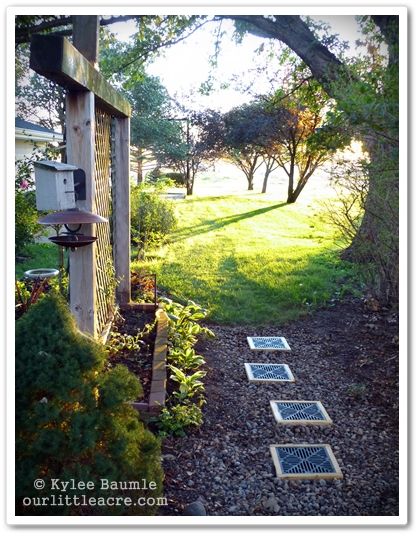
I decided to modify my original fix of digging the path so that it was lowest in the middle, then filling it with stones and using flagstones to walk on. This time, I wanted to use a stepping stone that was more water  permeable, allowing more space for water to have a place to go.

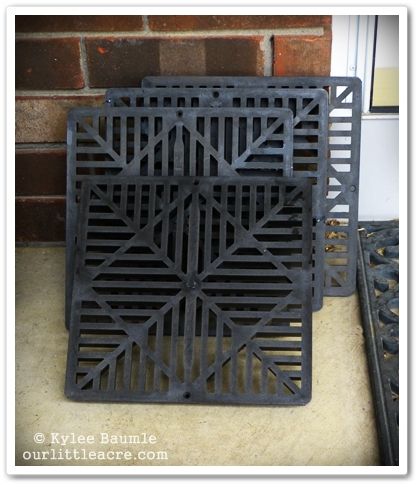
After removing the original flagstones, I regraded the existing stones in preparation for the new stepping stones. For these, I used 12" square grates that are made of polyolefin with UV inhibitors that help them to withstand the elements and are normally used as drainage grates in garage floors. They're heavy duty and can withstand foot traffic. They're also rather pricey at $21.37 each, but they'll likely last as long as I need them to.

I asked my husband if he would help me out (and he usually does) by framing the grates with treated lumber. We had some decking we'd gotten at Lowe's that was left over from a previous project, so he cut those pieces to the proper size and made frames for the grates. A simple screw in each side of the completed frame then held the grate in place. I considered staining the wood, but decided to let nature give it some patina all its own over time.


I embedded the framed grates a little bit, leveled them, and straightened the stones around them. When I was buying materials for this project at Lowe's, I noticed they had hostas in quart-sized containers on sale for $1.99 each so I bought three of them and filled in the area you see to the left with 'Twilight'.


Once again, our standing water problem has been taken care of and I really like how the stepping stones look, as well as being functional.

For more problem solvers and DIY projects, check out the Lowe's Creative Ideas website!


As part of the Lowe's Creative Ideas Garden Club, I was provided with a Lowe's Gift Card to cover the cost of materials for my project.


Thursday, June 21, 2012

The Rain We Didn't Get


The National Weather Service issued a Severe Thunderstorm Warning for our area this afternoon. We don't get excited about those anymore, because for the last seven-plus weeks, no matter what the weather forecasters said, we didn't get a drop of it.

As I was taking a stroll through the garden, trying to figure out what was going to survive and what would likely continue its downward spiral through drought hell, I heard thunder. I've heard that before, too. Doesn't mean a thing. We got the most gorgeous rainbow I've ever seen in my life a few weeks ago, but we didn't get any of the rain to go with it.

June 2, 2012


This time, I could smell the rain. It's a lovely, quirky smell - not like the delightful fragrance just after the rain has fallen - but pleasing all the same. The skies in the west got darker, the temperature dropped, and the winds that have been blowing for days, zapping the moisture from the leaves of plants that couldn't afford to lose it, turned noticeably cooler.

And then the storms turned. Again.

When I was working regularly in New Haven (Indiana), just 25 miles west of here, so many times I'd leave work where it was pouring felines and poochies, only to arrive home to dusty, dry everything. I pictured those storms reaching the state line and splitting - off to the north and off to the south - and we were left in the middle, denied again.

I'd sit down after supper and watch the news, with reports of the downpours all around us, many  times with accompanying video, and it was torture to watch. I wanted to scream at the television, "WE didn't GET any!!"

This one went north...


And so it was again today. I stood in my garden and watched the rain fall from the sky, eight to ten miles north. But there was still hope. Another line of storms was headed our way. Maybe that one would bring the badly needed rain to us. Again, the thunder. Again the smell of rain in the air. And again, it turned - this time southward.

This is the worst it's ever been since I've become a gardener. We've had hot and dry summers for the last several years in a row, but this year is different. We didn't get the usual spring rains that give our plants a good start to the season. They didn't have a chance to beef up before the hot and dry started.

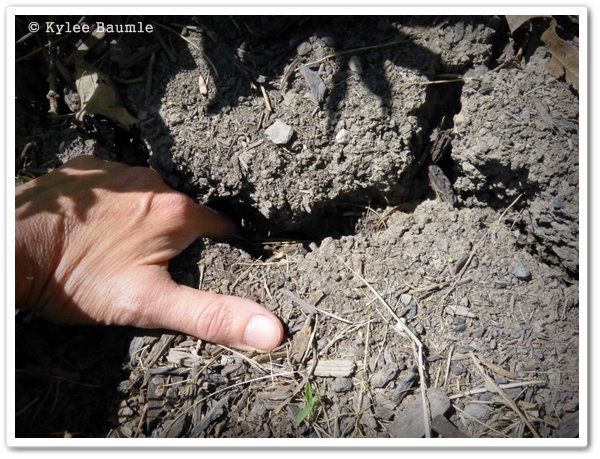
Cracks in the garden

Our pool was installed in 1988. That was another bad year and one that up to now we've used to measure all other years against. We had a drought and heat that was at times unbearable, even with the pool. When it's 106ยบ outside (June 25, 1988), the water isn't even refreshing. But this year is already worse and it's only June.

There's yet one more line of storms headed our way and I'm hopeful that the third time will be a charm...


Wednesday, June 6, 2012

What's Eating the Baptisia?


People often ask me, "How do you think of so many things to write about?" After more than five years of writing here at Our Little Acre, you might think I'd run out of things to say. Those of you who know me personally are snickering and muttering, "Fat chance!"

Though there are times when it seems that subject matter is at a lower level, there's always something, to paraphrase Roseanne Roseannadanna. Usually, just spending a short time in the garden inspires me to expound on something or another and yesterday was just such a day.

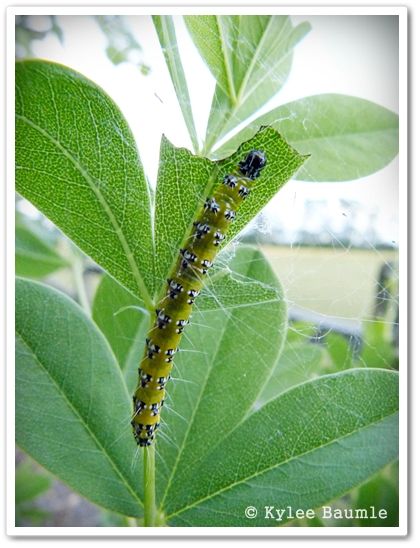
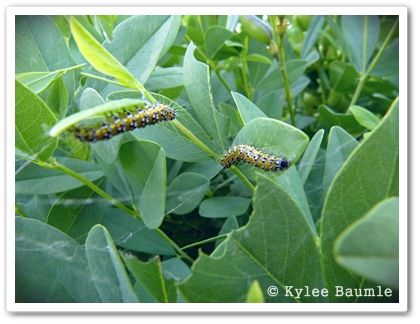
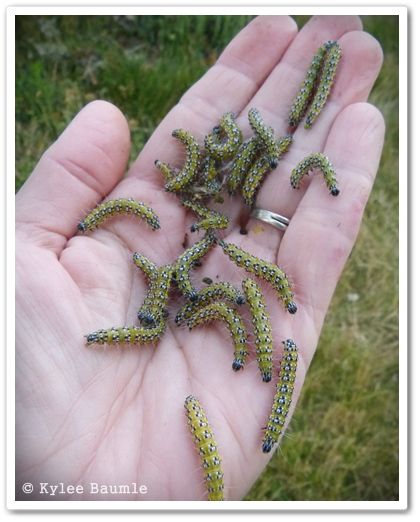
I've often said that I know nearly every inch of the property here intimately. I keep my eyes and ears open at all times and have discovered wondrous things this way. I also find not so wondrous things going on. As I went out to move the sprinkler in the vegetable garden last evening, I took a lap through the flower garden and noticed something had been eating the leaves on the Baptisia. A closer look revealed these - LOTS of these:

Genista Broom Moth (Uresiphita reversalis) caterpillar
on Baptisia x variicolor Twilite Prairieblues™ 


Some research revealed the caterpillar to be that of the Genista Broom Moth. The caterpillar isn't a particularly beneficial insect; they can certainly wreak havoc on a Baptisia (as well as Genista, Sophora and Lupinus) and it doesn't take very long for them to do it either. So I spent over an hour cutting them and the webs they'd formed off.

I thought maybe the chickens would like them as a treat. They like grubs and worms, so why not a caterpillar? I called them to the fence in my best falsetto, "Heeeere, chick chick chicks! I've got a treat for youuuuuuuuu!" That always gets them running to me, because they know I've got goodies.

Well.

They are not fans of the fuzzy caterpillars.

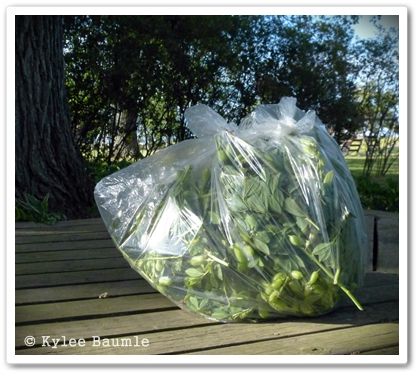
I bagged up the cuttings and the caterpillars and tied them in a plastic bag, then placed it in the garbage, which will be picked up tomorrow. I'm not taking any chances of them finding their way back to the Baptisia.

It's interesting that of the three baptisias I have, so far only two of them are infested. Of the two largest, which are also quite close to each other (6 or 7 feet apart), only the Twilite Prairieblues had the caterpillars. The straight species Baptisia australis did not.  Yet, a much smaller B. australis that I grew from seed several years ago, and 40 feet away, had a pretty heavy infestation.

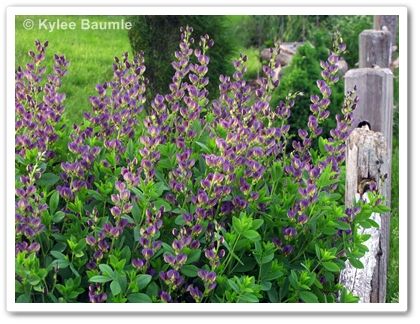
Baptisia x variicolor Twilite Prairieblues in bloom - May 2012


Other than manual removal such as I did, you can use Bacillus thuringiensis to control these pests. It wasn't hard to cut the ends of the branches off, which is where the caterpillars were (they like the tender new growth) so I prefer that method. Older established plants may survive the defoliation they cause if left uncontrolled, but younger plants likely won't. I'll check each day for cats that I missed and remove those as I find them.

blogger templates | Make Money Online