Tuesday, July 5, 2016

Gilmour Spray Nozzle and Flexogen® Hose Review and Giveaway


When the 4th of July happens around here, it seems like summer is half over. Of course, this isn’t true, except for the school kids and that was a long, long time ago for us. There’s a lot of summer left in the garden too, and one thing that we’re sure to be doing in the hottest and driest part of summer for us here in NW Ohio, is some watering.

Recently, the Fiskars people contacted me about trying some of their products. I’ve always been a fan of Fiskars and somehow missed the fact that they acquired Gilmour, maker of garden watering products, back in 2014.

Among the things they sent me to try were these Gilmour products: 

Of all the things I received to try, the Super Duty Thumb Control Watering Nozzle was my favorite. In their description, they talk about a nozzle having “the right heft” to it, and I have to wholeheartedly agree. This just feels right in your hand. And it’s really easy to control with that thumb lever.


The nozzle head itself has eight spray patterns: Flower, Sweep, Garden, Shrub, Clean, Soft Wash, Rinse, and Jet.


It has stainless steel connectors so it doesn’t corrode and get hard to disconnect from your hose. They also sent me some Quick Connect components though, so I don’t even have to unscrew the nozzle to remove it. I just pop it off.

The Quick Connect set makes it easy to take the nozzle off and on from the hose.

Oh, and it comes with a lifetime warranty, too. I. Love. This. Nozzle.

They also sent me a Flexogen® Super Duty Hose. If there’s one thing that I hear gardeners complain about, it’s hoses. First of all, they don’t like heavy ones and secondly, they hate how they kink. I’ve complained about these very things myself.


The Flexogen® IS lightweight AND it honest-to-goodness DOES NOT KINK. I can't believe it, but it's true. Now this is saying something, because we have really low water pressure. I've had hoses that are supposed to resist kinking under pressure, but when you've got low water pressure, it's hard to make a product that simply won't kink. But Gilmour has done it.

The other thing is, this Flexogen® hose really is pretty lightweight. As someone who suffers from degenerative disc disease in my neck (as so many my age do), I appreciate how much lighter in weight this hose is than some. There's nothing I hate worse about water hoses than dragging one around that behaves like it was a 50-lb. boa constrictor.

Flexogen® hoses have eight layers and have been tested and proven to be the strongest and longest-lasting hose in its class. It's made with heavy-duty brass couplings to hold up well under use.

Also, the polished exterior resists dirt collection, unlike some other hoses I’ve tried. Of course, it’s gray, so it wouldn’t show much dirt anyway, but still. It's my new favorite hose!

It's a GIVEAWAY!

Now, the folks at Fiskars and Gilmour have been so kind to offer both the Super Duty Thumb Control Watering Nozzle AND a Flexogen® hose to one of my readers. If enough people enter, they’ve said they might give away two sets! So enter now and tell all your friends and neighbors. The more people that enter, the greater chance there will be two sets to give away! (And no, I do not know what the tipping point will be. LOL)

This giveaway will end with a random drawing on Saturday evening, July 9th, at midnight EDT. All you need to do to enter is to fill out the Rafflecopter form. That’s it. But if you want bonus entries, check out the extra options when you fill out the Rafflecopter form. There are lots of ways to get a bonus entry!


a Rafflecopter giveaway
 
 
________________________
*I received these products from Fiskars/Gilmour for the purposes of reviewing them and hosting a giveaway. As always, I won't say anything about a product that isn't the truth from my own personal experience with it. I have received no other form of compensation for writing about these products.   

Tuesday, June 28, 2016

It Was an Actual Cherry HARVEST!


Back in 2011, while attending a regional GWA (Garden Writers Association) meeting in Chicago, I received a couple of small seedlings of a dwarf sour cherry shrub - 'Carmine Jewel'. Gurney's supplied them to us as part of the swag that we usually get when we attend such meetings.

I brought them home and planted them back near our apple trees. They didn't grow much the first couple of years and then those pesky wabbits chewed them off at the ground one winter. (Grrr... That's what I get for boasting about never having any rabbit issues.) I was certain they were both goners, but they came back from the roots - like gangbusters!


Last year, we had three blooms on one shrub and ended up with one cherry. I couldn't decide what to make with that cherry, so I simply ate it. 

Did I mention these were sour cherries?


This year, I was taken aback when I saw how profusely both shrubs were blooming and I made plans for pies, cobbler, jelly... Once the cherries started turning red, I netted them so the birds didn't get to them before I did.


In the end, there weren't as many as I'd hoped there would be, but...

CHERRIES, Y'ALL!


I haven't yet decided what I'm going to make (after I pit them...gah), but I think it might be this:


● Tart Cherry Crisp ●

(Recipe from Taste of Home)

________________________________

The 'Carmine Jewel' Dwarf Cherry was bred at the University of Saskatchewan and was introduced to the public in 1999. It is a shrub-type cherry that reaches a maximum height of about 6½ feet and a spread of about 5 feet, making it ideal for limited space gardens. 

Self-pollinating, it is one of the first cherries to ripen in early summer, with stunningly heavy yields in its fifth year, with 20-30 pounds of cherries per shrub not uncommon.

'Carmine Jewel' is is rated for zones 2b-7, making it very hardy. It is a firm cherry with small pits, making it excellent for drying. It has few disease and pest problems, making it a good choice for organic production.


It seems that it's a common error among backyard gardeners to pick these cherries before they're completely ripe. They're nearly black when at their peak and will be quite a bit sweeter if you can be patient. I noticed a few cherries falling off the trees, so I started harvesting them - in error. They will still be fine to eat in recipes, but next year, I'll know to wait a little longer.

___________________________

A tardy thanks to Gurney's for providing these shrubs free of charge at our GWA meeting.
___________________________


Thursday, June 23, 2016

Celebrating National Pollinator Week: Food For Thought


It's no secret the pollinators are in trouble. Oh sure, you see plenty of butterflies, bees, flies, and other insects out there and even bats (yes, they're pollinators), so really, what's the big deal, right?


Consider this:

One out of every three bites of food we eat relies on pollinators.


Still not convinced?

To carry that point further, some plants require specific pollinators in order to get good production of their fruit. (And I use "fruit" in the general definition of whatever edible the plant produces.) Bees are the most well-known of the pollinators, but other insects and birds are more efficient at pollinating certain plants.

Zucchini, anyone?


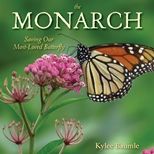
If you're one of the people who has asked me, "Does it really matter if the monarchs disappear?" I can wholeheartedly answer, "YES."

My philosophy in general is this:  I believe that every living thing on the earth is here because it has a purpose.

In regard to the monarchs, perhaps we can live without them, but it's more complicated than that. The monarchs are in decline because of several factors, not the least of which is that their habitat is disappearing due to urbanization, and to a greater extent, due to the agricultural use of pesticides* that kill milkweed, the only food their babies eat.


If you think that monarchs are the only pollinator that is being affected by the pesticides, think again. They're just more visible and recognizable than most. They're the poster child for the greater problem we humans are causing in the environment.

It's a complicated issue, for sure, but if nothing else, during this, National Pollinator Week, please give these things some consideration. Think before you use pesticides yourself. You may not only be saving the pollinator's meal, you could be helping to save your own.


_________________________________________
* Pesticide is the general term used by the FAO (Food and Agriculture Organization), the USDA and the EPA, which includes, but is not limited to herbicides, fungicides, and insecticides. Read more here.


blogger templates | Make Money Online