
Wednesday, July 30, 2008

Diversity in the Garden


As our gardens have expanded and evolved over the last three years, so has the health and vigor of the plants there. Some of this is due to natural growth...

"The first year they sleep,
The second year they creep,
The third year they leap."
...and some of it is due to the diversity that has occurred because of my ongoing obsession with all kinds of different plants.

One of the reasons that a plant might not due well is because of insect predators. Certain plants just attract certain bothersome insects. Japanese Beetles love roses. Black aphids love nasturtiums. Gold bugs love anything in the Ipomoea family. Slugs love hostas (and other things).


We are an organic garden 98% of the time, because we are a registered Monarch Waystation, and because we have a distaste for pesticide use in general. We never use pesticides on any plant that we know the Monarchs and other butterflies or bees like to feed on.

Last year, we only used Safer's Soap once on the green beans because the leaves were being eaten voraciously by some sort of pest.
This was really the only insect problem we had all year.

This year, in addition to the Japanese Beetles which are manageable by hand-picking them, we've had cabbage worms. Neem Oil took care of those. I've seen a few earwigs, but not as many as we've had in the past.

It seems that each season, we have less and less of a problem with harmful pests. It's my opinion that this is due to the great variety of plants that are grown in our gardens. By growing so many different things, we attract a large variety of insects. Many of them are natural enemies of each other, so they keep each other in check.

Most beneficial insects are in the larval stages of development when they eat their prey. Most adults feed on nectar. So generally it's the flowers that attract the beneficial insects. A month or so ago, I saw something that showed me that the birds play a part in this natural co-existence, too.

As I was working in the garden, I noticed our resident Baltimore Oriole picking at the Lonicera 'Dropmore Scarlet.' Just a few days before, I'd noticed the blooms were clustered with grayish-black aphids, similar to the ones we've seen on nasturtiums. Oriole food! Orioles forage in the garden, looking for several different insects to eat, as do finches, robins and sparrows.


Rarely has a pest done major damage to any of our plants and I believe it's because of the diversity of plants growing here. Mother Nature does have a way of taking care of things.
And this is a really good excuse for me to continue diversifying. Yeah, that's it. I need more plants to help control garden pests.


Sunday, July 27, 2008

The Cutest Little Carrots You've Ever Seen


'Parisian Market'

I like growing "different" things, so when I saw these little round carrots on the seed rack this spring, I knew I had to grow them. This week, I noticed some of them popping up out of the ground, so I pulled a few. Now I don't like raw carrots and I haven't yet had a chance to cook any, so I can't tell you if I think they taste good or not. But Romie and Jenna both tried them and proclaimed, "They taste like carrots," so there you have it.

It's a very well-known fact around here that Jenna hates cooked carrots, so of course, I fix them as often as possible when I know she's going to be home. She's not influenced in the least by the fact that cooked carrots are better for you than raw ones. She just doesn't like them. Just like I don't like raw ones.

We're growing 'Bolero' Nantes carrots, too. I wonder if any of those are ready yet.


Join Green Thumb Sunday

Saturday, July 26, 2008

The Summer of My Discontent


Summer continues on at warp speed, as usual, and I think we're done with the spring chores now. Seriously. I don't know why I even label them "Spring Chores" because spring is well on its way before we can even begin them and it's but a misty memory by the time they're done. But that's just the way it is in the garden.

So we're enjoying the fruits and vegetables of our labors, having stripped the strawberry bed of every last bit of its yummy goodness (we just finished eating the jam, too), eaten the minimal spinach harvest (need more sun next time), gathered enough blueberries to top a couple of bowls of cereal, eaten enough beans to last us until next year (but they're still coming on), pickled several quarts of beets (m-m-m...beets!), and pulled the first of the cute round carrots and the garlic. Still to come: sweet corn, okra, Brussels sprouts, Bolero carrots, onions and tomatoes. Goodness, the tomato plants look like they're on steroids.

The flower gardens are giving us plenty of eye candy, too. Daylilies, coneflowers, Gaillardia, and Rudbeckias provide the biggest share of color at the moment. And then there are the roses...

The roses are the current source of my discontent. None of them are dying, there's no black spot or powdery mildew, and the aphids haven't yet made an appearance. There's minimal evidence of Japanese Beetle action, and of the 74 Japanese Beetles caught (and 31 that got away), just one was found on a rose. So why am I disappointed in the roses?

They aren't blooming much, and it's my fault. I know they need at least six hours of direct sunlight to perform well and many of them just don't get it. It was wishful thinking on my part when I planted them in part shade that there would be enough sun, but they're pouting - telling me I was wrong.

Now I've got a problem. Where do I put them so they'll be happy and do what they're born to do? I could make a new bed just for the roses, but Romie won't be happy about tearing up more grass. He isn't a big rose fan in the first place. Now if I wanted to make a new bed and plant Black-eyed Susans, that would be a different story, but that isn't going to happen. We've got enough of those already. And I never really wanted a rose garden anyway.

I could make room in some of the other gardens for them, but that means I'd have to move something else. Max's Garden, where I'd need to put them, has the ratio of sun to shade shifting more to the shady side all the time, so that limits my possibilities there.

Then I worry about the actual moving of said roses. Some of them are quite large and established, although still movable, I think. But when is the best time to do that? Fall? Spring, before they start growing again? Even though they've now got diminished bloomage, some blooms are better than no blooms due to dead plants.

So I'll ponder my dilemma and in the meantime, the roses will continue pouting and withholding the best of what they have to give until I give them what they need. I thought I was doing well this year by remembering to fertilize them. One of these days I'll get my rose act together and I can move on to correct some other mistake I've made.

For as disappointed as I am about the roses, it's still part of what makes gardening appealing to me. The challenges and the learning processes that are continually a part of growing green things stimulates my senses in ways that nothing else can. The rewards of "getting it right" make each and every trial and error worth it.


Friday, July 25, 2008

A Lily A Day . . .


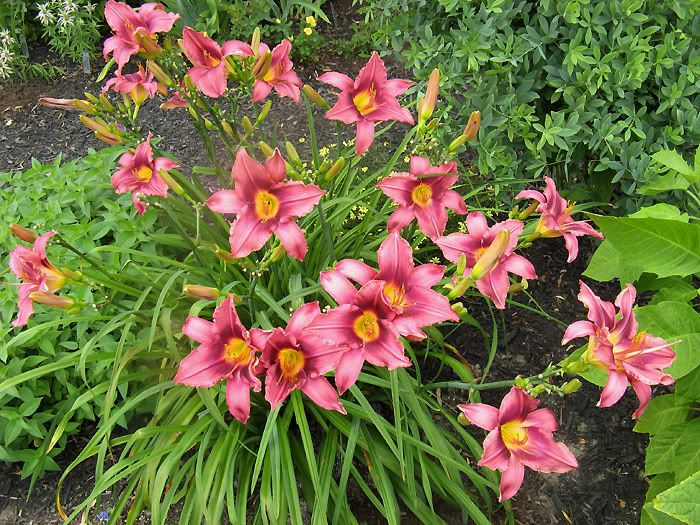
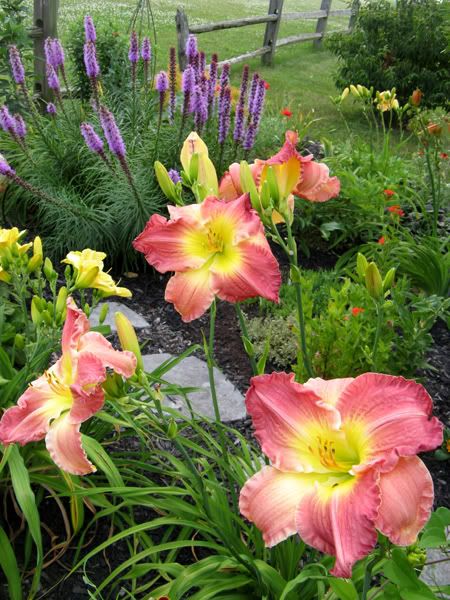
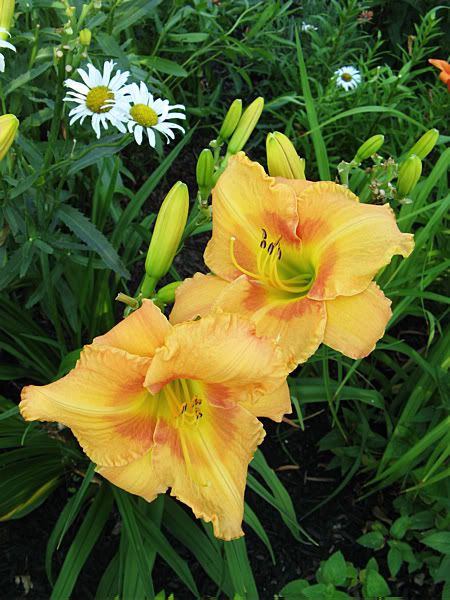
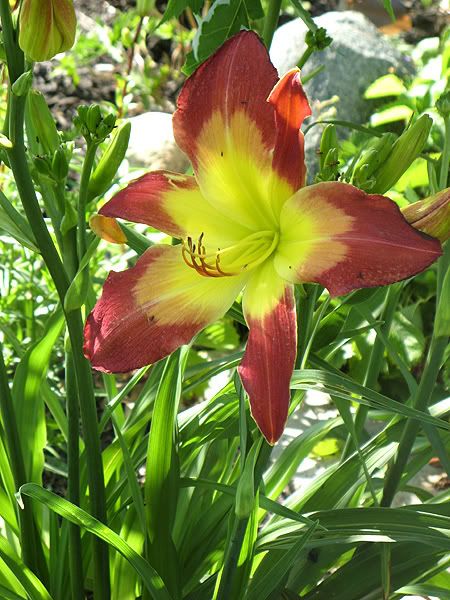
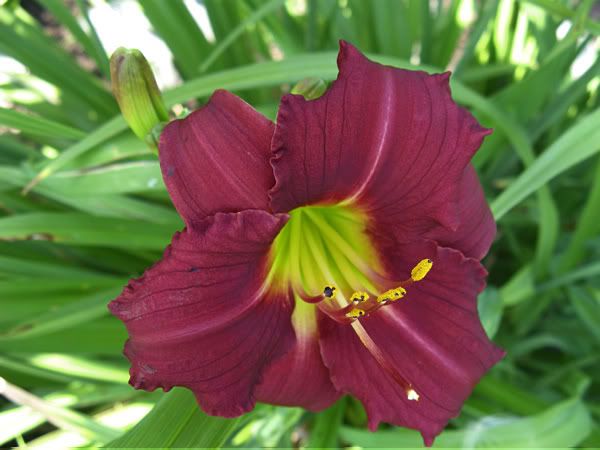
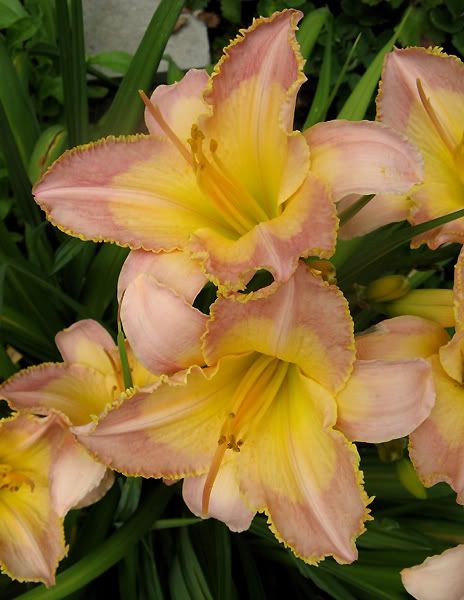
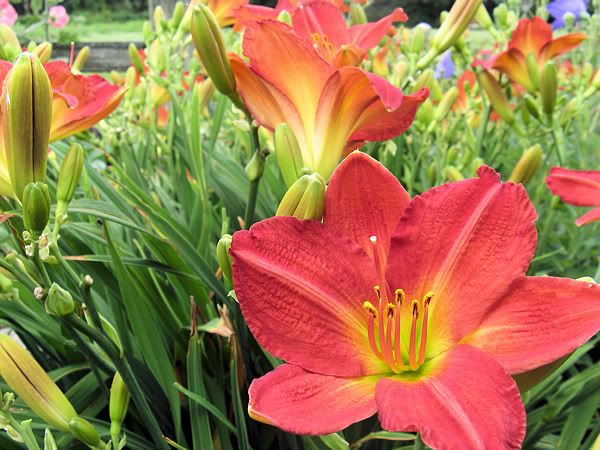
We have our own little lilyfest going on right here at Our Little Acre. We're enjoying the frilly blooms scattered throughout Max's Garden, where nearly all our daylilies are located. We don't have regular daylily gardens like you see when you visit a hemhead* garden, where they are generally placed in daylily beds or grouped in large clumps. Ours are here and there, living happily among the other perennials, annuals, herbs and roses.


However, the more daylilies we get, the closer they get to each other. Some have been here for a very long time, and those have spread to the point that I'm feeling like some need to be divided. The nice thing about older, larger clumps of an assortment of daylilies is that you're pretty much assured that once they start blooming, successive blooms keep them going for a month or three.

When we moved here in 1977, there was minimal landscaping on the property with very few flowering plants. I can remember a couple of peonies, yellow potentilla, and some orange daylilies. Those original daylilies still grow here and have multiplied exponentially. They line the north side of our pool area, and we've shared them with neighbors and family.

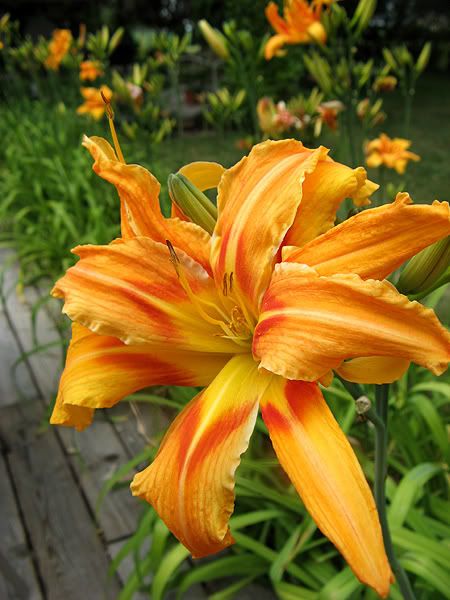
I used to think they were run-of-the-mill ditch lilies, but last summer, I took a good look at them, and they certainly are anything but ordinary. The color is familiar, but the form is double and sometimes triple! (Could be 'Kwanzo'?) I have a new appreciation for these daylilies that we've been enjoying all these years.

All of our daylilies have not popped blooms for us yet, but many have been doing so without stop for about a month now. I present the current line-up:


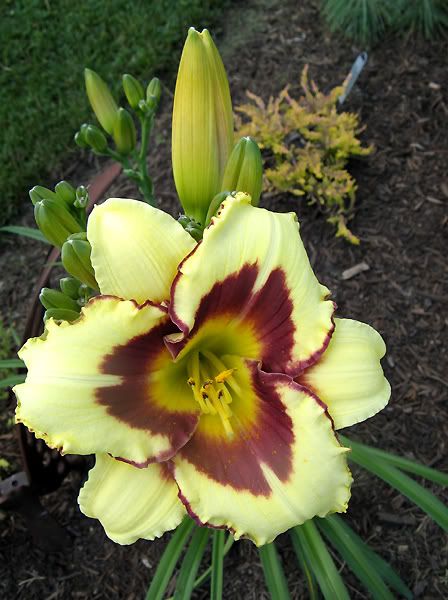
'El Desperado'
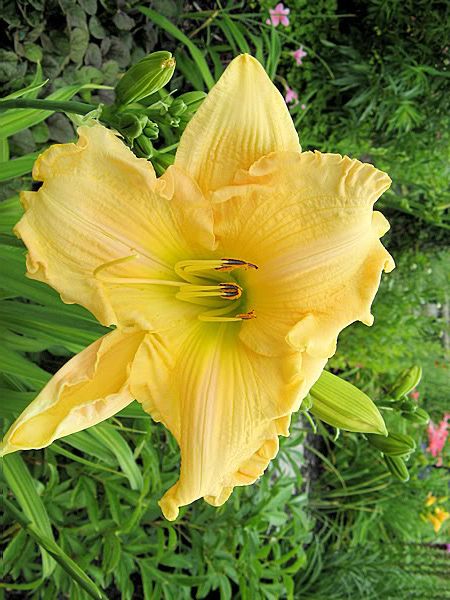
I love the dark edge on this custard-colored rebloomer. Purchased this year from Great Garden Plants (highly recommended for daylilies!)


'Alabama Jubilee'
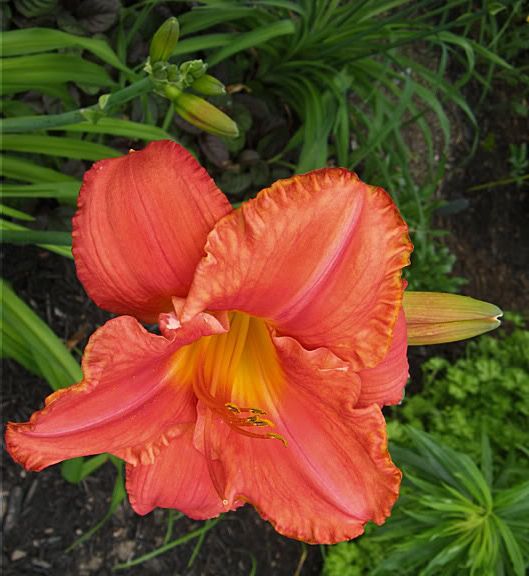
I thought 'South Seas' was a great, vibrant color, but wow! This one is so reddish-orange that it's hard to capture the gorgeous color. It definitely catches your eye in the garden. Another
Great Garden Plants selection - and a rebloomer.


'Siloam Double Classic'
Purchased this year from
Great Garden Plants


I originally thought this was 'Strawberry Candy', but now I don't think it is - no dark edges on it. This was a passalong that I got so long ago I don't even remember who gave it to me. I do have 'Strawberry Candy', but it's not blooming yet.


Wolfe with a Dark Eye
This is a hybrid from daylily hybridizer Lana Wolfe. Mom and I visited her nearby gardens last summer and I purchased this unnamed and unregistered hybrid from her. She "done good" on this one!


'Etched Eyes'


'Lady Fingers'
This spider daylily is large and the greenish centers glow when they're illuminated by the sun.


An unnamed hybrid by another hybridizer - Barbara Wolff - which she simply calls 'Wolff 734'. I bought this from her two years ago, so I need to call her to find out if she ever named and registered it. It's quite large.


'Wolff 726'
Another great one from Barb Wolff. The eye is a little more subtle than this photograph suggests.


Another Lana Wolfe hybrid that I called 'Lovely Lana'. Of course, it will never be named that because there's already a daylily by that name and this isn't it. This one is another of hers that isn't named or registered. But she should. It's GINORMOUS and a heavy bloomer. Stunning.


'Hush Little Baby'
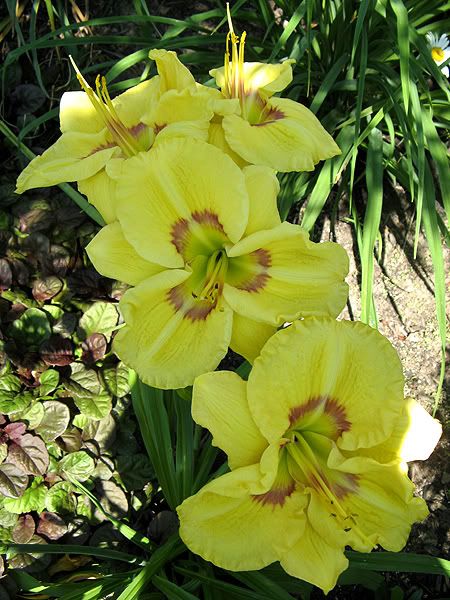
Such a pretty thing. Creamy coloring. Just sweet and perfectly named.


'Leprechaun's Eyes'


'Pardon Me'
Its blooms are small, but goodness, it's prolific! And fragrant!


'Czars Treasure'
Given to me by Mom in 2006


'Black-Eyed Stella'


No ID - I can't remember where I got these (from Mom probably), but they were the first daylilies planted in Max's Garden in the fall of 2005. They've really spread and I should divide them and share the love. They're a deeper red than this photograph shows.


'Razzmatazz'
Very similar to 'Pardon Me'.


'Ruffles 'n' Lace'


'South Seas'
This is a really luscious shade of deep corally orange.


'Big Smile' and 'Penny Candy' are finished, but we're still waiting on:

  • 'Sunday Gloves'
  • 'Red Volunteer'
  • 'Frans Hals'
  • 'Sarah Christine'

'Stella d'Oro' is taking a break.

_______________________
* "What is a hemhead?" you might ask. The genus name for daylilies is Hemerocallis, so just as Jimmy Buffet fans are called parrotheads, daylily lovers are called hemheads. I'm not one. Yet.

Thursday, July 24, 2008

LilyFest in Ohio


Two weeks ago, Romie and I, along with my mom and dad, took off for the southeastern part of our state - a mere three hours away - to attend LilyFest near Logan, Ohio. I'd heard about it through Ohio Magazine (what a great resource for events and history in our great state!).

LilyFest is a yearly event, first held in 1992, at the home of Bobbi Bishop. Bobbi and her husband Bruce (who has passed away) created beautiful gardens on their home property, featuring daylilies. The festival has grown since it was held that first year until it entertained around 8000 visitors in 2007.

We arrived around 1:00 p.m. and festivities were in full swing. There was live music and many artists and vendors set up around the grounds, as well as a butterfly habitat. The gardens are pretty spread out, so there's room for all the extras involved with a festival. We walked through a Viking settlement in the woods on the way to the actual lily gardens. That was interesting, although I'm not sure why that was going on in conjunction with LilyFest.


We spent about two hours there, strolling through the gardens, which also contained various types of permanent sculptures. Mom bought a couple of Himalayan clematis, and while I wanted to purchase a lily in commemoration of our visit, I left without doing so. I probably would have bought the daylily 'Victoria's Secret' since it is the number one bestseller there, according to the vendor.

I don't know that I would drive three hours just to attend LilyFest again, but it's in the Hocking Hills and that's reason enough to plan a trip around the festival. You won't find much more beauty in our state than here, and it's one of my very favorite places in the whole wide world. More on that to come!

Images from LilyFest


This was a beautiful Smoke Tree (Cotinus coggygria).


Does anyone know what this shrub is? I have a Variegated Japanese Knotweed that has similar-looking leaves, but I don't remember seeing any berries at any time.


The people sitting are listening to and watching live musicians.


The woodland setting provided a gorgeous backdrop for the lilies.


One of the vendors did sandstone carvings. I especially liked this water feature with the lizard crawling up the side.


Have a dead tree? Cut it off, turn it upside down, and plant it!


One of the beautiful stained glass art pieces.


I loved this 'painted' lily and would love to know its name. None of the lilies were labeled, unfortunately. Does anyone recognize this?


What a gorgeous caterpillar in the butterfly habitat. I'm not sure what this will later become.


I like the rounded petals on this one.


The hydrangeas were HUGE.


There were a couple of pottery vendors.


Beautiful dark asiatic lily.


There was a nice stand of bamboo growing.


Fritillary


Eastern Tiger Swallowtail


Black Swallowtail


Lots of green in this one.


More sculpture in the gardens

*~*~*~*~*~*~*~*

EDIT: Thank you to Shady Gardener, who has identified the beautiful caterpillar shown above as that of the Cecropia Moth. She also provided an excellent website that shows all the stages of growth.


Tuesday, July 22, 2008

One Man's Dog


This has been a very emotionally draining day. It didn't start out on the best note. Our dog Simba has been having problems with her hind legs for the last seven months and has had to have injections and steroids to help her cope. It's been working until this last episode. We noticed she was having problems again last night and this morning she simply couldn't get up, even with help.

We'd had her at the vet's last week and we were told that she probably has Cushing's Disease, common to older dogs. Simba is 14 years old and when I read up on this disease, I'd have to agree that she has many of the symptoms. There's no cure for it and treatment can be complicated and expensive, so we'd decided if Simba didn't improve, that we would not keep her alive for our own selfish interests. We just didn't think we'd have to make that decision so soon.


Back in the summer of 1994, Romie finally gave in to Jenna's begging for a dog. Jenna had heard that one of her friends had puppies and "could we
please go look at them?" We did, and came home with an adorable little black puppy that we were told was a mix of Black Lab, Alaskan Malamute, German Shepherd and they-don't-know-who-the-father-was.

With The Lion King being a popular movie at the time, the girls wanted to name our new puppy Simba, even though in the movie Simba was a male, and our puppy was a female. So Simba it was, though over the years, she became known as Simbie, Simba Boo-Boo, and sometimes just Puppy.


If there ever was a dog with a more pleasant nature, I've never met it. Until recent years, Simba never even barked - unless the garbage cans were in view. I can't tell you how long it took us to figure that one out. For some reason, she really hated those garbage cans. In the last few months, she had started barking quite a bit because she had finally figured out that if she barked incessantly, we'd let her loose from her chain.

I didn't really mind her running around free, but it's against the law here, and she did roam over to the neighbors' places. As far as we know, our neighbors weren't bothered by her strolling through their yards and if she decided to "do her business" there, Romie went over with a shovel and picked it up.

What did irritate me though, was when she got into my gardens, and she did it quite often. She had one spot where she liked to lay in them, right up by the house, and Romie solved that one by putting a garbage can in front of it until she didn't try to lay there anymore. Fifty-five pounds of dog is more than most plants can take.

Most people know that we are both cat people, so Simba learned to live with cats from Day One. I remember when Max first came around, Simba gave him all kinds of grief. We never figured out what it was about Max specifically that caused Simba to torment him, but after a couple of years, they learned to co-exist. Maybe it was a swipe or two at the nose that put a stop to Simba chasing him.


Romie built Simba a doghouse early on, but she avoided it, even during snowstorms. She absolutely loved the snow and thought nothing of curling up for a nap during a raging snowstorm until she was so covered by snow that we couldn't see her. No nice warm doghouse for her! Then we bought her a plastic one and she avoided that one too, until one day she decided she would check it out. Something suited her and she used it all the time after that.

Like most animals, she hated thunderstorms. Though she'd grown quite deaf, she could detect an approaching storm way before we could. She'd get antsy and prance around, whimpering a bit, until we put her in the garage where she somehow felt safe, even though she could still hear the thunder.

In fourteen years, we accumulated a lot of memories with our Simba. Jenna was 11 years old when we got her; Kara was 14. Both girls are married now. I'm sure Simba missed them as much as we did when they moved away. And that was when Romie and Simba became such good friends. They have taken a walk nearly every night for the last several years and when Romie wasn't up to it or got too busy, Simba made her presence known to remind him they hadn't taken their walk yet.

Romie called me from work this morning to see how Simba was doing and I didn't have good news. Even with me helping her, she couldn't put any weight on either her hind or front legs. She wouldn't drink water when it was offered. She had no light in her cataract-filled eyes. We both knew that the time had come to do what was best for her.

We were both in the treatment room when Simba left this world. There were many tears shed, both there and after we got home. While Simba is romping happily on the other side of the Rainbow Bridge, her earthly body is in our garden, along with past beloved pets. We'll put a memorial stone there.

We've received many condolences already and we appreciate them. We know many of you have been where we are right now. Our yard was eerily quiet this evening. In time, we'll get used to the silence, but right now we just remember the good times with Simba. She was a good dog.


Simba
1994-2008

Damned If You Do, Damned If You Don't


This may be old news for some of you, but it's still worth noting while summer is going full blast with the sun and all. Try having summer without it. The sun, that is.

Most of us know that in order for the body to absorb calcium, we need adequate amounts of Vitamin D. This vitamin is important in other ways too, as it boosts your immunities. While we can get Vitamin D from foods such as salmon, fortified milk and breakfast cereals, the best source is the sun. That's why it's called "the sunshine vitamin."

So what's the problem, you ask? We're cautioned not to spend too much time in the sun, and while we're out there, we're to wear sunscreen to help prevent skin cancer. And therein lies the rub. Sunscreen blocks the UV rays that are the source of Vitamin D.

Now we're told that there is somewhat of an epidemic of Vitamin D deficiency, apparently due to our being so vigilant about either staying out of the sun or blocking the Vitamin D benefit by wearing sunscreen when we are. So what's a person to do?

Of course, the cancer vigilantes say to err on the side of caution regarding sun exposure. Honestly, which would you rather have - rickets or cancer? How about if we just use some common sense and moderation with it all. Either limit your time in the sun to avoid burning or if you have to spend an extended time under those vitamin-rich rays, break out the sunscreen. It doesn't take too much time of direct sun exposure for the skin to absorb the Vitamin D. Just a few times a week, 15-20 minutes at a time is about all it takes.

"But what about winter?" you ask. The cool thing is that what you get during the summer pretty much carries you through until the next spring, when sunny days are back again.

Want to read more about this sunscreen/Vitamin D dilemma? Try these links:

USA Today:
Vitamin D research may have doctors prescribing sunshine
NBC: Sunscreens can block vitamin D
NetWellness.Org: Sunscreen Interferes With Vitamin D

The Magic Purple Beans


Every year, I try to grow something new and unusual (to me) in our gardens. This summer, we're growing Brussels sprouts, red okra, pole beans, garlic, round carrots and purple beans. The garlic is nearly ready to be pulled, but it's the purple beans that win the prize for being the first harvested of the newbies.

When I looked through the seed catalogs this winter, these purple beans fascinated me. They were supposed to taste like regular green beans, except that they were purple. And they do a magical thing when you cook them - they turn green.


The plants themselves are beautiful. The foliage is a deep green with tinges of purple on the edges and be it luck or some other unknown reason, the normal insects haven't been nibbling away on the leaves like they do when we grow green bush beans.


I started picking them a couple of weeks ago and by this week, we have had a mess of beans. We've had enough to share with our next-door neighbors and a couple of other people. These are heavy producers because we don't have that many bean plants.

The thing about purple beans is that they are supposed to taste just as good when picked late as they do when they're picked early. After a couple taste tests, I would have to say they do indeed. I prefer them younger, but sometimes I don't get out there and pick them on time and they get big. With green beans, it's easy to miss some, but the purple ones show up better and are less likely to be missed.


We're growing Fortex pole beans for the first time this year, too. I just picked the first ones last night, but we don't have enough yet for a meal, so I don't yet know how the flavor compares to others. These came highly recommended from a couple of sources, including The Victory Garden.


They must be good, because these are Japanese Beetle magnets, to the point that they're forgoing the roses for the bean leaves! At least they're leaving the beans themselves alone.

Fortex beans are very long and very slender, and look like the ones you see in high-class restaurants. One of the ones I picked measures nine inches long.


I love fresh green beans. Like sweet corn, I've been known to make a meal of beans alone. I'll never forget what a friend said many years ago - "You can eat ten pounds of green beans for about 25 calories." LOL. Not quite, but they are low in calories if you can manage to eat them without butter.

Time to go pick the beans for today. The more you pick, the more you get!


Sunday, July 20, 2008

Aquatic Plants at Dill's Greenhouse


As I was working my way through the many photographic images that I made last weekend while we were vacationing in Hocking Hills, I downloaded those that I took at Dill's Greenhouse in Groveport, Ohio, on the way home. Although in the sequence of that weekend's events, this is out of order, I wanted to share these photos now.

Mom and I had craned our necks as we passed Dill's on our way to Hocking Hills that Friday morning, and we both decided right then and there that we were going to stop and take a look on our way home on Sunday. Romie and my dad had other ideas, but deep down they knew they were going to lose this argument.


At this time of the year, when you visit a garden center, you don't know what you'll find ... bargain perennials, straggly annuals, reduced shrubs and trees, sales on pots... It can be a good experience or a disappointing one.
Dill's did not disappoint, and we imagined what their inventory must be like in the spring, when the gardening season takes off. Our men can thank their lucky stars that we weren't passing through in May.

Absolutely the highlight of the visit was the water feature with a fountain and little waterfall and the out-of-this-world water lilies and the exotic lotus, both in full, glorious, breathtaking bloom.
With beauties like this providing live advertising and being 20% off, you just know one of us was going to leave there with one. Guess who.

They had beautiful Water Hyacinths (Eichhornia crassipes) for four dollars (after the discount) and I wish I'd gotten a couple of them. There was water lettuce, too, but I chose a hardy rose-colored water lily (Nymphaea) and a Lobelia syphilitica that's blue-flowering..

In addition to the water plants, I bought a new climbing rose - Morning Magic
TM - and a beautiful 'Blue Muffin' Viburnum. Mom bought some things, too and our already-full van got fuller.


Lotus (Nelumbo)


Water Lily (Nymphaea)

The two water plants will be nice additions to those we already have growing in the little pond in Max's Garden. There are two Cyperus (C. papyrus 'King Tut' and C. involucratus 'Baby Tut'), Juncus inflexus 'Afro', and Bloody Dock (Rumex sanguineus).


Our two little frogs won't care whether we get beautiful rosy lily blooms, but they should be happy to have the lily pads on which to sun themselves.

Friday, July 18, 2008

Li'l Bit O' Texas in Ohio


When I mentioned earlier this year that I was growing Texas Bluebonnets (Lupinus texensis) from seed, there were more than a few skeptics. These beautiful Texas natives that are the cousins of the Lupines we typically grow here in the north, don't like heavy clay soil. Guess what we have.

We've amended the soil somewhat, but we still have basically clay, so there's Strike One. The Bluebonnets also have a somewhat long growing seasons, with just germination taking as long as 75 days. Never mind them growing large enough or long enough to flower. Strike Two, maybe even Three. But the seed packet was sold here in Northwest Ohio Zone 5 and it said they were guaranteed to grow and bloom. Outside. And I was willing to take a chance on them.

Lupines

I grew perennial Lupines here for the first time when I winter sowed the seeds two winters ago. When spring came last year, there were the tell-tale leaflets growing in the milk jug and when it was warm enough to plant them out, I carefully transferred them to my garden. That year, they grew beautiful foliage. No flowers.

This year, they once again weathered the winter well and once again they grew beautiful foliage. If Lupines never flowered, I would still grow them because I like the foliage so well, but one day I noticed a flower stalk forming. It continued to grow and eventually bloomed a beautiful purple.

Since the Lupines did so well there in the garden, I sowed the Bluebonnet seeds right beside them. I figured since they were related, they might like the same things when it comes to growing conditions. They germinated fairly quickly, due to our warm moist spring, but have grown slowly.

Then yesterday, I noticed something as I was weeding around the Lupines and the Bluebonnets:

Texas Bluebonnet 7.17.08

Okay, so it isn't the most beautiful Texas Bluebonnet bloom you've ever seen, but it's not done yet and you know what? It's the very FIRST Texas Bluebonnet bloom I've ever seen and it's growing in my garden because I was willing to try growing something a little bit out of the ordinary for northwest Ohio.


I hope the flower keeps developing and opening right up to their characteristic white cap and that the other plants will bloom, too. But even if this is all I get, it was worth it.
In gardening, taking chances sometimes pays off, and really, what did I have to lose besides a packet of seeds?

Thursday, July 17, 2008

Plant Monarda and They Will Come


A little over a week ago, I commented to Romie that we'd not seen any Hummingbird Moths (Hemarus diffinis) yet in the gardens. I remember last year, when we saw our first one and wondered what it was. We were totally fascinated with it and could stand in the garden for a very long time watching them flit from bloom to bloom.

Not even three days after I'd made that comment, I saw one. It was headed for the Monarda and it was then that I remembered how much they liked that last year, too. Just as we have our favorite foods, the insects do too and we may not see certain ones until their favorites start blooming.


The Monarda is in bloom now and at any given moment you can go out to Max's Garden and catch a glimpse of the Hummingbird Clearwing Moths. They're not the easiest things to photograph, but they stick around long enough to give you the opportunity to try several shots.

If you're close enough to them, you can hear the beating of their wings, much like a hummingbird's, which is part of the reason they got their common name. The other reason is because of their hovering abilities. They give the appearance of a small hummingbird as they go from flower to flower, drinking nectar.

Since the moths are so plentiful, our gardens have been home to the larval stages. I was witness to some procreation going on between two of the moths, so I would imagine we will see some caterpillars eventually.


Here is what the caterpillar looks like. In its green form it shares some of the same characteristics as the Tobacco and Tomato Hornworms. There is a brown form too, which I managed to see last summer. These photos were used with my permission on Bill Oehlke's site.


The range of the Hummingbird Moth goes as far north as the Yukon (but only in the eastern half of the U.S.), so grow some Monarda and keep an eye out for those hummer moths!

EDIT: Caterpillars spotted on July 23rd!


Garden Bloggers' Bloom Day - July 2008


Can it really be the middle of July already? Garden Bloggers' Bloom Day is here again - actually it has come and gone - but I did tell you I was the Queen of Procrastination, didn't I? Every day when I go out to the gardens, there's something new flowering. That's the way we like it and is precisely the reason we garden. It's also the reason we can't resist stopping at every garden center we see. The more beautiful blooms, the better!

If you visited Our Little Acre today, this is some of what you would see:


Echinacea purpurea 'Ruby Giant' really does have giant blooms.


Echinacea 'Summer Sky' is one of my very favorites of the many varieties of coneflowers that we have. The gradations of color are gorgeous, and they seem to be more intense at dusk.


Each year I plant something a little different in two baskets that attach to an old fireplace chimney. This year it's Calibrachoa 'Callie Painted Coral' with a matching Gerbera daisy thrown in for good measure. The Callies are struggling a bit though.


I've grown Mexican Hat (Ratibida columnifera 'Red Midget') before, but last year it didn't return. I missed it so I bought more this spring from Bluestone Perennials. I think it must have been a fluke that it didn't return, because it's got a reputation for being a tough and reliable perennial here.


The Balloon Flowers (Platycodon gigantea) are popping. I've got a pale pink one, too.


These frilly Peruvian Daffodils (Hymenocallis festalis) bloom reliably every summer. I store the bulbs in the basement for the winter and pot them up in the spring.


Before this year, I'd never grown Sweet Peas (Lathyrus odoratus 'Cupani's Original'). I love this color and I think I'll grow them again next year. I'm growing Lathyrus sativus this year, too, and it's got very small blue blooms. They're underwhelming so I don't think I'll bother with those again, although the color is pretty.


Oriental Lily 'Stargazer' needs no explanation, does it?


This Passion Flower (Passiflora caerulea 'Clear Sky') is enjoying its fourth year here, after being purchased when I attended my very first flower show ever - The Cleveland Flower Show in May 2005. We have to bring it in for the winter, where it blooms sporadically, but right now it has several blooms in production. These will forever amaze me with their bizarre look.


This is the third flush of blooms for the Lewisia cotyledon.


Orienpet 'Robert Swanson' is the first Orienpet lily to bloom here. Probably because it's the only Orienpet I have! Must get more. Smells great.


The Blazing Star (Liatris spicata 'Kobold') is...well...blazing!


The variegated foliage on Heliopsis 'Loraine Sunshine' sometimes reverts to all green, but the yellow flowers remain their cheerful self. I winter sowed these two years ago and this is the first time they have ever bloomed.


Dianthus amurensis 'Siberian Blues' isn't blue, but a shade of deep, intense lavender. It's my favorite of the several Dianthus we have.


Echinacea 'Hope' was developed to benefit Breast Cancer Research. It has pale pink petals that are shorter than those of most other coneflowers.


Some gardeners don't like this Coneflower, known as 'Pink Double Delight', but I do.


The Gaura I grew last year didn't return for me, so I bought more this year.


I love hardy geraniums and this one - 'Ballerina' - is one of my very favorites. 'Samobor' is blooming as well, right along with 'Rozanne' and 'Striata'. I especially like the veining in this one.


Asiatic Lily 'Italia'
This is one of the last Asiatic lilies to bloom in the garden.


This is a very small annual called Bunny Tails (Laguras ovatus) that I grew from seed. It's a miracle any of them survived to bloom because the kitties kept eating the grass-like foliage.


Last year, I grew Annual Candytuft (Iberis crenata) from seed. I didn't plant any this year because I didn't have to. This is a prolific self-seeder. Good thing I like it.


Thread-leaf Coreopsis 'Sweet Dreams'


Another thread-leaf Coreopsis - 'Zagreb' - is a passalong plant from Mom. It's nearly identical to 'Moonbeam' which we also have, thanks again to Mom, except 'Zagreb' is a more intense shade of yellow. I prefer the pale yellow of 'Moonbeam' and it's blooming, too. All of our Coreopsis are blooming.


I wintered over this Alstroemeria 'Princess Zavina' in the basement greenhouse.


Asiatic Lily 'Corrida'


I grew these Tritonia bulbs last summer and only got foliage. This year - blooms! Very delicate, but moderately sized. They were labeled Tritonia, but I think they might be rain lilies (Zephyranthes grandiflora), although mine are not requiring a rain to bring on blooms. Hmmm...


This is the first bloom for Astilbe 'Sprite' that Mom bought me late last summer. It's her favorite Astilbe of all. I know, because she tells me that every time we see one.


This is a new Campanula for Our Little Acre. It's Campanula carpatica 'Pearl Light Blue', otherwise known as Carpathian Harebell. I love the clear blue color.


And with those, I'm going to have to stop, or else I'll never get this posted! There's much more, of course, because we're smack dab in the middle of the growing season. It's a happy, happy time in the garden. Except that the Japanese Beetles have arrived and the cabbage loopers are getting fatter by the minute.

If only the Japanese Beetles had a taste for cabbage loopers...


Tuesday, July 15, 2008

Six Random Things About Me


Last summer, I posted Seven Random Things About Me, then I got tagged in November, and now Garden Lily has tagged me this summer. This time, I only have to come up with six things, which I will have to dig deep to find. Here goes!

October 1968
  1. My first garden was in the late1960s when I was in 4-H. It was at my grandparents' house out on their farm and was entirely in raised beds made with old railroad ties with tiered levels leading up to a small pond with a waterfall. Probably my mom designed the garden and I think it was there for a few years before I planted things for my project. It made my project look good. ;-)

  2. I can't wear baseball caps. Oh, I can put them on, but it ain't a pretty sight. My head is larger than average, so I have problems even finding hats that fit. I know, baseball caps are usually adjustable, but with my big noggin' they look utterly ridiculous. In fact, I look ridiculous in most hats so I don't wear them.

  3. Another thing that you'll rarely see me in is sunglasses. I'm too cheap and absent-minded to buy a pair of prescription sunglasses that being near-sighted requires. I have brown eyes, so light doesn't bother me as much as it does my blue-eyed husband whose whole day can be ruined if he leaves home on a sunny day without his sun specs.

  4. I am a cat person. Now that's not a news flash, but what I'm not saying by making that statement is that I'm not a dog person. I think I understand a little bit when people say they don't like cats because I feel the same way about dogs. Although for the love of all that is affectionate, soft, cuddly, smart, and adorable, why wouldn't anyone love to have a cat???

  5. I have a pretty good-sized collection of Winnie-the-Pooh books and memorabilia. Not the Disney cartoon imitation of Pooh, but the original E.H. Shepard illustrated Pooh, as created by A.A. Milne in 1926. Sadly, today's kids and many adults think the Disney version is the only Pooh there is or ever was.

    I used to own and maintain a Pooh website called The Literary World of Winnie-the-Pooh, which can be seen in partiality by using The Wayback Machine. Parts are missing and the fonts aren't appearing as they originally did, but you get the idea.

  6. I am The Queen of Procrastination. For some of you, that needs no further explanation, and the rest of you wouldn't really understand anyway.

I'm supposed to tag others for this meme, but I'll take the easy way out and say that anyone who wants to do this, please do! If you participate, please leave a comment here so I can go and read about your randomness. Kara, here's your opportunity to join in on the fun! (Yes, that means you've been tagged and I can't wait to read what it is I might not know about you. *giggle* )


Monday, July 14, 2008

The Hurrier I Go, The Behinder I Get


Summer is in high gear here and I'm already in a panic about how I'm running out of weekends before summer's end. Lots of things going on, and lots yet to do! I can't keep up with myself! I have a gazillion photographs to edit and upload from our trip to Hocking Hills over the weekend, plus those that I've been taking of our flowers as they've been blooming at hyper speed.

Since there are family members and friends that read this blog as a way of keeping up with what's going on in our lives as well as in the garden, over the next week or so I'll try to play catch-up and post about all the fun things we've been doing. Hopefully, everyone else that reads Our Little Acre won't be too bored with our oh-so-exciting-life. (It's exciting to us, but it doesn't really take much to excite us!)

Let's see . . . I need to post about:

  • Our day spent hiking through Litzenberg Woods this spring
  • Our bus trip to Chicago Botanic Gardens
  • The expansion of Max's Garden
  • Fruit harvest
  • Our new garden scarecrow
  • My early birthday present
  • Our new grape vines
  • This year's vegetable garden and ongoing harvesting
  • Our new compost bin
  • New garden purchases
  • LilyFest in Rockbridge (Ohio)
  • Hiking in Hocking County

. . . and then of course there are those thoughts and discoveries that occur on pretty much a daily basis while working in the garden. Never a dull moment!

Now - what to blog about first? You tell me.


Thursday, July 10, 2008

A Cure For "Man Hands"


"Where are your gloves? Why aren't you wearing your gloves?" If I've heard these words come out of Romie's mouth once, I've heard it a thousand times. I'm out in the garden, with my gloves on, and oh, look there! A weed! I reach over to grab it to pluck it out and I just can't grasp the thing with my gloves on, so I peel them off and well, there they stay.

As a dental hygienist, I resisted the change in the '80s when wearing protective latex gloves became a requirement. Not because I didn't know it was in my best interest, but because I lamented the loss of tactile sense while wearing them. It's always been the same with garden gloves. I want to really feel what I'm doing.


I've looked at various brands of gardening gloves in just about every garden center I've visited (and that's a lot), and while I found some that I thought might be good, something stopped me from buying them (usually the price). I wondered why somebody couldn't make women's gardening gloves that weren't bulky yet looked nice.


Somebody finally did.

Ethel.

Last week, I received a pair of Ethel Gloves to try. The day my gloves arrived, I was just about to head out to the garden to do various tasks, so it was a good day to put them to the test.


The first thing I had planned was to finish spreading mulch. We use Black Pearl and if you don't wear gloves, you'll end up with charcoally dirty hands. I'd worn gloves to do this before, but always managed to have some of it make its way down into my gloves and had to take them off and remove the irritating pieces of shredded wood. Ethel has a ring of elastic around the wrist and it was very effective at keeping stray mulch out of my gloves.

The next task was weeding. I actually enjoy doing this and as a result of staying on top of the weed situation, none of them ever gets to be very large. Pulling small weeds can be very difficult while wearing gloves, so invariably, the gloves come off. Especially if I'm trying to pull those ground-huggers. With Ethel Gloves on my hands, I had no problem at all grasping and pulling them out.

I needed to deadhead some flowers, and I fully expected the Ethel Gloves to be more than adequate for this task. With the leather-like palms, I was able to grab the flowers and hang on while pruning them away. There are flowers that are stickley, like Gaillardia and Sea Holly, and I didn't get stuck once while holding onto these.

However, while pruning the roses, I discovered that the knit fabric used on the back of the gloves gets snagged by the thorns on neighboring canes and stems. I do love the fabric because it's stretchy and conforms to my hands while allowing air to get through so my hands don't get hot. But the snag factor means I won't be using them when working with my roses. Ethel, how about developing a good glove for use when working with roses?


After a day of working in the garden, putting the gloves through all my normal gardening tasks, they were pretty dirty, so I decided to wash them. They are machine washable, but I didn't want to run a load just for the gloves, so I washed them in the sink. I had to rub a bit to get the black out of the orange knit fabric between the fingers, but they came perfectly clean.

I hung them to dry (as recommended) and wondered if they would shrink. They didn't. They fit just as well as they did when I first put them on. They dried pretty fast, too.


As far as fit goes, I have an average hand size for a woman. I'm 5' 4" with a small frame and I chose size medium. They fit me well, but I wouldn't want them to be any smaller, so if you're waffling between one size or another, I'd recommend going with the larger size.

I'm a detail person, so I wanted to call attention to a feature that I didn't see mentioned on the Ethel Gloves web site. They have a tab attached to the opening of the gloves with a small buttonhole-like opening. This is perfect for hanging the gloves on a nail or hook for storing. To keep the gloves together, it might be nice if they added a plastic snap on the wrist cuff.

All told, I love these gloves. No more "man hands" for me! Since I tend to ditch the gloves after a short time when working in the garden, my hands have suffered and Romie complains that I am getting what he calls "man hands".

Ethel Gloves are so comfortable and allow me to do so many tasks as well with them on as I can when they're off, that I won't be taking them off like I have done so often with other gloves in the past. I'll once again have nice, soft hands with clean nails.

Thank you, Ethel.

*~*~*~*~*~*~*~*~*

Ethel Gloves come in five different styles and are sized Small, Medium, and Large. Retail price is $18.00 and when ordering from the web site, shipping is FREE!

For a limited time, you can buy Ethel Gloves at a 10% discount just by entering LITTLEACRE in the Discount Code box when you check out. This special discount is good through August 7, 2008.

*~*~*~*~*~*~*~*~*


_________________
The product or merchandise being reviewed in this blog post was the sole compensation for testing and reviewing the product. All opinions expressed here are mine, with no suggestions whatsoever by the manufacturer or distributor. If I like it, I'll say so. If I don't, I'll say that, too.

My ISP Doesn't Like Me


I am posting this from my parents' house because my internet service has been down for going on three days now. We had some bad storms go through here and I suspect this is the reason for the down time. In any case, I'm chomping at the bit here, because I have blog posts I need to post, as well as other internet things to do.

You see, I live online. My heart beats wirelessly and when I'm not connected, it's like I've had a virtual heart attack.

Okay, so it's not that bad, but almost. In any case, whenever they get us up and going again, I've got stuff to post! And responses to your wonderful comments to make! I hope they get it going later today yet, because we're going to be at LilyFest this weekend and I won't really have time to spend online.

Maybe the very act of posting this whine about my ISP will subconsciously spur them to action. As if they care whether I get online tonight or not...

Monday, July 7, 2008

New at Our Little Acre - The Roses


When I bought two new roses in 2006, they were the ones that made me fall in love with roses. Prior to that, I could take them or leave them. They were for people who were 'mature' gardeners, because you know, they're hard to grow! (I've since learned that they really aren't that difficult.) And I never really was wowed by that rose fragrance. It reminded me of a funeral home.

That was the year that Mom took me with her to The Greenhouse Effect to buy some roses and I came home with 'Chihuly'® and 'Hot Cocoa'™. Since they've been in my garden, they have made a rose lover out of me. I even love the smell of roses now. Funny how your tastes change like that.

I made a trip over to The Greenhouse Effect again this year, just to look. Oh, sure. Just to look. Every gardener (and gardener's spouse) knows what that means. More often than not, looking turns into buying, and this trip was no different. The Greenhouse Effect carries Weeks roses and theirs are always big and healthy. Each one costs $25, no matter which one it is, and they're worth every penny.

I nearly bought a dark purple climber, but over in the corner was an unnamed Floribunda that kept luring me back for a second and third look. It reminded me a bit of 'Hot Cocoa'™ in that smoky sort of way, but the color wasn't quite the same.
I walked away from it again and looked down through the other roses. There were several that I could have taken home - 'Gentle Giant', 'Ink Spots', 'Burgundy Iceberg', 'What A Peach'.

'Lavaglut' - This is not an accurate rendition of its color. It's a deep, almost black red.

I ran into a deep dark red one with clusters of small blooms - a Floribunda called 'Lavaglut' (a.k.a. 'Lava Glow'). The small blooms in large clusters reminded me of some of the old roses and I decided to set one aside for my garden.


That unnamed one was still on my mind, and being the only one in the place like it, I wondered if it was even for sale. I walked back to the main building and asked Earl about it. He knew just which one I was talking about. He told me when they order their roses from Weeks, there's always two random roses that get sent along with the order and this was one of those. He agreed to sell it to me.

I took both of my roses home and decided to do some investigating on the mystery rose. It had a tag with a Weeks coded number on it
(WEKcobeju), so I Googled it and found out it was 'Cinco de Mayo', a 2009 AARS Winner.

I also found out that it has 'Topsy Turvy'
as one of its parents. That's one that I bought last year. Both roses are now planted and blooming away, as is 'Topsy Turvy'. 'Chihuly'® and 'Hot Cocoa'™ have finished with their first blooming and have small buds starting for the second flush.

'Topsy Turvy'


Earlier this year, I'd mentioned that I wanted 'Ebb Tide'
and I had purchased it from Dutch Gardens. It's small, but it's been performing well, producing several blooms despite its size. I love its unique deep purple color and I have yet to take a photograph that accurately depicts that.

The foliage on some of my roses isn't the best this summer, but I figure some years it's going to be like that. Depending on the weather and other factors, the insect pest issues change from year to year. But I've not run into anything that poses a huge threat to the plant, and no powdery mildew, black spot, aphids, or Japanese Beetles. Yet.

Thursday, July 3, 2008

The Pine Needle Experiment


I love blue flowers. Every time I bought a hydrangea, it was the blue color that drew me in, with the exception of 'Lady in Red' and 'Variegata.' But of course, with our generally alkaline soil, the second year the hydrangeas bloomed, they bloomed pink. Pink is nice, and I still liked my hydrangeas, but I longed for blue flowers on them.

There are several ways you can manipulate the soil to make it more acidic, which produces blue flowers on the hydrangea. Actually, it's not the acidic soil directly that encourages blue flowering, it's aluminum. But in order for the plant to make the best use of aluminum, the soil needs to have a pH of less than 5.5. Acidic soil enhances uptake of aluminum, much like our bodies need vitamin D in order to absorb calcium.

You can add aluminum sulfate to the soil by watering them with a solution of 2 tablespoons dissolved in a gallon of water. Make sure the soil is moist first, before watering with this, or you could burn the plant. Sulfur lowers the pH of the soil, as do pine needles, pine bark, oak leaves, or peat moss. No matter what the name of the hydrangea, such as 'Blue Nikko' or 'Pretty in Pink', all have pretty much the same chance of being pink or blue, depending on the soil.

You'd think with all the oak trees we have here at Our Little Acre and several pines, that we'd have acidic soil. We have sulfur water, too, so with these things combined, logic says we're likely to be acidic. But we're not. The pink hydrangeas were proof. So I decided to try something last fall, to lower the pH around the hydrangeas. I mulched some of them for the winter with pine needles.

The hydrangeas are beginning to bloom now, and it would appear that my plan worked. The ones that grow inside the gazebo have not yet begun to bloom. These I didn't mulch with pine needles, so I expect those to be pink, as they usually are. The blue ones are located under a huge oak tree and I mulched them heavily with needles from the large pine tree we have. Dad also donated some needles to my cause.

Endless Summer® 'Bailmer'

I've also got Endless Summer 'Blushing Bride' and it is all-white and loaded with blooms right now. I got it last summer shortly after purchasing 'Bailmer', so we'll see if they both continue to bloom all summer, as they're supposed to.

Endless Summer® 'Blushing Bride'


While you can blue the blooms of 'Lady in Red', it's not recommended for this particular cultivar, as they feel they aren't as attractive on this plant as the pink - 'they' being the University of Georgia and Michael Dirr, who developed it. I didn't mulch that one with pine needles so it's blooming pink and pretty now.

'Lady in Red' is so named because of its unique red stems, as well as its blooms and leaves, which age to a shade of burgundy. In the fall, the leaves are stunningly beautiful.

We planted a small oak leaf hydrangea this year called 'Snow Queen.' It will have white blooms, so no soil manipulation there. We'd seen lots of them at Garvan Gardens in Hot Springs, Arkansas, and they were just gorgeous, so I wanted at least one here. It's too small to have blooms this year, but I look forward to maybe having some next year.

Have you tried to change the color of your hydrangeas? How successful were you?


Wednesday, July 2, 2008

Stop Cutting the Chrysanthemums!


I don't know if you knew this or not, but you've been supposed to be pinching back your mums. Asters, too. Pinching or cutting the growth tips back by one-third since they started growing in the spring will make them fuller and more floriferous come fall, when they typically bloom.

But we're nearing the cut-off date to stop cutting them off. In our area, July 4th is the time to quit and let them grow. I've been doing this for many years and I have to say it makes for a very dense plant, covered in blooms.

If you haven't been doing this, don't worry. You'll still have pretty flowers, just not as many of them, and in the case of some asters, they may be taller and flop a bit. Remember to do it next year and see if you don't like your mums and asters better!

Tuesday, July 1, 2008

Death of a Monarch


I had a strange feeling of déjà vu earlier today. As I was watering the Bronze Fennel I'd just planted that my mom shared with me, I looked to my right, where the Swamp Milkweed (Asclepias incarnata) grows, to see if we had any Monarch caterpillars yet. We've been seeing Monarch butterflies for a month or more now, so I figured it was just a matter of time before we saw some caterpillars.

The feeling of déjà vu came upon me because last year I was out in the garden and the same thing happened - there was a Monarch caterpillar being munched on by an insect. Last year, it was a wasp that did the deed. This year, it's a weevil or beetle of some sort, and looks to me like a juvenile form of whatever it is.


I hate when this happens. I know it's a part of life, but the Monarch is special and I want every single one to live a full natural life. Because of what I witnessed last summer, I took a caterpillar inside last fall so that it would be sure to live to adulthood, because it's the fall babies that grow up and fly to Mexico.


There will be more caterpillars. We've had several American Lady caterpillars already and they're doing a number on the Helichrysums we have. Just how DO they find those plants?? We don't have many at all and with all the hundreds of plants in our gardens, they've managed to zero in on the little things and make stems out of them.

This is not the Painted Lady caterpillar (Vanessa cardui), and the American Lady
(Vanessa virginiensis) is generally found in the southern United States. But it will migrate in the summer, to Ohio. I counted four of them in two different parts of my garden.

I imagine we'll soon see caterpillars of the Eastern Tiger Swallowtail, since several have been seen flying here in the last month, both male and female. The first butterflies of the year that appeared here, way back in early April, were the Red Admirals. The Silver-Spotted Skippers are plentiful.
Just today, I saw an Eastern Comma hanging out in the carrots.

I've mentioned before that we're a Certified Monarch Waystation, and while we think Monarchs are special, we welcome any and all butterflies to spend time in our gardens. We enjoy having them and watching them raise their offspring here.

A Garden of Foliage Delights


Emma had a great idea. While flowers get all the glory in a garden, they would be nothing without their stems and leaves and many times these go unappreciated. Emma suggested we pay homage to that great green foliage we have in our gardens and I jumped right on it.

I've always been a foliage fan and welcomed this opportunity to highlight some of the great greens (and not-so-green) here at Our Little Acre. Let's get started!


Elephant Ear (Colocasia gigantea)
Romie has always been fascinated by these, so this year I bought a few bulbs and planted them. Here you can see some of the hail damage we had during a storm last week.


Sea Holly 'Sapphire Blue' (Eryngium amethestynum)
I love the veining and the serrated edges of the leaves, but this one also has beautiful flowers and the upper part of the stems are as blue as the flowers!


Gold-Striped Hakone Grass (Hakonechloa macra 'Aureola')
I bought this when I first met Kim (from A Study In Contrasts) during a visit to Cleveland last year. She recommended this for shade. It came back in fine shape after the winter. It's a slow grower though, so I bought a second one this spring.


Heuchera 'Ginger Ale'
Just love those Heucheras!


Heucherella 'Stoplight'
This is a cross of a Tiarella and a Heuchera, which are similar plants. Sometimes this one looks more yellow than it does right now. I think it depends on how much sunlight it gets. I have it in pretty much full shade right now.


Spotted Dead Nettle (Lamium maculatum 'Golden Anniversary')


Pelargonium hortorum 'Indian Dunes'
I've had this one for two years. I winter it over in the basement greenhouse.


Fern Leaf Peony (Paeonia tenuifolia 'Rubra Flora Plena')


Ornamental Oregano 'Kent Beauty' (Origanum rotundifolium)
I made sure I bought this early this year. Last year, I tried to find it mid-summer and everywhere I went they told me they had sold out of it right away. I can see why.


Japanese Knotweed (Polygonum cuspidatum)
Not only is the foliage interesting, but the stems put on their own show. When they emerge from the ground in the spring, they're blood red!


Ornamental Kale 'Nagoya Pink' (Brassica oleracea var. acephala)
I have 'Nagoya' in red, pink and white. As they grow, I prune the bottom leaves and by fall, when they're very large, they look like fancy trees.


Lungwort (Polemonium 'Trevi Fountain')
This is one of the first plants my mom gave me (for my birthday!) when I started gardening three years ago. I love the polka dotted foliage!


Lettuce 'Mesclun Mix' (Latuca sativa)
It's so pretty, I almost hate cutting it, but it keeps producing, so I'm not without it's pretty leaves for long.


Tansy (Tanacetum vulgare var crispum)
I should have included this in my post about invasives, because it definitely IS. It spreads by underground runners.


Variegated Porcelain Berry Vine (Ampelopsis brevipedunculata)
This one can be invasive, too.


Tatting Fern (Athyrium filix-femina 'Frizelliae')
This hasn't been a strong grower for me, but it has reliably returned for three springs now.


October Daphne (Sedum sieboldii)
As well as having beautiful red-tinged leaves, the growth pattern is interesting and attractive, too. All the stems radiate from a central point, giving it a 'fireworks' look.


Sedum pachyclados
I love the tiny rosettes of this sedum.


Here's a two-for-one: Brunnera 'Jack Frost' (Brunnera macrophylla) and Japanese Painted Fern (Athyrium niponicum var. pictum)


Euphorbia 'Bonfire'


Euphorbia 'Chameleon'


Euphorbia myrsinites a.k.a. Donkeytail Spurge
Yes, I'm enamored with Euphorbias.


Yucca filamentos 'Color Guard'


Flowering Maple (Abutilon pictum 'Variegata')
I haven't had this very long and it hasn't bloomed yet, but I imagine it will have orange blooms. Most of the variegated ones do.


Astilbe 'Colorflash'
I found this at half-price at Meijer last fall, and snatched it right up. I'd read about it earlier in the summer and wanted it. Good things come to those who wait!


Balsam a.k.a. Touch-Me-Not (Impatiens balsamina)
These are volunteers from last year and they appeared all over the garden, due to the explosive nature of the seed pods. I transplanted the healthiest ones to another area.


Heuchera 'Midnight Rose'
And my love affair with Heucheras goes on and on...


Bloody Dock (Rumex sanguineus) grows well in the ground and in our little pond.


This is just one of four different Coleus plants that I have planted in a shaded area in front of the honeysuckle trellis. None of them were marked as to which cultivar they are. :-(


I've enjoyed taking another look at my garden in a slightly different way and I hope you have, too!


blogger templates | Make Money Online