
Friday, February 27, 2009

2009 Ft. Wayne Home & Garden Show


Let the gardening season begin!

For us - meaning Mom and me - the Ft. Wayne Home & Garden Show is the kick-off for the gardening season. No, we can't go home from it and run right out and start digging in the dirt, but we start really planning for the not-far-away days when we can. Seeds are bought, maybe some bulbs, and we get to see some perennials up close that we might want to get for our gardens.
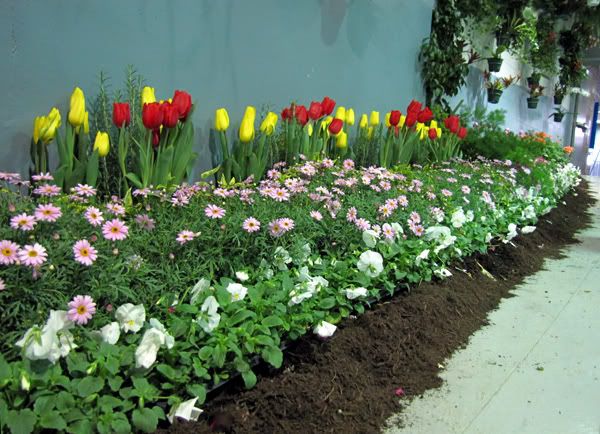

We arrived at the Memorial Coliseum a few minutes before the doors opened to the general public, but since we were both members of the AHS, we got to enter through the exhibitors' door - early even! The usual hallway of spring blooms greeted us as we made our way into the garden expo hall.

Landscape displays were to the left...
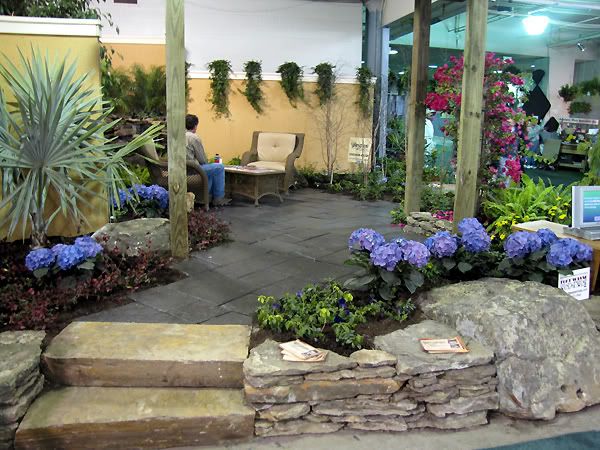


right...


and center...


...but we made a beeline for the rear of the hall, where Dr. Lori was going to be speaking at noon.
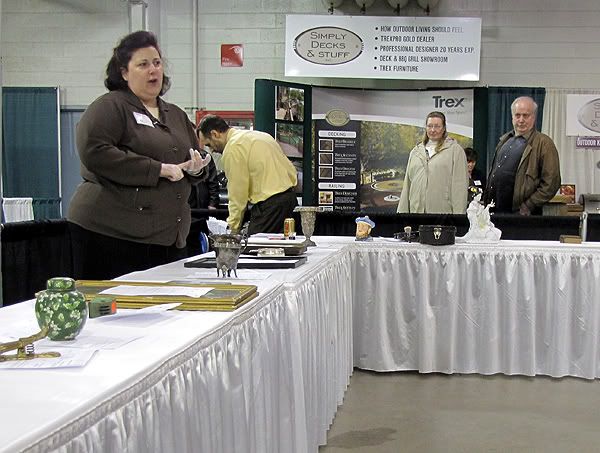
Dr. Lori is a certified fine art and antiques appraiser, an award-winning TV personality and TV talk show host, and a nationally syndicated columnist. Today, she was offering one free antique appraisal and I'd brought one of the books in my Winnie-the-Pooh collection - a 1946 French edition.

What makes my French Pooh book unique, besides being a relatively rare item, is that I believed it to be signed by A.A. Milne. The inscription didn't contain "A.A. Milne," rather it was signed, "For Vi, From blue," with the familiar fluorish under the name. But I knew that Milne was known to his friends and family as "Blue."
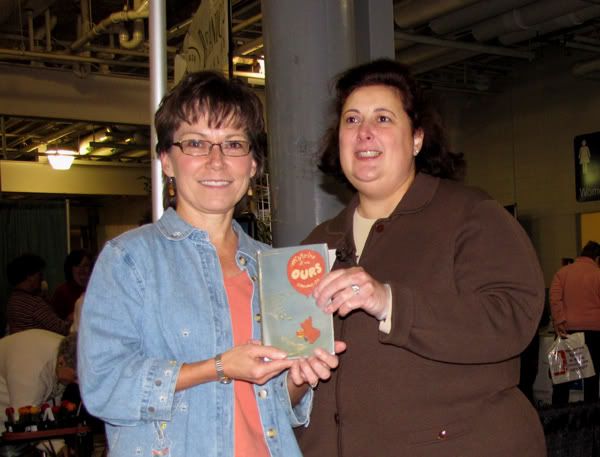
My turn came and Dr. Lori asked me how I acquired the book (online from a used book store in France) and what I'd paid for it. She explained that it was a relatively rare item, in good condition (though it had some acid burn on the dust jacket), and confirmed that it was indeed signed by Milne. When all was said and done, her appraisal was over 300 times what I'd paid for it. I was a happy girl! No plans to sell it just now, though.

Now that that was out of the way, we proceeded to check out the various gardening displays and exhibits. I always love to visit the Foellinger-Freimann Botanical Conservatory booth, because they bring so many wonderful plants from their greenhouse, with extremely reasonable prices on them.
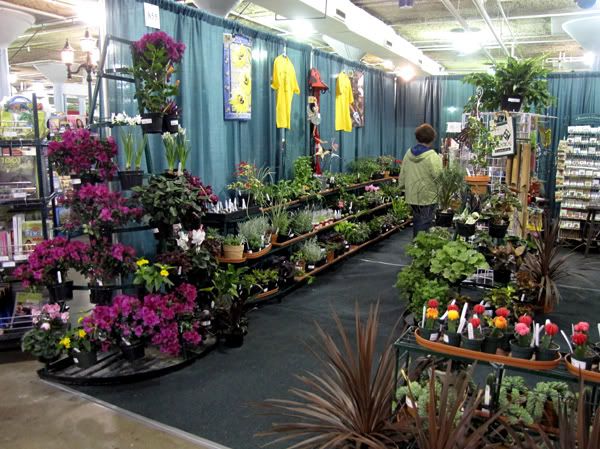

This year was no exception, and though my intention upon attending this year's show was to just look and not buy, I was a goner when I saw the variegated Bougainvillea in bloom and the variegated Jade plant. Sold. Both of them!

The next favorite spot for me is the Three Rivers Orchid Society booth.
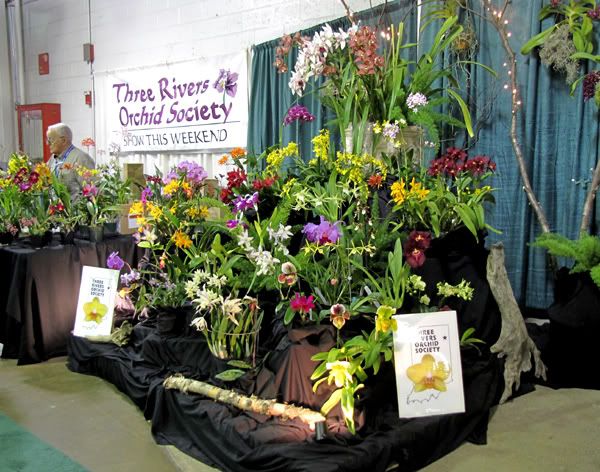

Ohhhh, such loveliness and fragrance all in one spot! There were several beautiful orchids for sale, but I settled for taking some pictures of some of my favorites.
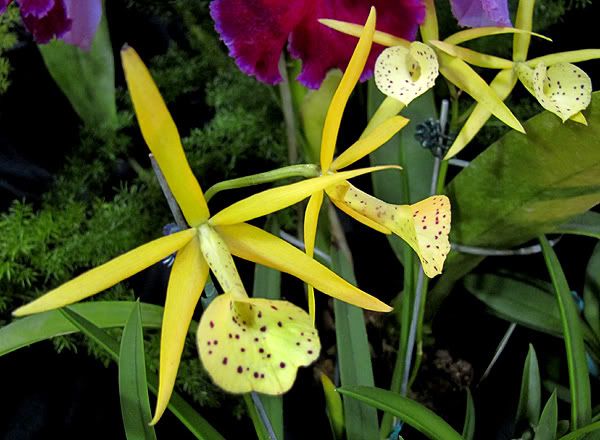
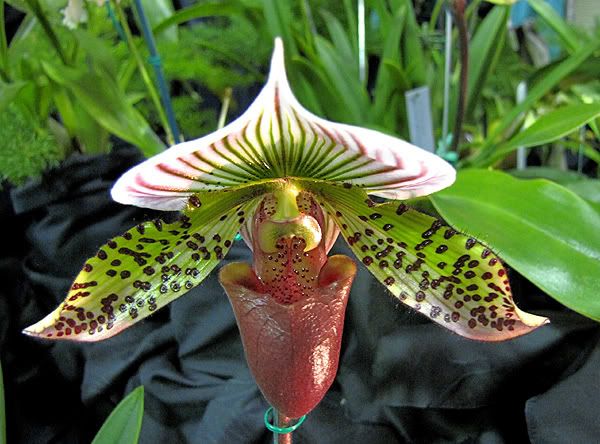
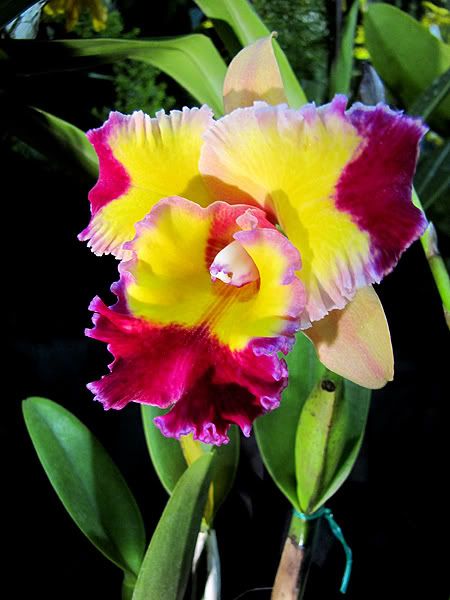
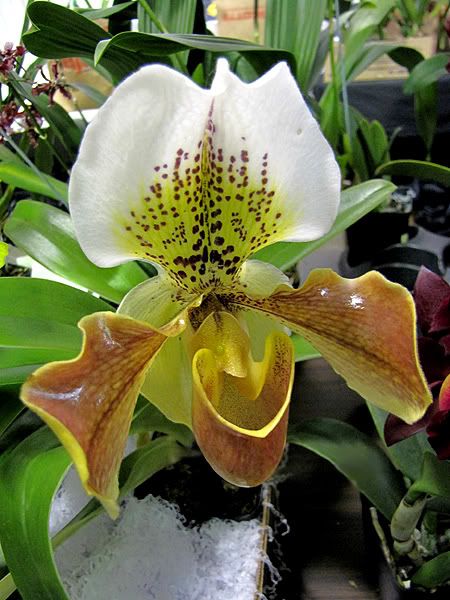
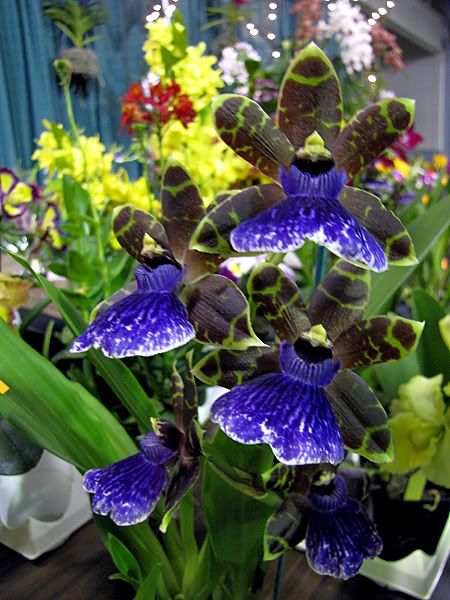
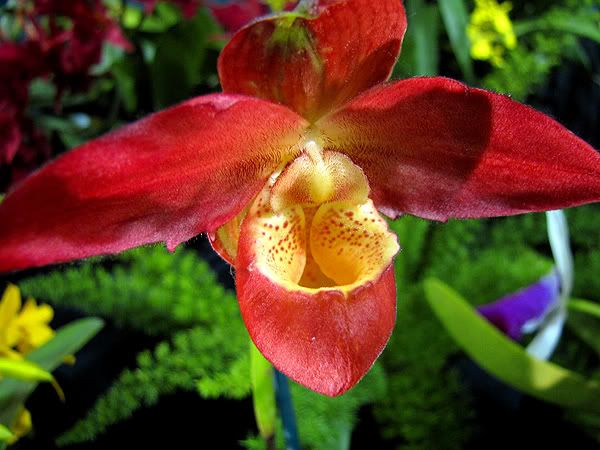


I spoke with one of the members regarding the lack of rebloom of a couple of my orchids, and she provided some advice (repot and move to a new location).
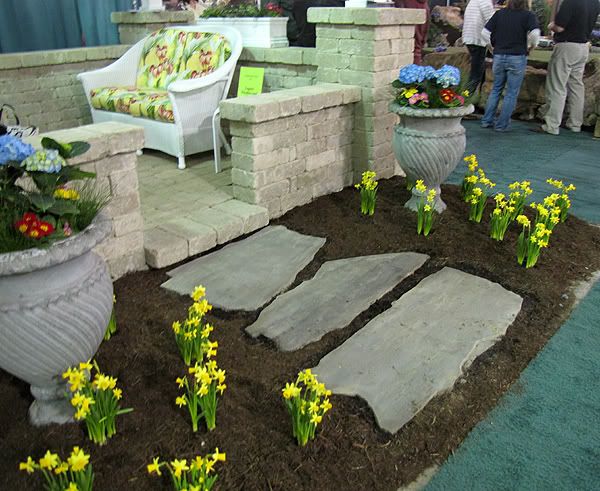
I don't know if it's because this is my third year in a row attending the show, but I was underwhelmed by the landscaping displays. There wasn't much new in the way of design or hardscape and the lack of actual plantings didn't help. I did like the use of large flat rocks for walkways, in comparison to the use of smaller ones so commonly seen.

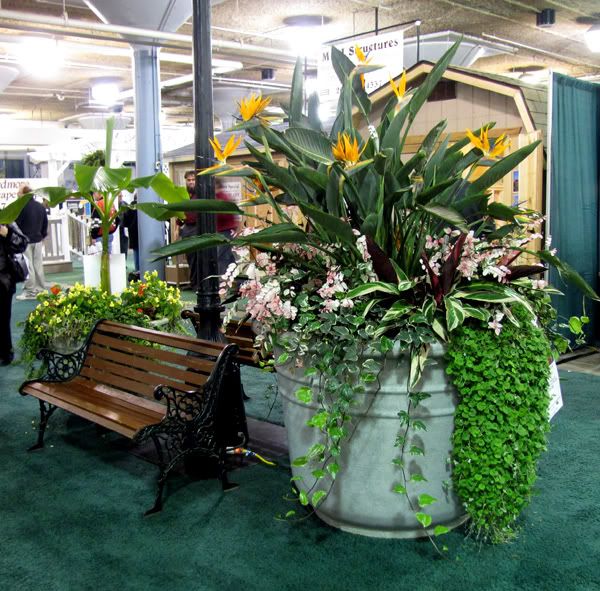
In the aisles between displays were several extremely large stone or clay pots heavily planted and situated with park benches. These were quite attractive and lots of positive comments were overheard as we passed by them.

We paid a visit to the booths of local garden centers and nurseries, several of which were familiar to us from previous shows. Lots of wonderful offerings were there for the buying, but I resisted since I'd already purchased two more plants than I'd intended.

Succulents of all kinds seemed to be in abundance and I wondered if it was a reflection of the hot, dry summers we've had in recent years.


There were several booths by businesses that didn't have plants to sell, but plenty of garden decor and whimsy.
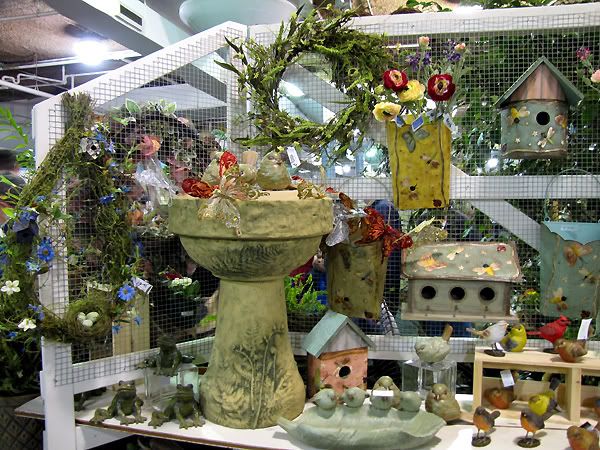
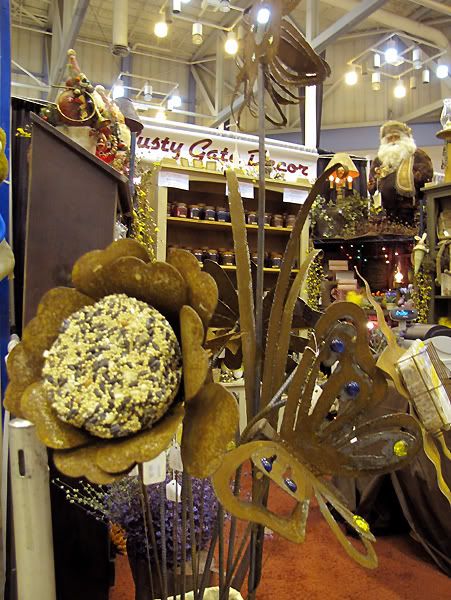
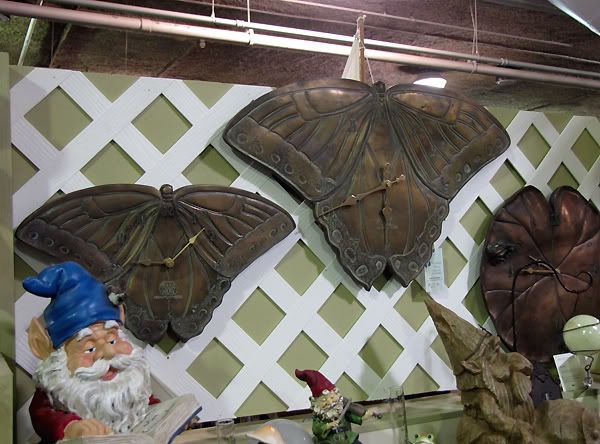

Rusty Gate Decor
(Notice the bird feeder stakes.)


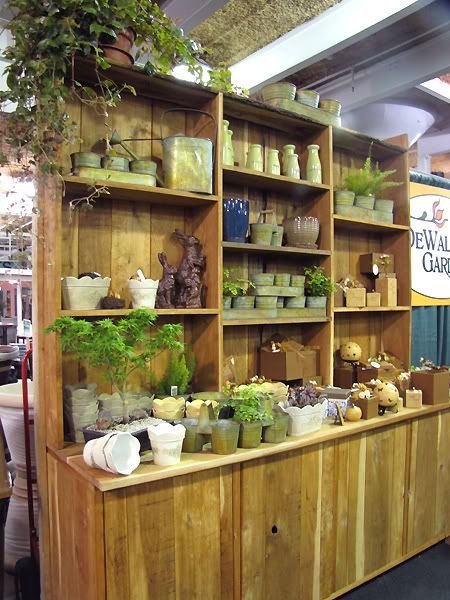
One of my favorite displays was by DeWald Gardens, new to the show this year.
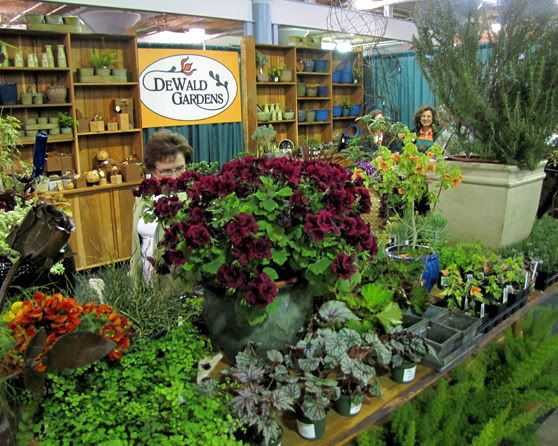

DeWald Gardens is the first greenhouse in Indiana and one of only four nationwide to receive the distinction of "Up and Coming Greenhouse Business for 2008" . Steve and Maria DeWald both have had successful careers as plant research scientists and have Ph.Ds in horticulture. Maria, who was born in Italy and lived in Venezuela (her accent is charming!), has had her container designs featured in several gardening magazines.

Their display showed a lot of class and I loved the pottery. There were beautifully planted containers, several healthy coleus cultivars (one of their specialties), and a gorgeous Japanese Maple bonsai for sale. I had a delightful conversation with the owner and plan to visit them in the coming months.

We left the garden expo hall and walked over to the home section of the show. Here was where you could see exhibits for home improvement, lawn equipment, cooking equipment, and various other related businesses. There were plenty of food items for sale and sample as well.
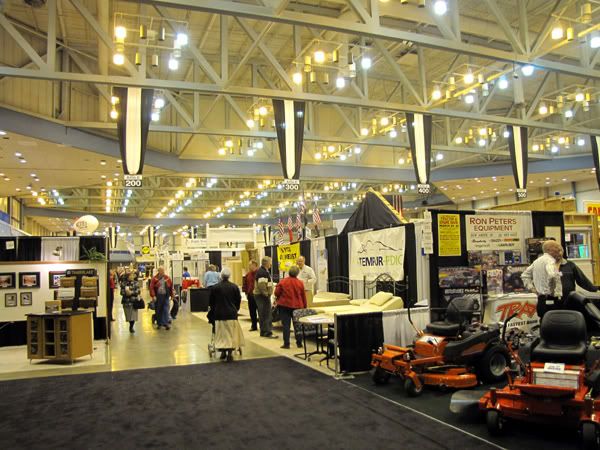

One of the more unusual booths was by River City Links, which is an 18-hole putting course in Ft. Wayne. It is a well-known fact that I am the black sheep of a golfing family, due to my lack of ability to cause a driver to make contact with a teeny tiny white ball, no matter how hard I concentrate on keeping my head down.

Both of our girls played on their college golf teams and went to state with their high school golf team, no thanks to my genes. However, I can putt. Go figure. River City Links gave the opportunity to make a hole-in-one for a free round of golf. Mom and I both managed to do it, so guess what we will be doing this summer?

I'm not sure why home and garden shows feature exotic pets, but it's not the first time we've seen this. At the Indianapolis show Mom and I attended last year, there were sugar gliders. Today's show in Ft. Wayne had snakes. Now I happen to think snakes are cool, but not everyone shares my enthusiasm, so I've kept the photo of the milk and corn snakes to the right at thumbnail size. If you would like to see it in all its glorious, scaly beauty, just click on it.

I still had a few dollars burning a hole in my pocket, so I purchased a couple of packets of seeds from Renee's Garden (sold by the Conservatory): Cerinthe 'Pride of Gibralter' (Cerinthe major atropurpurea) and Butterfly Monarda 'Bergamo Bouquet' (Monarda hybrida). Both are annuals here. The Allen County Public Library was giving away free packets of French Dwarf Marigold seeds at the Master Gardener's booth, so we picked up one of those, too.

Mom and I both purchased new hose nozzles, invented by a fireman, and guaranteed for life and guaranteed not to leak. If they'd been cheaper (we paid $25 each), I would have bought three of them instead of just one, but one of the nice features is the washer is integrated so no worries about losing it when switching it from one hose to another.

One of the fun things about going to a local home and garden show such as this is that you run into people that you haven't seen in awhile. Both of us saw several friends and acquaintances and stopped to chat for a little bit before moving on. We left the show buoyed by the goodness of it all and with a lighter heart, in spite of the cold wind that greeted us as we went out the door.

Spring is on the way!
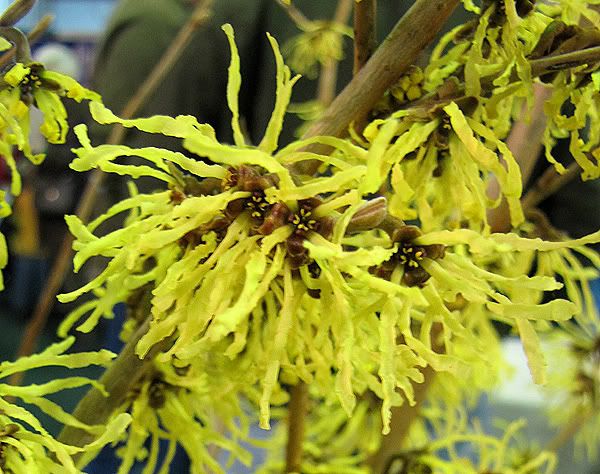
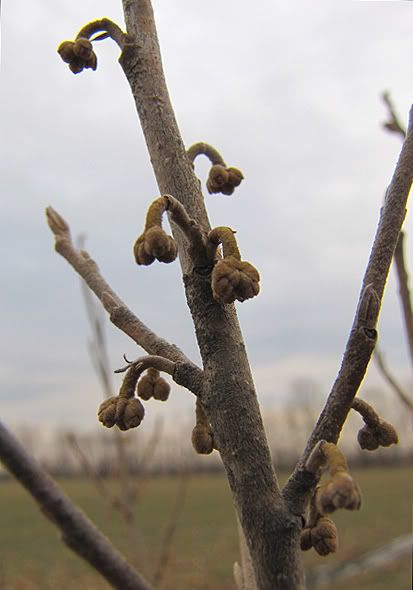
Witch hazel (Hamamelis x intermedia ‘Pallida’) in full bloom at the show, courtesy of Blue River Nursery.
Thursday, February 26, 2009

Spring Project No. 1 - The Grape Arbor


I'm sitting here grinning, and it's such a simple thing that's making me do it. The outdoor thermometer reads 54° F. This makes me happy, not only because 54° is particularly warm, but because it means the weather is starting to actually act spring-like, even if it officially doesn't arrive for a few weeks yet.

This begins an up and down cycle of temperatures which, along with increasing hours of daylight, helps to signal the gardens that it's time to wake up from their long winter's nap. It makes me more energetic, too. My calendar is beginning to actually have things on it. Today I had lunch with a friend, and tomorrow Mom and I are going to attend the Ft. Wayne Home & Garden Show.

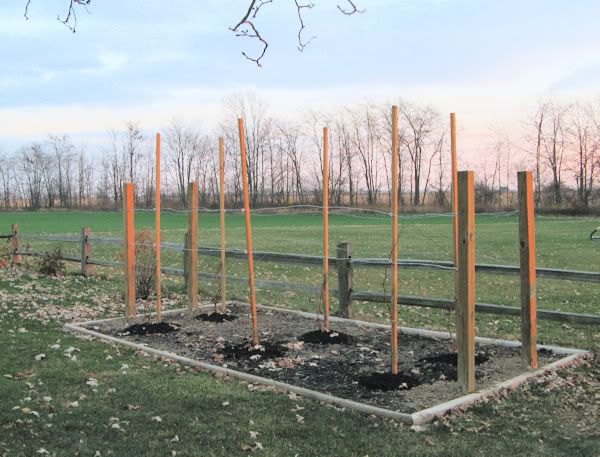
Warmer temperatures also bring to mind those projects that need to be done and first on the list here at Our Little Acre will be to finish the grape arbor. I mentioned last year that I wanted to grow some grapes, and while harvesting them will be wonderful, I really wanted to grow them for the beauty of their vines.


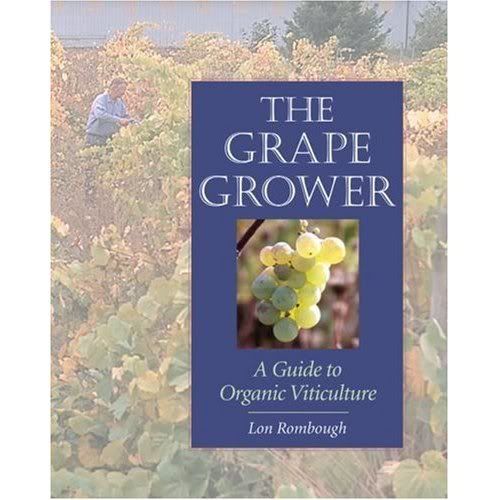
The first thing we did was consult our grape bible - The Grape Grower: A Guide to Organic Viticulture by Lon Rombaugh. This is undoubtedly the most complete and informative book that's out there on the subject of grapes.

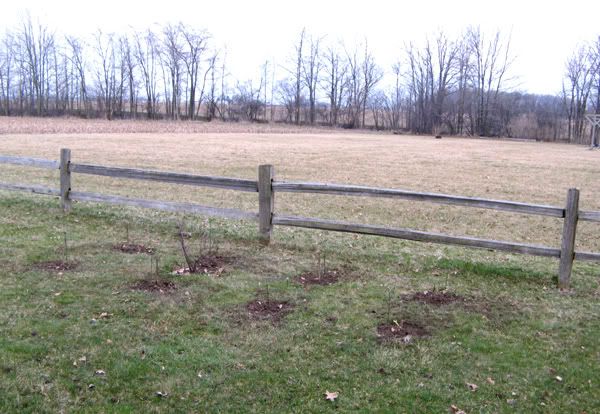
In April, we planted eight vines of table grapes: 2 Himrod (white seedless), 4 Reliance (red seedless), and 2 Mars (blue seedless). They were planted in short rows from east to west, to allow for air circulation, since our prevailing winds come from the west. They were small and took awhile before they started to take off, but all except one Reliance did well.


Planted April 8, 2008

I moved the opposing Reliance vine and replanted it next to a section of the split-rail fencing on one border of our property. Then I replanted the other Reliance vines so they were equidistant from the others, which was probably a better situation anyway, since I'd placed them a bit too close initially.

I wanted there to be a distinct area for the grapes, so we used landscaping timbers to delineate the area and I killed the grass inside by placing layers of newspaper over it. Next, I put a layer of mulch over the newspaper and that was that.

While we weren't quite sure how we wanted to do the trellis system, we began by just letting the vines grow and staking them to a short post. They grew this way until fall, when we knew they were large enough that we needed to get the more permanent system installed. Otherwise, winter winds would whip them around, so with more sturdy support and staking, they'd be ready to go once spring arrived.


October 9, 2008

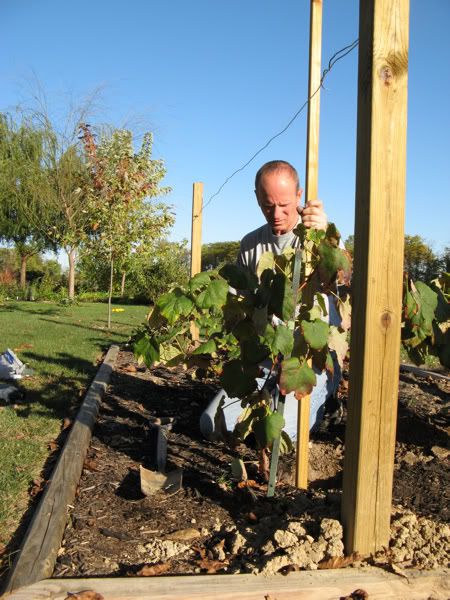
We adapted information found in The Grape Grower to our needs and Romie began by digging holes for the 4x4s that we used for end posts.
Next, holes were dug for the 2x2 wood posts which would go next to the grape vines. Here is where we would have been much better off to have placed the posts first, but Romie was very careful not to cut any of the roots he encountered.


Eye bolts were put at the proper heights on all the posts.
We strung heavy-gauge wire from the end posts, threading it through the eye bolts on the smaller posts in between.

The grape vines were semi-pruned of their lowest auxiliary shoots, leaving one large stem for the trunk. One of them has two strong stems, so we left them both until we figure out what to do with that one. The vines were then well-secured to the supports with Velcro
® plant tape.


November 10, 2008

Now spring is coming and we need to finish what we started. Plans are to get four more 4x4s, which will go in between the middle vines and the end vines. Then a pergola-type covering will be constructed over the entire structure. It won't be tall enough to walk under, but will provide aesthetic interest and further support for the vines as well as keeping the end posts from collapsing inward.

I also need to read up on how to prune the vines. I don't expect to get any grapes yet this year, but I do expect that the vines will grow quite a bit.

Wednesday, February 25, 2009

Witch Hazel - Is It or Isn't It?


I have been whining and lamenting all over the blogosphere about my lack of witch hazel blooms. Time after time, I see yellows, reds, oranges, and even yellow AND orange together in beautiful photos on other blogs. Some are in the same zone I am, so why don't I have blooms?

I bought a witch hazel last summer and though I really wanted a Hamamelis x intermedia 'Diane' or 'Jelena' (any of the redder ones), I couldn't find them and settled for a common yellow one (Hamamelis vernalis). It was nicely shaped and a bargain I couldn't pass up.


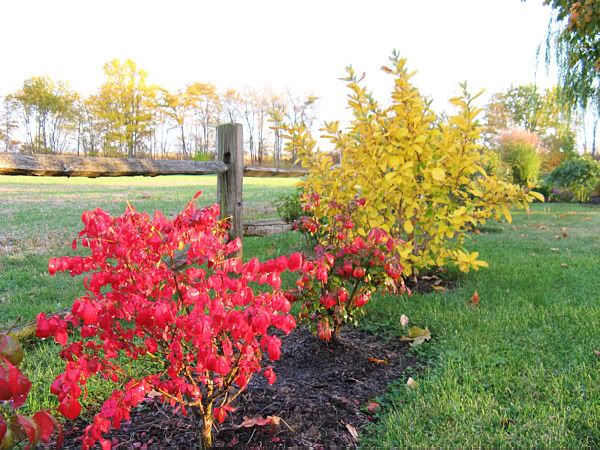
It was beautiful last fall when its leaves turned a gorgeous golden yellow color and I looked forward to seeing winter blooms. Witch hazel is completely new to me - mine is the very first one I've ever seen in person. Can you believe that? They're even native here!

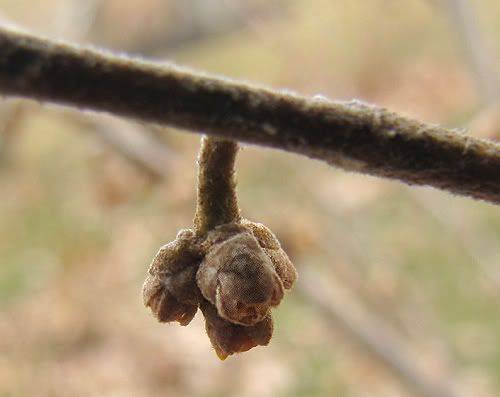
When I started seeing blooming witch hazel photos popping up on other blogs about a month ago, I made the cold trek out to the back of the property and inspected ours. Nope. No sign of blooms. There were several larger brown things attached to a few branches, which appeared to be shells of previous blooms, but nothing except teeny tiny round leaf buds all over the shrub.


Today was a gorgeous late winter day. No sun, but the temperature reached 55° and snow was melting fast. The ground even had a little "squish" to it when you walked on it. I took a look around the yard and in the gardens and was happy to see swollen buds on all the lilacs and the new viburnum that I thought I'd killed by letting it get too dry after planting last fall had buds on it, too.


I thought I might as well have another look at the witch hazel, and hmmmm... It looked a bit different than it did before. I saw leaf buds on the ends of the branches - some even looked like they were actually leafing out - but those clusters of little round balls hanging all over it were much bigger than the last time I checked. Could they be flower buds?


Logic tells me that they are, but I don't want to get my hopes up just to have them dashed. So you tell me! (Keeping fingers crossed.)


Tired of Snow?


Though there are many of us that are indeed tired of snow in particular and winter in general, this post is dedicated to Jodi of bloomingwriter, who seems to have borne the brunt of winter's fury more than most.


Jodi, here's wishing you warm suns and gentle breezes as spring finds its way to you. Eventually. Someday. Soon.


Tuesday, February 24, 2009

"That's What You Think!" said The Cats


Cats are sneaky. No great revelation there. There are wheels constantly turning in their little triangular heads and if we could just decipher what goes on in there, I feel certain we'd have a cure for cancer, world peace, and people in Florida could grow tulips.

You think dogs are smart? Cats are smarter. I'm pretty sure that they can do anything a dog can do - except bark - it's just that they don't want to. That would be giving in and they're far too independent to waste their time doing what you want them to. I have managed to train Baby to come when called though.

We cater to our kitties just a little bit. Romie is much more accommodating to them than I am though. (Perhaps that's why Simon likes him better than me.) We have a kitty dish in the kitchen, which is kept full of fresh drinking water for them, so they don't have to go down to the basement, where their main food and water (and litter box) are located. But this dish had become somewhat of an annoyance.


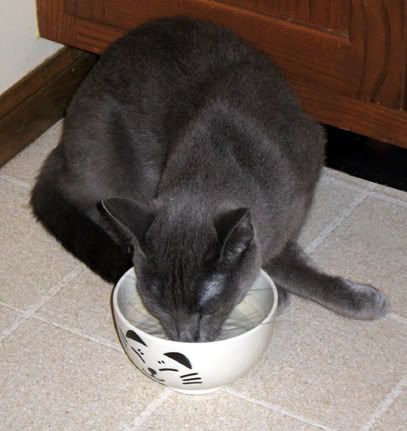
Oh, the dish is cute enough. It's got a cat's face on it, whiskers and all. It holds just the right amount of water to keep them supplied during the day.
That is, if someone (not naming names, but a black and white bundle of fur was observed running from the scene) doesn't keep tipping the bowl over. I don't really enjoy walking into the kitchen in my stocking feet and stepping into a puddle of water.

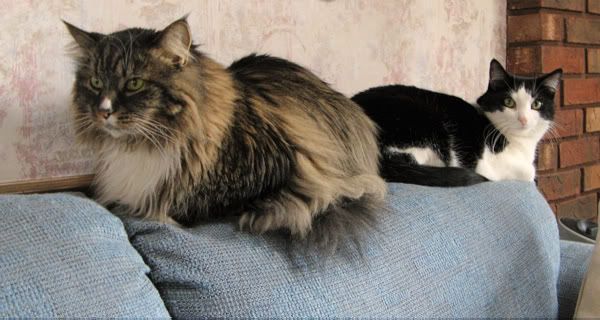
We didn't know which of the kitties was the culprit, but we narrowed it down to two. This started happening before Jilly, our Russian Blue wannabe, was allowed to stay in the house all winter, so it was either Simon or Baby.


Like a good detective, I kept my eyes and ears open for clues that the crime was being committed. I watched as each of them walked into the kitchen, hiding behind the cupboards so my spying self would not be detected. First Simon...no, it wasn't him. Then Baby...no, she didn't do it either. Both just lingered for a short sip then went on their way.

Then I heard the telltale sound of a bowl scraping across the floor. Romie was at work, so I knew it wasn't him puttering around in the kitchen. I tiptoed out, just in time to see Baby with her paw in the bowl, pulling it towards her, spilling the water. BUSTED!

This went on for months and simply knowing who was doing this didn't help at all. I could talk to Baby until I was blue in the face and she continued to spill the water. There's that independence thing I was talking about. The simple solution would be to remove the bowl, wouldn't it? But that would be mean and there must be a simpler solution.

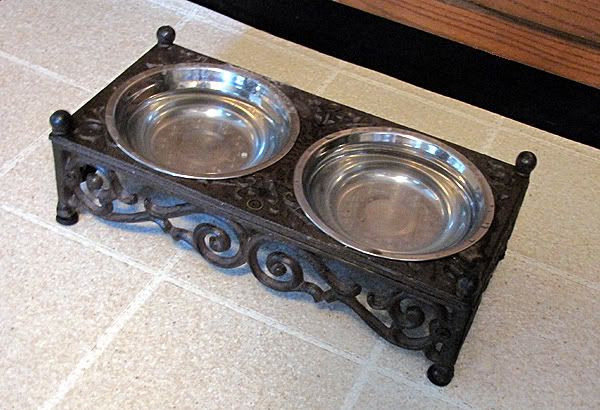
A few weeks ago, I was shopping with my mom in Steinmart and found a lovely iron food and water dish holder with nice stainless steel dishes. The dishes were held at a level of a few inches off the floor and while I thought it was pretty, the first thought that came to my mind was that this would solve our spilled water dish dilemma.


I brought it home, washed the dishes, and filled them both with water. (No food, because gosh darn it, they have to get a little exercise going up and down the stairs to the basement. Our cats are fat enough already.) The cute little white kitty dish was put in the cupboard and I rejoiced in knowing I'd never again have soggy socks.

Hmmph.


Here we go again. I stepped in a puddle, looked into the water dishes, and noticed that one was completely empty. NOW who? And how? No one is fessing up to it, but I have some theories as to both who and how.


As I mentioned earlier, Jilly somehow charmed us into letting her stay in the house all winter. For the most part, she's been fairly well-behaved. Very little claw-sharpening (which is actually a territory-marking trait) and she gets along well with both Baby and Simon. Most of the time.


She's quite vocal, which we love, unless it's 4:00 in the morning and she decides there is an issue she just has to discuss right away. She won't be denied and after having our faces walked over numerous times and listening to her plead her case, one of us has to put her outside the bedroom door and close it. Another five minutes of beating a dead horse, and she gives up. Yeah, we love her.

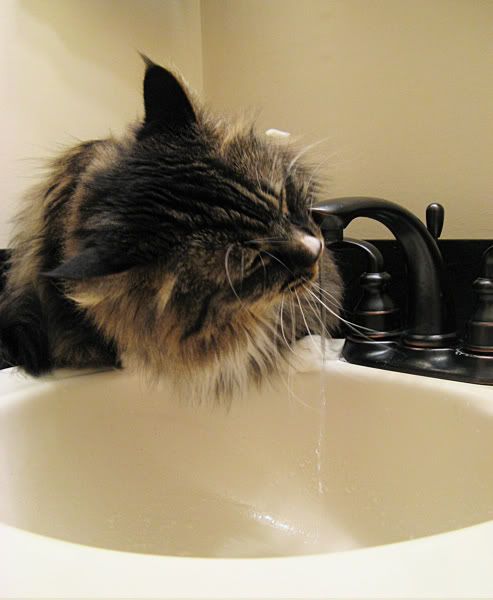
So now, there are three suspects. I don't think it's Simon, because he actually prefers to get his water from the bathroom sink. He's gotten so big that it's difficult for him to jump up there on his own, so he stands by the sink cupboard until one of us lifts him up. He and I have a ritual, whereby he knows he has to give me a "kiss" before I'll turn the water on. Simon's kisses are a lick on the chin and he always obliges. Romie just gives him what he wants straight away.

It could be Baby. Since she seems to get a kick out of spilling the old water dish, perhaps she has learned a way to tip the new dish out of the holder. But because of something I've seen before, I have a feeling it's not Baby, but Jilly.


Cats can do strange things, which is part of what endears them to their owners. You just never know what quirky behavior will erupt from them at any given moment. Jilly is no exception.
When Jilly drinks water from a dish, she assumes a peculiar stance.

Yeah, that's her right paw sticking out...

She sits, balances on one front paw and tucks the other front one all the way under her, keeping it elevated from the floor the entire time. She always does it. It's kind of like on Everybody Loves Raymond, where Robert has to touch his chin with the spoon first when he takes a bite of food. Just one of those things.

Now just suppose that Jilly were to drink from the dish, and she were to accidentally lift the water dish with that wayward paw just enough to spill some water? I've not actually seen her do it, but it could happen.

I'll keep working on the case, but I might have to enlist the help of
Secret Agent 007.5, otherwise known as Harley. At least he speaks the same language as Jilly. Perhaps he has ways to make her talk. On the other hand, Jilly probably knows how to use her feminine wiles to get Harley to keep a secret.

We may never know.


Monday, February 23, 2009

Taking Delight in That Which Surrounds Me


There's still snow on the ground, outside my window. Bleah. The sun is shining though, and while it won't warm us enough to melt the snow, it's better than the usual gloomy gray skies of winter. And we're on the downside, with just 25 days until the calendar says it's spring. In the meantime, I'm reminded of why I grow house plants.

There are several of them in bloom at the moment and their beautiful faces are not lost on me. As regular readers of this blog know, I love to study the intricacies of a flower blossom up close and personal. I'm continually amazed at the detail with which God fashions each one.


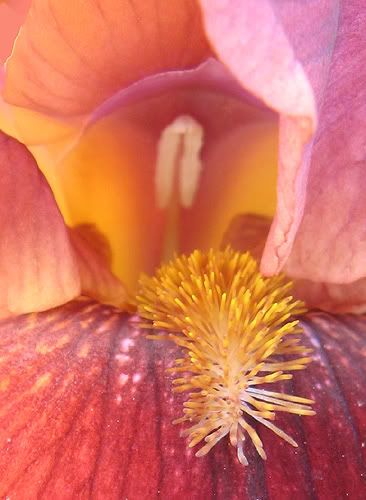
Often, the details of a flower aren't just for our enjoyment though; they serve a very useful purpose. Take an iris, for example. Look closely at this photograph of a bloom from my bearded iris, 'Red at Night' :

The fuzzy beard acts as a runway, leading the potential pollinator into the reproductive organs of the plant. In addition, the hairs serve to brush off pollen that may already be on the pollinator's body as it enters, helping to insure pollination of the flower. And you thought it was just another pretty face!

It will be some time before the iris are blooming outside, but here's what's flowering in the house right now:


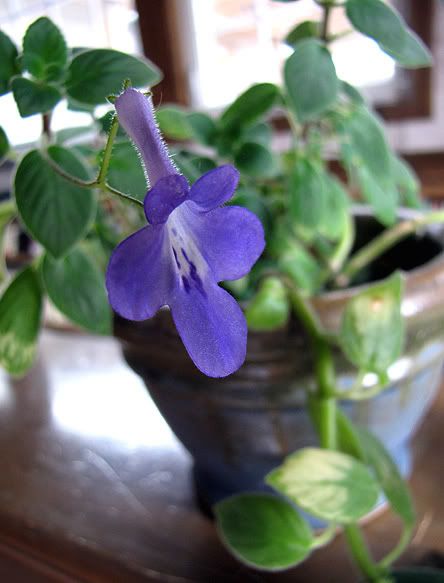
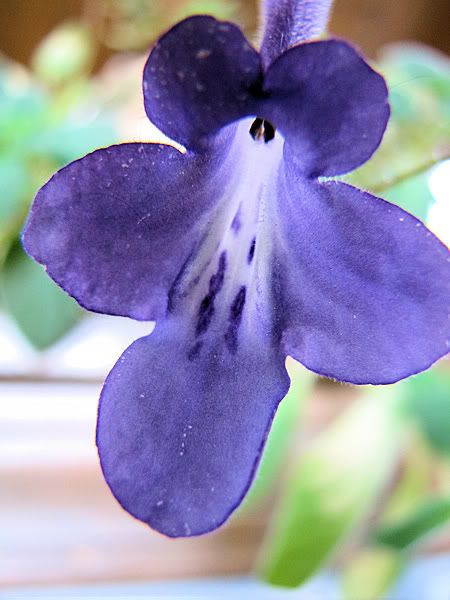
Streptocarpella

I purchased this plant about three years ago at the Foellinger-Freimann Botanical Conservatory in Ft. Wayne for four dollars. About a year ago, I was ready to pitch it into the compost bin, mostly because I'd neglected it and it was on its last leg. Then it all of a sudden decided it was going to show me a thing or two, and it has come back quite nicely, even rewarding me with blooms.

I have had a couple of people tell me this is a Streptocarpus, but I figure the people at the Botanical Conservatory know what they're selling, and I found the following information making the distinction between the two:

Some references list Streptocarpella as a selection of Streptocarpus, but these two groups of plants are considerably different. While the flowers of Streptocarpus and Streptocarpella are similar, the plant habit is considerably different. Streptocarpus grows in a basal whorl of leaves with no above-ground branching while Streptocarpella has a well branched top.


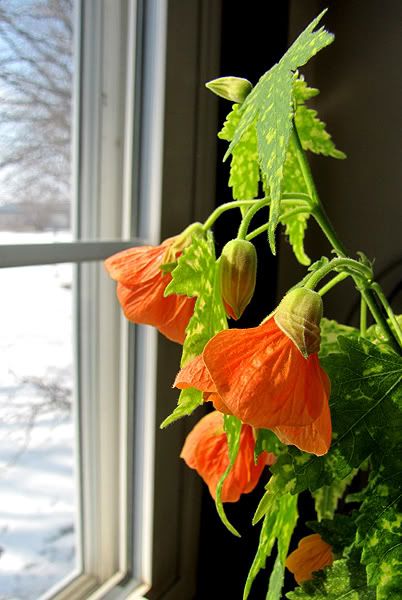
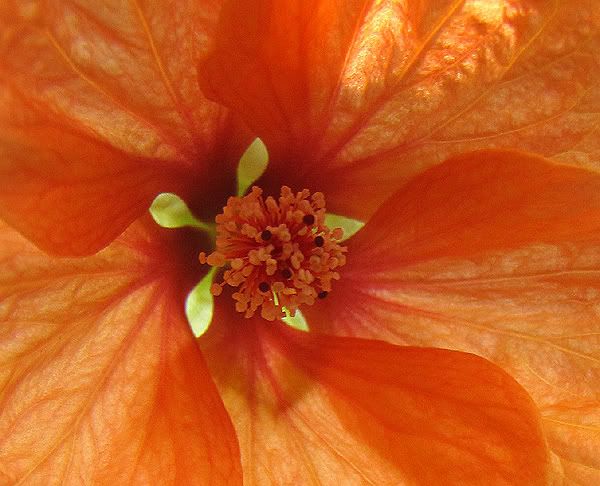
The Flowering Maples are all in various stages of bloom, with this Abutilon pictum 'Thompsonii' being the star of the show. The speckling in the leaves is caused (on purpose) by the mosaic virus. The virus can be spread to other abutilons by way of insects, especially white fly, or by grafting. So far, this one remains the only one with speckles here.


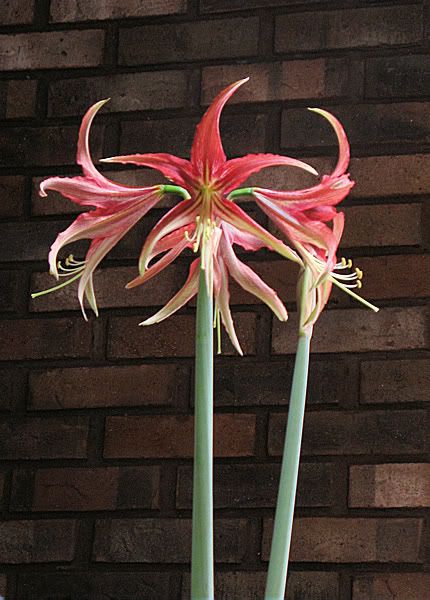
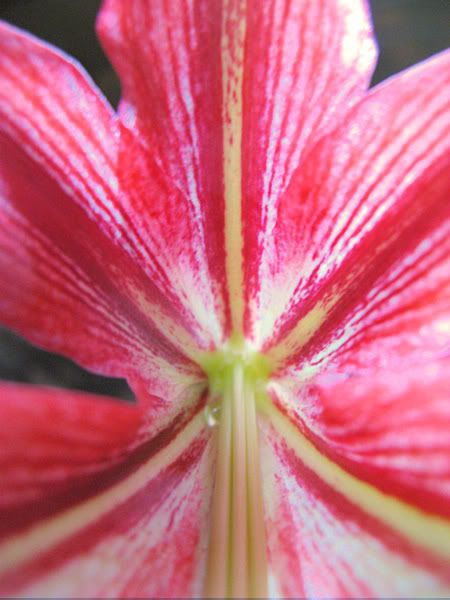
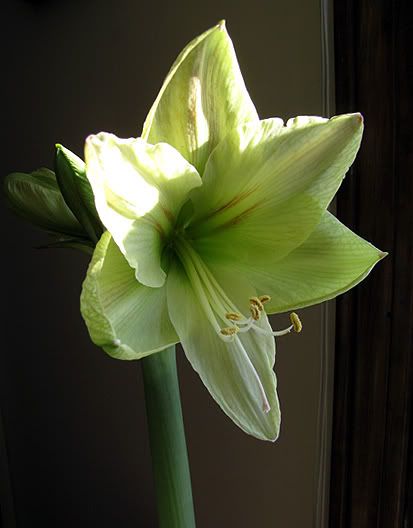
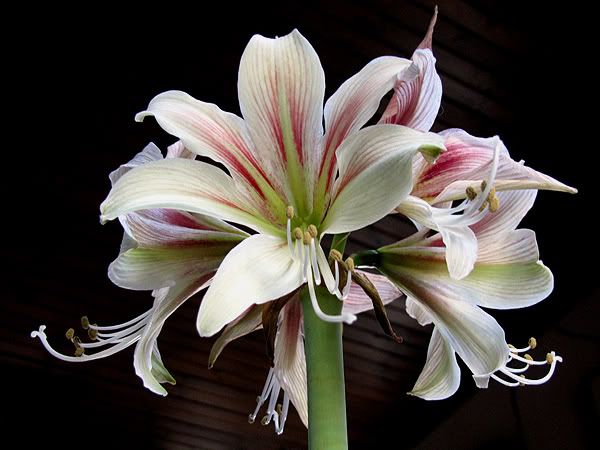
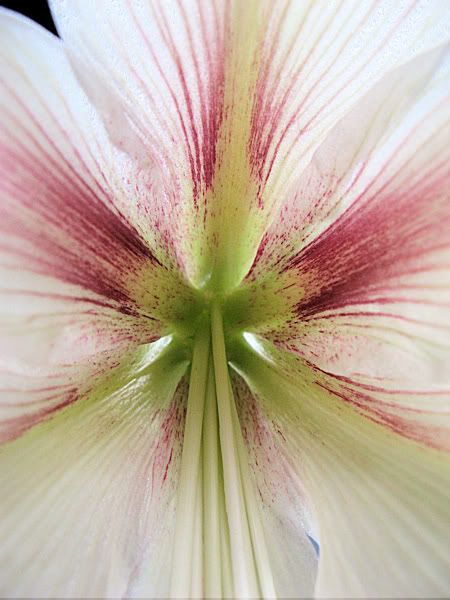
And of course, there are my beloved amaryllis (Hippeastrum). I have many of them potted up right now and each week, a new one opens up. Currently in full bloom are:

'La Paz'


This is either 'Lemon Lime,' 'Limona', or 'Green Goddess.' My labels got mixed up and I thought I'd be able to tell which was which when they bloomed, but I can't.


'Rembrandt van Rijn'


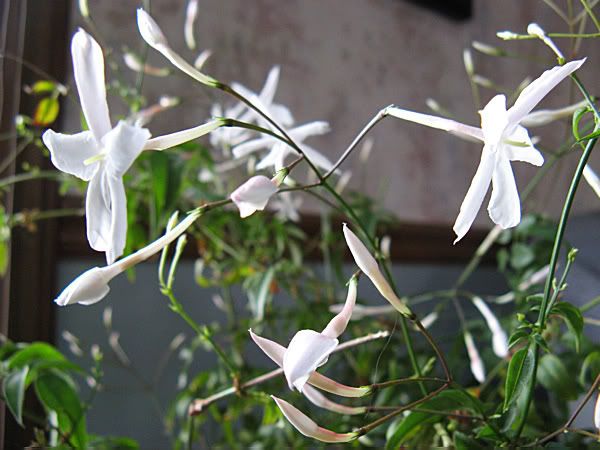
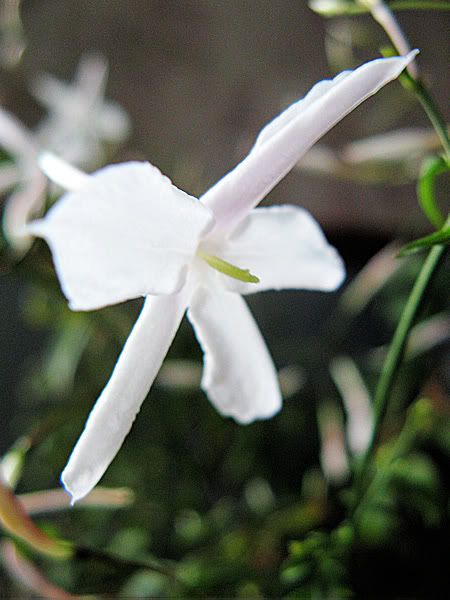
I'm not sure which jasmine this is, because it was simply labeled "Jasmine" when I purchased it a couple of years ago at a garden center in Cleveland, but it has provided the house with a wonderfully tropical scent. These two photos were taken about a month ago and it's pretty well done blooming for now, but there are more buds coming on.


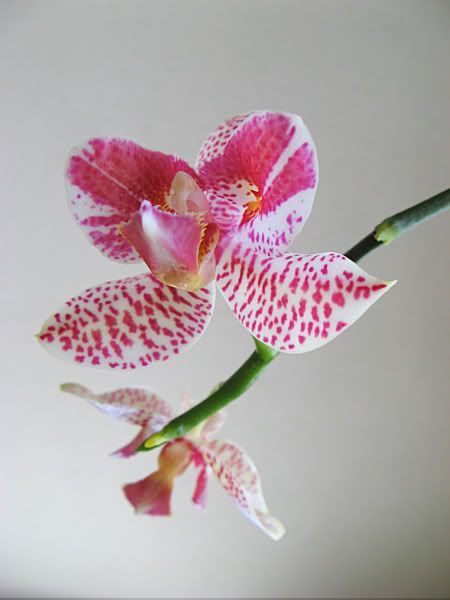
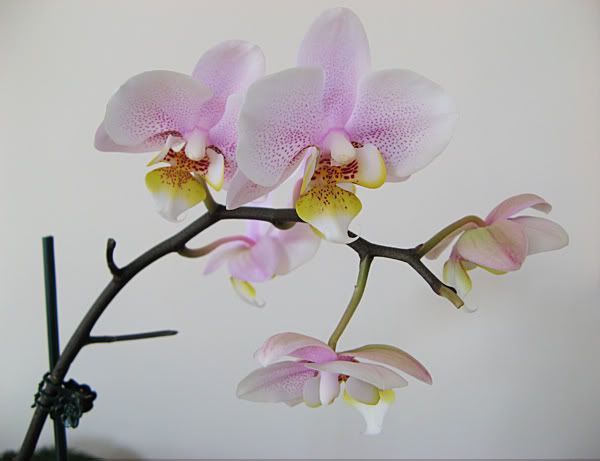
Two of the orchids are still nicely in bloom, with another one forming buds on its flower spike.

Unknown Phalaenopsis


Phalaenopsis Longpride 'Amy'


The actual flower is the plant's highest fulfillment,
and are not
here exclusively for herbaria,
county floras and plant
geography:
they are here first of all for delight.


- John Ruskin


Saturday, February 21, 2009

BloomingBuds™ - A Review


When I returned home from Florida, I went through my mail and there was a large envelope containing a set of BloomingBuds™ earphones, which are quality ear buds for using with an iPod® or other electronic devices using a standard earphone jack. Included was an extra set of Blooms for use on the ear buds.


I'd read about BloomingBuds™ and their creator, Chip Lowry, in a recent issue of a local paper and was immediately smitten with them. I loved the idea of being able to personalize a set of ear buds in much the same way I did my Crocs.

Okay, so it's cool that I can put daisies on my ear buds, but how would the music sound when I used them with my iPod®?

FANSTASTIC! Now I'm no audiophile, but I know static and flat sound when I hear it, and BloomingBuds™ earphones have none of that. They sound every bit as good as the original ear buds that came with my iPod®, and that's good enough for me.

As a gardener, of course I love the several options available on that theme - daisy, butterfly, ladybug, clover, apple, and bumblebee. But there are many more for others who are into other things. (Is there more to life than gardening??) They also have other products to which the Blooms can be affixed, like sunglasses and Bluetooth headsets. The Blooms are proprietary, meaning they only fit on BloomingBuds™ products.

I've been using my set of ear buds this week (right now they have the daisies on them) and a couple of times the daisies tilted out of the ear buds as I removed the buds from my ears. Maybe the snap-in mechanism could be a little tighter, but it's been just a minor nuisance. Otherwise, I love them and find them an ingenious idea for personal expression with otherwise boring headphones.

BloomingBuds can be found in various stores throughout the United States, so keep your eyes open for them. They can also be purchased on their website for $14.99, which includes two sets of Blooms, and for a limited time, this purchase will include a bonus of two extra sets of Blooms, which normally sell for $2.99 each.

Maybe I'll have to get the runner Blooms when I start running again...

_________________
The product or merchandise being reviewed in this blog post was the sole compensation for testing and reviewing the product. All opinions expressed here are mine, with no suggestions whatsoever by the manufacturer or distributor. If I like it, I'll say so. If I don't, I'll say that, too.

Does This Look Like Spring To You?


What a difference a day makes. It could have been worse, though. Counties to the north and south of us got more. We were between snow storms, I guess. Those pictures I took yesterday would be a study in white if I took them today.

Oh well, one look at the calendar tells me this is probably exactly what it should look like out there.

Friday, February 20, 2009

Could That Be a TULIP I See?


After reading so many wonderful blog posts about signs of spring in areas south of us, and even a couple not all that far south of us, I just had to go out and see what I could find in my own gardens.

I looked for some crocuses in all the usual places, but there was nary a one...


Then I tried to find signs of hyacinths but they were not there...


And then I walked around to the south side of the house and found spears of daffodils!


Nearby, some tulips were peeking through...


So spring is on the way after all! I continued to look around and there were more spring signs...


The 'Dragon's Blood' Sedum has started freshening up its burgundy foliage and the Sempervivums are showing signs of green in the center of their winter brown.


Yet another sedum is turning green.


There were areas where the leaves had blown into a fairly deep pile, so I removed some of them and I found some new Columbine (Aquilegia) growth.


The Sundrops (Oenothera) are up and running.


Now here's a bright and shining perennial that looks as good in winter as it does in summer. Yes, this is really how it looks all winter long. It's 'Kelly's Gold' Campanula and along with another Campanula, 'Dickson's Gold,' they really provide a bright spot in an otherwise dull and brown landscape.


It's late in the winter and we're ready to be done with it. One more week of February and the fickle month of March will be upon us. In March, anything goes. And THAT means it truly is spring and we'll find many more visible signs of it in the garden.


Thursday, February 19, 2009

Tropical Treasures


In past visits to Florida, I couldn't resist a visit or two to places where plants are for sale. In 2006, I brought home a couple of small azaleas, which I managed to keep alive for two years, even getting them to overwinter outside the first year. However, they never bloomed for me up here, so I took them out and they made their way to the compost pile.


That same year, I brought home a Bougainvillea that wasn't in bloom when I purchased it and the nursery owner wasn't sure what color it was either. It didn't bloom for me until the summer of 2007, at which time I discovered it was a gorgeous raspberry color. I take it inside for the winters, of course, and I hope to see it bloom well for me this summer.


In 2007, I brought home another Bougainvillea called 'Imperial Garden,' which is an exquisite white bloom with hot pink on its outer edges. It's my favorite and I was disappointed that it didn't bloom this past summer like it did in 2007. Maybe this will be its year!


Also in 2007, I bought a small Paphiopedilum at Lowe's, and while it has remained somewhat healthy, it has not rebloomed for me. Maybe some fertilizer would help? I'm so bad about feeding my plants.

I've purchased many tropical bulbs on previous trips as well, and I hoped to get some new ones when I was in Florida last week, but it must have been too early to find any. Neither Lowe's nor Walmart had a single one. But that doesn't mean I didn't find something to bring home!

Jenna was struggling with resisting the many orchids we saw at both places. It was hard for me too, since they were all so inexpensive compared to prices up north. But the fact that we only brought carry-ons for our luggage on this trip meant there was precious little room for carrying a tender plant such as an orchid home with us on the plane.

But as we were drooling over the orchids at Lowe's, I spied something else that highly tempted me. Several healthy quart-sized pots of Spathoglottis lurked nearby and I snatched one right up.


We have ground orchids that grow native here in Ohio, but I've never seen them for sale in our garden centers. The one I decided to bring home from Florida isn't hardy to our zone 5, so I will have to bring it in for the winter, but that's not a problem for me. What's one more?

It's blooming for me right now and it does have beautiful orchid-like blooms. I'll have to read up on its care so that I can enjoy it for many more years. If, however, I manage to kill it, I won't be out much, since it only cost $6.95.

I've already told you about the Hippeastrums that Meems dug for me from her own garden. I'll put them in the ground later in the spring when it warms enough. Aren't they nice bulbs? With babies!


My aunt Kay also shared from her courtyard plantings by letting me dig up the babies that her Aloe plant was producing. As I dug up the nicely-sized plants, I discovered more smaller ones that had not yet made it up through the soil and surrounding stones. I have an Aloe plant at home that has also produced offspring, but it's not heavily speckled like hers.


So while I brought home less than I have in previous years, I've got some nice, quality bulbs and plants to tropical up my northern garden this year.


Prevailing Winds


I woke to the sound of the wind this morning. It was steady and LOUD. While I was laying there in bed, listening to the strong winds outside, my mind fell into a stream of consciousness, as it often does, and this blog post is a result of that thought journey.

We'd had very high winds last week while I was in Florida and both we and our neighbor lost shingles from our roofs. When I took a walk through the gardens yesterday, I saw the evidence of the wind. The tuteurs and taller plants were leaning eastward and there was foreign debris caught in the "winter interest."

Wind is a peculiar thing. You can't see it, but you know it's there because you can hear it and you can see the evidence of its presence. You can feel it on your skin. Even more amazing is that it carries yet another invisible wonder of nature to our noses - the scents of the world around us. Just think about that - we can't see wind or a flower's aroma, but we know they exist. Kind of like God!

I remembered a book I'd read last year that had been recommended to me by my former employer. The Shadow of the Wind by Carlos Ruiz Zafón is now on my list of all-time favorite books. Not only is the story engaging, it is beautifully written and Lucia Graves, who translated it to English from its original Spanish, deserves credit for making it available to us in the English-speaking world. I wonder if it reads as beautifully in Spanish.

The book is listed on a recent meme going through the ranks of Facebook called "Books I've Read." The list of 100 books was compiled by the BBC and they surmise that the average adult will have read six books on the list. I was glad to see this one listed.

In this part of the country, wind is an early sign of spring. Without it, this area might temporarily return to its Great Black Swamp days. We get lots of rain in the spring and while most of it is soaked up by the ground, you'll see water laying in excess in the fields, too. The strong winds help it to evaporate more quickly. Though I get tired of dealing with the winds day after day, I know they will also get me into my garden much quicker for spring planting.

Recently, the wind has been considered for supplying power to our area. Two major wind energy companies have been contacting land owners in an attempt to secure access for constructing wind turbines. The flatness and openness of the land provides a nearly ideal location for the turbines to harness the wind here.


Mom and I saw our first wind turbines in action during our trip to Winterthur, Delaware to attend GardenFair in September 2006. We drove by them in Pennsylvania and we were astounded at their size. If the turbines are constructed here in my county, they could be possibly within sight of Our Little Acre. I find them strangely attractive in an architectural way and wouldn't mind seeing them every day, especially knowing that they are harvesting wind power for our use.

It's afternoon here now and the wind is still blowing. I can still hear it howling and now it's carrying snow. Sideways. Florida was nice while it lasted!


Some Facts About the Wind

The highest recorded wind speed on earth was recorded at Mt. Washington, New Hampshire in 1934. The wind reached a top speed of 231 mph.

The prevailing winds in the mid-latitudes (30-60 degrees latitude both north and south of the equator) blow from the west. In the other latitudes they generally come from the east.

The world's windiest place is Antarctica, where winds blow at over 60 miles/hr for five months of the year.

The state of North Dakota alone has enough energy from good wind areas to supply 25% of the lower 48 states' current electrical needs.

Wind is powered by the sun. The heating of the earth causes air above it to rise and the pressure to fall, and cooler air rushes in to equalize the pressure, resulting in wind.

The instrument used to measure wind speed is called an anemometer.

____________________
Photo of wind turbines from altdotenergy.com

Sunday, February 15, 2009

Bloom Day in the Sunshine State


This morning was our last here in Florida, after spending a week visiting with my aunt and uncle at their beautiful condo. Jenna and I took one last short walk through their development, soaking in the warmth of the sun, wishing we could take it home with us.

Romie had told me that on the south side of our house, the tulips were starting to emerge from the ground, but we both remembered they had done that last year, too. We have nothing blooming outside in the middle of February in Ohio, even though the snow all melted during our unseasonably warm weather this past week.


So my Garden Bloggers' Bloom Day post is brought to you from beautiful Bradenton, Florida, with a few of what my Aunt Kay has in bloom at her place:


Desert Rose (Adenium obesum)


Wax Begonia (Begonia semperflorens)


Tropical Hibiscus (Hibiscus rosa-sinensis)


Now here I sit, nearly 1000 miles from where I woke up this morning, through the wonder of aviation. It's 45 degrees colder here, but it's warm inside. While Jenna and I had a nice time at my aunt and uncle's, there's no place like home.


Saturday, February 14, 2009

Love on the Half-Shell


Happy Valentine's Day!


This walnut is a simple fractal in nature. Several months ago, I happened upon a television show that was explaining fractals. Since I'd heard the word, but didn't know what it meant, my interest was piqued.

It's a simple, but beautiful concept, really. Fractals involve repeated shapes within the same structure. They can't be exactly the same, or they're geometric, not fractal. The walnut has repeated curvatures of a similar nature that mimic other curvatures within the object. There are more complex fractals, such as a snowflake, a fern, and branches of a tree.

Google has a theme for its iGoogle pages called "Fractals." If you use iGoogle for your homepage, try it. There are some beautiful graphics!


Thursday, February 12, 2009

Thomas Edison and Henry Ford Estates - Ft. Myers, Florida


"Be courageous! Whatever setbacks America has encountered, it has always emerged as a stronger and more prosperous nation.... Be brave as your fathers before you. Have faith and go forward."

~ Thomas Alva Edison ~


Thomas Edison was born in Ohio. I've seen his birthplace in Milan and it's not all that far from where I live. I learned much about him in my Ohio History class in junior high school, but before today, about all I could remember to tell you about him is that he invented the phonograph and the light bulb. Now one of those is not exactly true, but more on that later.

Edison lived in several places, but he spent his winters in Fort Myers, Florida. He built his "Seminole Lodge" home there and his good friend Henry Ford had a home right next to his. Much of his work in Florida was dedicated to botanical research and development to find a plant that could be grown domestically that would produce enough latex for commercial use. This, of course, was of interest to Ford as well, since tires for his cars were made from latex rubber.


When we were about halfway to Fort Myers to tour the Edison and Ford Winter Estates, which were an hour and a half south of us, I remembered that I had forgotten to bring my AHS (American Horticultural Society) membership card along. This was a costly oversight, since that would have allowed me to take the Home and Gardens Tour for free. Instead, I had to pay the $20 fee.


It was a beautiful day that we chose for making our trip here and we meandered through the grounds, which were on both sides of McGregor Boulevard. The Edison and Ford homes, as well as the guest house and cottage, overlook the Caloosahatchee River, which empties into the Gulf of Mexico.


We took the self-guided tour where we were provided with recordings on a device that we wore like a necklace. When we came to a location with a numbered sign, we pressed that number on the device and it would play a short message with information about that location. I found it ironic that Edison was credited with so many inventions that involved telecommunication and here we were, using just such a device to tell us about it.


Edison home - Seminole Lodge


Edison and his second wife, Mina, were both interested in plants and flowers, for different reasons. Mr. Edison was interested in breeding goldenrod for latex production and eventually produced a variety that grew four times as tall as most goldenrod and produced more than twice as much latex. This goldenrod was named for him - Solidago edisoniana - and a specimen of it is mounted in a case on the wall in his laboratory.

Mina loved the beauty of flowers, and grew a variety of them, both for use as a backdrop for her entertaining and as a way to entice birds. She was instrumental in the formation of the Audubon Society.

We visited the Moonlight Garden, where she planted white-flowering plants so they could be seen at night. Today, there are other colors here, but still many with white blooms.


Rosa 'Mrs. B. R. Cant'


The bougainvilleas on the property are impressive, especially the large purple one located just east of the Edison home. Climbing over 20 feet tall, it was covered with blooms, and was simply amazing. Crazy amazing.


And then there were the pink ones across the street where the research labs are located. These are in a row as a hedge and they were a solid mass of blooms - more crazy amazing.


The next part of our visit was a look at Edison's laboratory. Here, he spent countless hours working with four assistants on his research and experiments.

He was a workaholic who once attributed his success to the fact that he had no clock in his laboratory. He often worked such long hours that he took naps on his desk, on the lab tables and even on the floor. His wife had a cot brought in, where he took his naps from then on.


Edison spent his last ten years working almost exclusively on the development of the goldenrod as a viable resource for producing latex on a commercial level, but at the time of his death, he hadn't yet accomplished it. Mina continued to run the lab for five years more, but no breakthrough was ever made and the lab shut down.


There is a museum on the grounds, highlighting Edison's life and his inventions. It was really neat to see some of the things he is credited with inventing and many originals and prototypes are on display there. He invented a baby's high chair and even had a company that produced baby furniture.


"Of all my inventions, I liked the phonograph best...."


Photo by Jenna DeCraene


One of the most astounding things we saw on the grounds was the gigantic Banyan tree (Ficus benghalensis). It was originally brought to Edison by Harvey Firestone from India as a four-foot-tall specimen and it now covers nearly an acre. There are several similar figs throughout the property, as well as many, many different palms.

The largest Banyan tree in the United States is here.


Orchid Lane, which was a path behind the Edison house, had many orchids growing in the trees, but only a few of them were in bloom while we were there. They were scattered throughout the property in other trees, too.


Oh, that light bulb thing? There were others before Edison that had invented various forms of the light bulb, but it was Edison who found a way to produce one that could stay lit for long periods of time and be used commercially. With 1093 patents to his credit, he was always looking for new ways to improve items already invented and to improve life for people in general.


More scenes from the Edison and Ford Winter Estates


The outside of the Moonlight Garden


Bamboo


Banana


Friendship Walk


The Herb Garden by the laboratory


Gardenia


Lipstick Tree (Bixa orellana) - its seeds are used for dyes


Just another little lizard...


Mysore Fig


Henry Ford's home was under renovation and not open to the public during our visit. We were given rain checks for a return visit, though it's doubtful we'll do that.


A couple of Ford's cars


Edison's swimming pool


Rain barrel


Pier on the Caloosahatchee River


Pond


Tree Crinum


Yesterday, Today, and Tomorrow Flower (Brunfelsia latifolia)


Orchid (?) growing on tree


Unknown Crinum


Staghorn (Platycerium sp.)


L-R: Me, Aunt Kay, Thomas Edison, Jenna, Uncle Bob


Wednesday, February 11, 2009

Surf, Sun & Sand


You can't go to Florida on a vacation and not go to the beach, so with temperatures in the 80s and few clouds in the sky, we (Aunt Kay, Uncle Bob, Jenna and I) headed west to Anna Maria Island.


Holmes Beach is the beach of my youth. I don't think we've ever gone to any other beach when we're down here, because there's no reason to do so. It's close (10 miles away) and it's gorgeous. The beautiful white sand and wide beaches are all you could ask for in a beach. I've parasailed above it and sunbathed on it, and it's about as good as it gets.


Jenna was on a quest to find a shark's tooth, but the beach was pretty barren as far as beaches go. We've been here when there was much more shell debris washed up, but don't you know, she found one before we'd gone too far down the beach. She and I had had a shark tooth finding contest on a previous trip and I'd won ... 26-25 ... but today, she was the winner, because I didn't find a single one.

We brought sunscreen, but in our excitement of just being on the beach, neither Jenna nor I put any on. Nearly four hours later, we realized we'd made a mistake. We knew we should have left about an hour earlier, but we'll be okay.


We walked quite a distance north along the shore, although we didn't quite go all the way to the northern point of the island, as we'd done in past trips. We ate our lunch there at Cafe on the Beach.


When we were ready to go, we made our traditional visit to Sun and Surf, which has various tropical birds in large cages outside the front of their store. They have been there for years and it's fun to visit them and talk to them, because they talk back. Bullwinkle was especially talkative, with "Hello!" and "Bye" being the bulk of his vocabulary. There were several very colorful birds and seeing them up close and personal is always amazing.


We swung by the big Banyan tree that we'd taken the girls to see many, many years ago, when they were small. I remembered that we'd driven the minivan under it and you still can.

On the way home, we stopped at SweetBerrieS for frozen custard. I had the Razzmatazz, which was chocolate custard, raspberries and pecans. Yum! Perfect ending for a beach day, don't you think?


The Florida snowman we made - 8" tall!

Tuesday, February 10, 2009

Meeting Meems of Hoe & Shovel


I was up bright and early to get ready for a short trip to a friend's house. A friend I'd not yet met. And isn't that what some people say strangers are - friends we've not yet met? But this friend was no stranger.

I felt as if I already knew much about Meems from reading her blog, Hoe and Shovel, for a year or more and after an hour-long phone conversation yesterday. We managed to cover a mutitude of subjects in a very short time, and realized we both loved to talk. As we said goodbye on the phone, we joked that maybe we wouldn't have anything left to talk about when we actually met. Not a chance!

My uncle Bob was my "driver" and we arrived at Meems' house around 10:00 a.m. It was readily apparent as we pulled up to her house that a gardener lived there. Beautiful and inviting landscaping had me wanting to see what other treasures lay beyond the front yard.


She invited us into her lovely home, where we hugged and introductions were made. The talk was non-stop, even as we enjoyed her homemade banana bread and fresh blueberries and strawberries.

Eventually, we began the grand tour of her gardens, and while Meems was just a bit apologetic about the destruction by the freezes they'd experienced recently, I still recognized the lovely gardens she pictures on her blog. It was fun for me to see them in the context of her home and the surrounding area. While we both would have liked to see things in their usual gorgeous prime condition, nature happens and we as gardeners know all about that and learn to take it in stride.

Despite the frost, I was taken by the beautiful layout of her gardens, with such careful attention to what grows best where. It's apparent that she knows her gardens intimately and tends to each plant and shrub and flower as her children.

Before we left, she used her Shovel to share some amaryllis bulbs from her own garden with me. She knows how much I love them and these will be special treasures from a friend, growing in my own garden this summer. The frost damaged their foliage before they were due to bloom, so perhaps they'll do it later, in my Ohio garden.

We spent 2½ hours there before we had to leave since my aunt and Jenna had not accompanied us and we had left them without transportation. Meems and I could have spent the entire day talking about so many things. We had that instant connection that you make with some people when you share a common interest. Even outside gardening though, I know that Meems and I could be the kind of friends who spend time together, if we just lived closer to each other.

Thank you, Meems, for opening your home and gardens to me. You are just as charming and warm as you appear on your blog and I am so glad we got the chance to spend some time together. Now, you need to visit Our Little Acre. My door is always open for you, my friend.


Monday, February 9, 2009

Color Overload


To see Jenna and me walking around my aunt and uncle's development here in Bradenton (Florida), cameras in hand, you would think we were visitors from another planet. Hearing our oohs and aahs as we came upon yet another tropical bloom in all its glory must sound a bit amusing to those who enjoy these things every day.

But we are from The North. The land of snow and ice and gloom and cold. Jenna and I are delirious with the the feel of the sun on our skin. We close our eyes and raise our faces to it so we can get its full benefit. We are sun-starved by this point in our northern winter.


I was looking forward to seeing the bougainvilleas in bloom and I worried that the freezes they'd recently experienced here would rob me of it, but I wasn't disappointed at all. Pink, purple, magenta ... they are all here. I have two bougainvilleas at home and both were purchased right here in Bradenton on previous trips.


There are other beauties, som
e of which I know the names, and a couple that I don't.

Unknown!


Hibiscus


Another gorgeous hibiscus.


Berries on a Schefflera - I have one of these in a small pot at home, but of course, it doesn't even bloom, let alone get the berries.


Euphorbia (Crown of Thorns)


Later in the day, we made our traditional trip to Mixon's Fruit Farm, a place we've loved since I was young. We sample the oranges, the juice, and the fudge, and decide to buy some 'Honey Belles,' a.k.a. Mineolas. We ate lunch here and of course, had to have the orange soft-serve ice cream. I felt just a little tinge of regret while eating the ice cream, knowing it is one of Romie's favorites and that he was still back home and wasn't here to enjoy it with us.


We swung by the park where my grandma used to come for the winters for many years, just to see her place and reminisce about the times spent here. While my aunt and uncle visited with old friends in the park, Jenna and I walked over to nearby Braden Castle to see the ruins of the castle there. Not much left to it anymore, but it's always fun to see it and the pier.

We hear they've had the coldest winter in years, but we picked a great week to be here. High 70s and 80s all week.

Tomorrow, I get to meet Meems of Hoe & Shovel. We spoke on the phone today and chatted for over an hour. I have a feeling meeting Meems is going to be like meeting an old friend.


Sunday, February 8, 2009

Leavin' On a Jet Plane


I am posting this from Gate 8 at Ft. Wayne International Airport. In about half an hour, Jenna and I will be boarding Allegiant Air Flight 852. A couple of hours later, we will be out of the wintery Midwest and in sunny, warm Florida.

There's a cool online tracking feature that I've posted here. If it does what I think it will, you can watch as our plane makes its way south. I've posted this to make it easier for my family to see, rather than for them to try to go to the website itself, but you can watch too, if you want.

Of course, once we've landed, this graphic will be useless, but it will be fun for a little while.


Next post will be from the American tropics! :-)


Saturday, February 7, 2009

The Strange Thrill of A Weather Event


We in the north have learned to deal with the cold, the gloom, the ice and snow over the many years of living here. To those who are in warmer climates, it might be puzzling as to just why we stay and tolerate less-than-ideal weather conditions for so many months of the year.

The reasons are varied:


  • We like the change of seasons.
  • We have family here.
  • We have jobs here.
  • It's too expensive to relocate.
  • We like to complain.

It does give us a break from the garden and for those of us that are a bit obsessed with ours, we need that break, whether we think we do or not.
This winter has been one that's all over the weather map, with thunderstorms, high winds, snow, sleet, freezing rain, blizzards, and fog. The result of some of that has been flooding and power outages for some of us. Never a dull moment!

Think about this . . . what would winter be like if we didn't have some extreme weather to look forward to? Day after day of gray, brown, cloudy, depressing weather, with a few sunny days peppered here and there. Bo-r-r-r-ing. So sometimes, strange as it may seem, we get a bit excited over what the weather forecasters like to call A Weather Event.


Right now, I'm reading The Shack by Wm. Paul Young. It's been recommended reading for me for quite a few months now, and when I saw it on the shelf at Walmart last week, I picked it up. I started reading it last night and in the very first chapter, there's a perfect explanation of how we northerners are when A Weather Event is forecast.

There is something joyful about storms that interrupt routine. Snow or freezing rain suddenly releases you from expectations, performance demands, and tyranny of appointments and schedules. And unlike illness, it is largely a corporate rather than individual experience. One can almost hear a unified sigh rise from the nearby city and surrounding countryside where Nature has intervened to give respite to the weary humans slogging it out within her purview. All those affected this way are united by a mutual excuse, and the heart is suddenly and unexpectedly a little giddy. There will be no apologies needed for not showing up to some commitment or other. Everyone understands and share in this singular justification, and the sudden alleviation of the pressure to produce makes the heart merry.

Of course, it is also true that storms interrupt business and, while a few companies make a bit extra, some companies lose money - meaning there are those who find no joy when everything shuts down temporarily. But they can't blame anyone for their loss of production, or for not being able to make it to the office. Even if it's hardly more than a day or two, somehow each person feels like the master of his or her own world, simply because those little droplets of water freeze as they hit the ground.


Even commonplace activities become extraordinary. Routine choices become adventures and are often experienced with a sense of heightened clarity.


Wm. Paul Young has been there. He gets it. He could never explain it in such an accurate way unless he'd experienced it.

I'm sure the southerners have their own counterparts to these northern natural events, especially those who live in California or other areas that experience earthquakes. Though relatively commonplace for some, it still provides a bit of drama to their days.


We're having A Little Weather Event here today. This is one of a slightly different sort, but the resulting feelings inside us are much the same. We are having what I call "a teaser day." The thermometer on the bank just outside Walmart read 51° at 1:00 this afternoon.
The average high for this date is 25°.

The sun was peeking out for a little while and though it was a bit windy, it was still much, much warmer than it was just a couple of days ago. We saw people shedding their heavy winter coats and walking around in just sweatshirts and sweaters topping their jeans. The sheer numbers of people out and about was an indication of The Event, too. The fresh air smelled so good.

These days put a smile on our faces because they are the sign of things to come. The teaser days will occur more frequently from now on - melting snow and softening the frozen layer of soil blanketing the land. Oh, we'll have more snow and maybe even A Weather Event or two, but spring is on the way!


Friday, February 6, 2009

If At First You Don't Suc-seed...


Growing anything from seed can seem like a daunting venture when you think about it. I mean, honestly, just how can a teeny tiny seed ever hope to become a relatively gigantic plant with colorful flowers? Take the petunia for example.

A petunia seed is about the size of the period at the end of this sentence. An ounce contains 245,000 to 285,000 seeds. They need light to germinate, but a seed that small can get lost in the cracks, even when you can't see any cracks. That's probably why a single seed pod on a petunia contains so many seeds. Chances of many of them reaching maturity is pretty small.

I enjoy growing things from seeds, because 1) it's a challenge, 2) it's an inexpensive way to try new things, and 3) I enjoy watching the tiny seedlings emerge and go through all the stages of growth. There are plants that I love that are not easily available at our local garden centers as an already grown plant. Seeds allow me to grow them.


But all is not ideal in Eden. As much as I would love to say that I have a 100% success rate with my seed planting ventures, I can't. There are those plants that elude me, some of them time and time again. I am a persistent sort and don't like the thought of a plant getting the better of me, so I try again.


Meconopsis betenicifolia

I've attempted to grow Meconopsis (Himalayan blue poppy) from seed and plant. Two years ago, I started them inside in peat pots and got a single seedling for my efforts and even that succumbed within a few weeks. Last year, I purchased plants from Michigan Bulb and while they were really healthy plants, I managed to kill every one of them. I also winter sowed the seeds and got nada.

Has anyone had good success with growing Bells of Ireland (Molucella laevis) from seed? I don't want to know, unless you have a tried and true secret for it. I've tried to grow them every single year for the last four years and only had one plant with bells on it two years ago. I love them and would be quite thrilled to see just a few plants looking good in my garden.

Oriental poppies (Papaver orientale) are a favorite of mine, but I have yet to be able to grow a single one from seed. I'll be trying again this spring by planting some 'Lauren's Grape' oriental poppy seeds that I purchased from Botanical Interests. I bought two packets of seeds and will probably plant them all, hoping to get at least a couple of plants from them.

Snapdragons (Antirrhinum majus)are supposed to be easy to grow and self-seed, right? Well, there isn't going to be any self-seeding of these going on in my garden this year, because I only got one blooming plant out of the bunch I planted last year and it was so close to frost that it never made it to seed-pod stage. These are readily available at the garden centers so I might purchase some and then let them go to seed. Romie loves them and calls them "dragonsnaps."

Jodi's Livingstone Daisies (Dorotheansus bellidiformis) captivated me from the moment I saw them on her blog, so last year I decided I would try to grow them from seed. No luck, but I'm going to try again this year, because they're so gorgeous and I want them growing in my own garden.

And finally, what kind of gardener can't grow Johnny Jump-ups (Viola cornuta) from seed? Me. I've sown them several times and have yet to get even one blooming plant.

It's a sinister plot meant to discourage me from seed sowing, don't you think? But it's not working. I will always sow seeds, even those that are my own personal nemeses.


Who plants a seed beneath the sod
And waits to see, believes in God.
~ Unknown


Wednesday, February 4, 2009

Black Lady Slipper


We were invited to my grandma's house for ham and beans the other night (yum!), and stopped at Walmart on the way home. We needed to pick up a few things, but as is usually the case, we found a few that we didn't need, too.

I usually take a stroll through the garden center, but as it was late in the evening, I resisted this time. However, sometimes Walmart will put items in another location totally unrelated to their usual space. As I was walking from the pet supplies department to the other side of the store for some food items, something caught my eye and I stopped.

Black lady slippers! And they were on sale for five dollars!


I'd not seen these before and was surprised when I just happened upon them. It only took me a few seconds to make the decision to buy some. I couldn't believe my luck and smiled all the way to the frozen foods.

I showed Romie as I met up with him there, and he took one look and rolled his eyes, which is exactly what I expected him to do. He just doesn't understand how sometimes it only takes a small thing to give me great joy.

So how do you like my black lady slippers?


When you saw the title of this post, you thought I'd found a black lady slipper orchid, didn't you? I didn't mean to mislead you. Okay, yes I did. When I looked at the receipt and saw the slippers listed as "Lady Slipper", I couldn't resist.

Only a gardener would look at that and think "orchid."

~~~~~~~~~~~~~~~~~~~~~~~~~~~~~~~~~~~~~~~~~~~

Is there such a thing as a black lady slipper orchid?
Perhaps not a
Cypripedium, but there is this.

Tuesday, February 3, 2009

Attention on Annuals - Part III


This is the third and final post in my series on annuals that I have grown here at Our Little Acre. I hope you'll try some of these in your own gardens this year!


Osteospermum 'Orange Symphony' - I bought the plants for these African Daisies a few years ago and have saved the seed each year. I've got 'Lemon Symphony' too.


Asclepias curassavica - This annual milkweed is the most vibrantly colored in the family and I would grow it for its beauty even if I didn't grow it for the Monarchs. Look closely and you can see the tiny Monarch caterpillars on this one. Like the other Asclepias, it forms seed pods and I save the seeds for the following year.


Ipomoea lobata - Known as Spanish Flag or Firecracker Vine, last summer was the first year I grew this. It vined up a maple tree that had come up volunteer through a rock pile and grew well in that shade! The leaves obviously show a deficiency or insect damage, but it bloomed beautifully all the same.


Cosmos sulphureus - Somehow, since I'd never grown these before, I misidentified them as marigolds due to their foliage similarity, but thanks to garden bloggers, saw the error of my ways. These are annuals that no garden should be without. They are so beautifully colorful and bloom non-stop with deadheading. I think they'd bloom non-stop even without deadheading. They are simply gorgeous.


Convolvulus tricolor 'Ensign Blue' - These morning glory relatives are not vining and produce the most vibrant color of blue you'll ever see. This is the plant that introduced me to the Gold Bug, a fascinating beetle. However, it will pepper the leaves with holes if you have any number of them, because this is one of their favorites.


Nigella damascena - Known as Love-In-A-Mist, the foliage is pretty, the blooms are pretty, and the seed pods are pretty. Its blooms are gorgeous in every detail and they will return year after year, because this is a vigorous self-seeder. I don't mind though.


Verbena bonariensis - I first learned of this butterfly magnet through garden blogs and decided to give it a try here. WOW! What a great plant! It's supposed to self-seed, but I saved seed as well, just in case.


Amaranthus 'Pygmy Torch' - This was a big lesson in the value of thinning your seedlings. When I first saw this coming up after direct seeding, I wanted to laugh. It was literally a burgundy carpet. As it grew, I thought about thinning, and well, just didn't. I know it's supposed to be a shorter variety, but not this short. Still, it was an attention-getter in the garden. It's hard to ignore a solid mass of this color, no matter how tall it is. And I have a feeling I won't need to plant it at all this year, if these are like other Amaranthus.


Lathyrus odoratus 'Cupani's Original' - I'd never grown sweet peas before, but grew three different ones this past year. This particular cultivar is the one from which all other cultivars were developed. They were grown in the late 17th century and were named for a Sicilian monk. The combination of color shades is one of my favorites and the fragrance is nice. It's a heavy bloomer, especially if you keep it deadheaded and it produces lots of seed pods. I'm definitely growing it again next year.


Did you see anything you might like to grow in your gardens this year? These proved to be easy for me, unlike some other annuals that I've had difficulty growing well or even at all. That will be saved for another post.

What annuals have you grown that you liked and would grow again?

Monday, February 2, 2009

Attention on Annuals - Part II


Continuing the parade of annuals from Part I . . .


Lupinus texensis - Ahhh...the Texas Bluebonnet. Do you know I've never seen one in real life until I grew it last year? I wondered if I could get it to bloom stage, but no problem! It really is the most luscious shade of blue.


Papaver rhoeas - These Shirley poppies are the only kind I've managed to grow as of yet. They're incredibly easy and self-seed freely, so if you don't want them, collect the seed heads. Mine produce all different shades of red and pink, as well as white with red accents. They're very delicate-looking flowers with that typical paper-petal look.


Alcea rosea - My first hollyhocks were grown from seed my grandma gave me, but these deep burgundy ones are from seed I collected behind a restaurant near here. They aren't black, but from a distance they look like it. Hollyhocks aren't an annual, rather a biennial. I always make sure to spread seed from the large pods so I am never without this old-fashioned favorite.


Emilia coccinea - Scarlet Tassel Flower was a newcomer to the garden this year and it grew and flowered like gangbusters. It's a small flower on tall wiry stems, but never failed to attract attention from garden visitors. When it goes to seed, the cottony seeds float in the air like dandelion seeds, so I'm pretty sure I'll be finding this all over the garden next year. Thomas Jefferson grew this at Monticello.


Dahlia - It took these dahlias most of the summer to reach blooming stage, but I was rewarded with beautiful 'painted' blooms. After we had a killing frost, I dug the tubers that had formed and they are now in the basement awaiting spring, when I will plant them out. This is the first time I've ever done this, so we'll see how it goes.


Euphorbia marginata - This is one of my very favorite annuals. It's easy to grow, glows in the garden, especially on a moonlit night, and has fun Explode-O-Pop seed pods. Be careful of the milky white sap though. It can cause skin irritation.


Gomphrena globosa - Also known as Globe Amaranth, this is a small flower whose blooms last a long time. I don't care for this color, so this year I'm going to grow them in red. I saw a patch of red ones at Inniswood Gardens and they were stunning.


Calendula officianalis - I have planted these for several years now. I purchased seeds the first year, and have always saved seeds from the plants for the following year. They are reliable germinators and undoubtedly would self-seed if I didn't purposely plant them. The color combinations are variable, which is one thing I love about them. The flowers are edible, too!


Lagurus ovatus - I love these Bunny Tails! They're short and grass-like, with fluffy little heads. I didn't think mine would ever make it to bloom stage, because the cats kept eating the foliage!


Iberis umbellata - This is the annual form of candytuft. I've grown it for a couple of years now and it too is a self-seeder. In fact, I didn't have to plant any seeds this past year and I allowed it to come up wherever it wanted. It has a wildflower look to it and produces flowers in lavender and white.


Ipomoea quamoclit - Known as Cypress Vine, this is a vigorous grower with small trumpet-shaped flowers in shades of red, pink, and white. Self-seeds freely and once you've planted this, you'll likely be pulling seedlings from areas where you don't want them . They're easily recognizable though.


Phaseolus coccineus - Not only are Scarlet Runner Bean's blooms pretty, the beans they produce are edible. This is a plant that grows so vigorously that it can be used as a privacy screen if it's given the proper support.


Part III will feature the last in this series of seed-grown annuals.

~~~~~~~~~~~~~~~~~~~~~~~~~~~~~~~~~~~~~~~~~

Seed sources:


Attention on Annuals - Part I


Every year, I grow several annuals here at Our Little Acre. Some make their appearance every year, whether by my choice or theirs (self-seeding), but I always try to grow something new each year as well.

The seed catalogs arrive throughout the month of January, when we here in the north are color-deprived and longing for spring. I go online and fill my virtual shopping carts with way more seeds than I can possibly plant, and that's when I have to refine and reduce it to a more realistic total. Please tell me I'm not the only one who does this.

Flowers appeal to me for various reasons, with the main one being the beauty of their blooms. But just because they're pretty doesn't mean I should or can plant them in my own garden. For me, the easiest way to whittle down my list of seed wants is to see if they are suitable for our location and if they require any special conditions for germination. Time until maturity, whether it be harvesting the vegetables or producing flowers, is another practical consideration.

During the year, as I visit other gardeners' blogs, I see flowers that I like and want for my own gardens. Many are perennials, but most of the ones that I will plant from seed are annuals. Here are some of the annuals that I've grown from seed. Maybe you'd like to try a few of them in your garden this year.


Gazania rigens - Commonly known as Treasure Flower, these have given me great joy in the variations of patterns they present. I save seed from previous years' plants, so by now, I have no idea which cultivar I'm growing, although the one pictured is from 'Daybreak Mix'. The only downfall they have thatI can see is that they don't open up all the way on a cloudy day.


Cosmos bipinnatus - I love the carefree airy look of Cosmos, and in the past I've grown all colors of them, but last year I only grew white, planted with Zinnia elegans 'Envy'. This year, I think I'll try to find seeds for 'Psyche,' which is a white double. Cosmos definitely self-seed if you let them.


Coreopsis tinctoria 'Mahogany Midget' - This is a smaller, finer featured Coreopsis which got off to a slow start, but once it began blooming, it didn't stop until we got a hard freeze. Blooms are an inch or less in diameter. It self-sows freely.


Heliopsis helianthoides var. scabra 'Loraine Sunshine' - I winter sowed this a couple of years ago and it did well the first year and returned the second. I love the variegated foliage, but I have noticed some of it reverting to solid green over time.


Zinnia pauciflora - This is a small-flowered species zinnia that is simply charming. I purchased the seeds from The Monticello Store, which lists the flower as grown in 18th-century gardens, before hybrids came on the scene. It self-seeds, but I saved some seed from last year's plants so I can be sure to have some this year.


Silene coeli-rosa - Also known as Viscaria oculata, this is another sweet, airy annual that self-seeds readily.


Xeranthemum annuum 'Immortal Mix' - What a bloomer! I love the glaucous foliage, but the seemingly neverending blooms won me over and I don't want to be without this performer in my gardens. It self-seeds, but I made sure to save some just in case. This was a mix, but at least 75% of the blooms were shades of lavendar, with the rest being white.


Zinnia elegans 'Profusion Apricot and Fire' - These have to be the healthiest hybrid zinnia plants I've ever had. No mildew, and blooms lasted a long time.


Zinnia angustifolia - This narrow-leaf zinnia was amazing. It didn't matter how much or how little rain we got, they bloomed and the blooms each lasted at least two months without wilting! Deadheading is supposed to promote more blooms, but I honestly didn't need to do it. See how they look in the picture? They stayed looking like that all summer.


Lobelia erinus 'Crystal Palace' - I just sort of threw these seeds in this location and forgot what it was I planted there until they bloomed. They are such an intense shade of purply-blue, they seemed to glow. The burgundy foliage is nice, too.


Ipomoea nil 'Chocolate' - This Japanese morning glory has large (4-5") ruffly blooms and is a unique shade of mauve, with some of the flowers having a white edge. The variegated leaves are fun, too.


Cobaea scandens - Known commonly as Cup and Saucer Vine, I grew this beauty from seed for the first time last summer. I had attempted it the summer before and failed to get even one seed to germinate. To be honest, of all the ones I planted this past summer, only one of those germinated, but it was enough to produce a strong vine with several gorgeous blooms. I'll try it again this year.


Eschscholzia californica - This is my California Poppy! I planted several seeds - probably a couple hundred - and this was the only one that bloomed. For a day. I'm glad I took a picture of it right away. If I hadn't been home, I would have missed it. I was so disappointed, but I'll try again this year.


Zinnia haageana 'Chippendale' - I've grown this narrow-leaved zinnia for several years now, saving seed from year to year. It's a robust grower and bloomer.


Nemophila maculata - It will come as no surprise to you that this cute little annual is commonly called Five Spot. I really loved this one and grew it in my rock garden. Some of the blooms had seven spots, but most were just like the one pictured.


More Our Little Acre annuals in Part II!

~~~~~~~~~~~~~~~~~~~~~~~~~~~~~~~~~~~~~~~~~

Seed sources:


blogger templates | Make Money Online